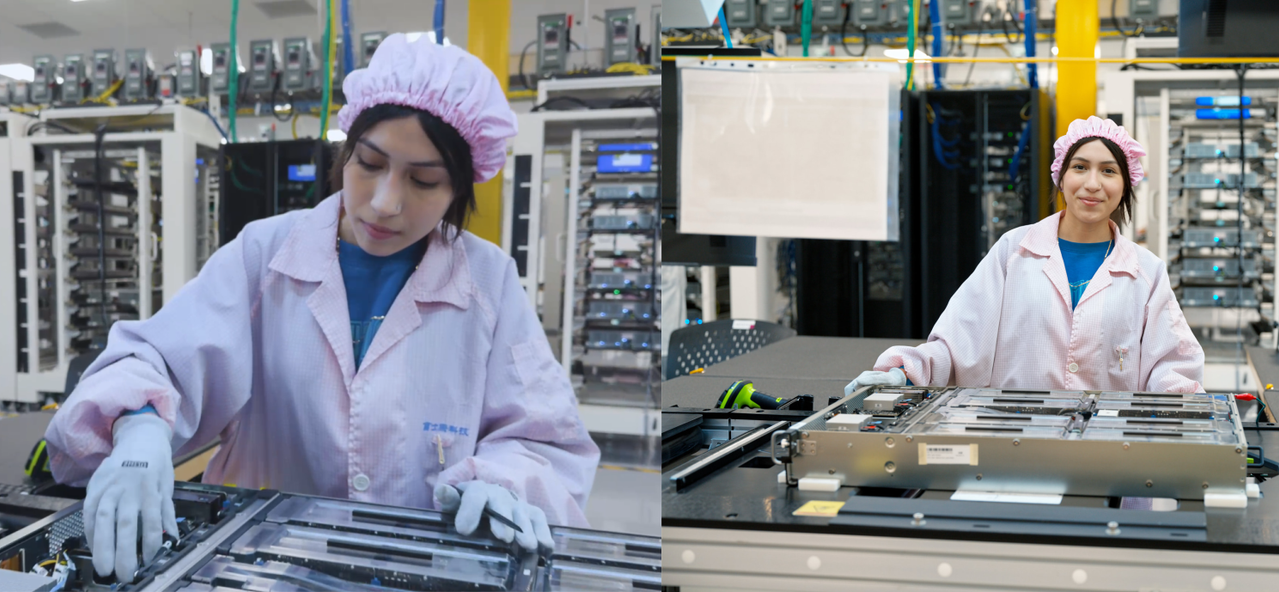
- Apple is very tied to Chinese manufacturing in a way that is hard to replicate in US.
They will agree to make some high margin simple to assemble thing in the US to appease government, but if it goes as well as last time, they will stop as soon as they can.
In china they were often able to iterate on designs and have custom screws and other parts made and ramped up in very short times. Something about having the whole supply chain in one place and very motivated and it all fell apart when tried to move to US.
So things that took weeks became hard on anytime line.. per Apple in China book.
- > Something about having the whole supply chain in one place
I can't find the source but I thought I read somewhere that the major manufacturing cities in China are all geographically laid out like giant assembly lines. The companies that process the raw materials are located mostly inland, then the companies that form those raw materials into metal and plastic stock are next door, and then the companies that take that stock and make components are next door to them, and the companies that input those components and output subassemblies are next door to them, and so on all the way down to the harbor where the companies that produce finished products output directly onto the loading docks where the ships await.
The US can't even zone a residential neighborhood without lawyers and special interests jamming things up for decades through endless impact studies and litigation. How is it going to compete with a country that can lay out entire cities, organizing the value chain geographically towards the ocean?
- This reminds me of a great freakonomics podcast that talked about China being run by engineers and America being run by lawyers.
https://freakonomics.com/podcast/china-is-run-by-engineers-a...
- That guy is so annoying his subpar analysis has become such a trope. America used to build things too. Lawyers have been part of the founding and fabric of both societies. Trying to reduce China v America to engineers vs lawyers is so reductive it's just mind blowing this keeps getting repeated.
- I've only listened to one interview with Dan Wang, but I understood him to be particularly talking about the politicians, not the country as a whole.
I can't speak for China, I've only visited a few times, but in the US it's true that an overwhelming number of successful politicians were previously lawyers. Which is not a good thing IMO.
- "I can't speak for China, I've only visited a few times, but in the US it's true that an overwhelming number of successful politicians were previously lawyer"
I can't speak for china either, so I looked it up and indeed, Xi Jinping studied chemical engineering and his predecessor Hu Jintao worked as a hydraulic engineer before becoming a politician.
Well in germany we had Merkel as a doctorate in quantum chemistry (but she never worked as an engineer, but neither did Xi Jinping).
I certainly would prefer politicians with some engineering background, unless they use their skills to manufacture a total state surveillance and control machine.
- Yeah I'm pretty nervous about engineers in charge. Merkel is interesting because her dad was reverend in the East. My reading of her is more that she was smart and there were good options in physics/chemistry - but then she effectively went right into politics directly afterwards. For better or for worse she never had that 5-10 years of day-to-day work before politics.
- She is the most hated EU politician in whole eastern part of EU, a symbol of EU failings and main reason there are many EU-sceptics across whole region.
A lot of current/recent crisis and utter dependence on russian gas and oil was her doing. She desperately tried to appease putin at all costs despite him mocking her from time to time, she pushed long term underfunding of German army despite war on Ukraine happening since 2014, closed down nuclear plants too fast so coal energy was needed immediately and so on.
Shame on her to be polite, not a good example if you want to show that engineering background (just studies in her case) can lead to better outcomes than lawyers.
- The german army was never underfunded. It just enjoyed lots of luxories, like lots of management staff instead of combat troops and custom made special equipment (that often failed to deliver) instead of buying what the market offered.
- Here in the UK the leader of the opposition frequently refers to herself as an engineer.
She was a software engineer. LOL.
(I speak as someone with a degree in Computer Science and Software “Engineering”, and an inglorious past as a Chemical Engineering student)
- UK Conservative Party leader Kemi Badenoch has both an engineering degree (computer systems engineering) and a law degree. Best of both worlds?
- >.... unless they use their skills to manufacture a total state surveillance and control machine
Well, um, that's China in a nutshell. They did exactly that.
Turns out people with power like to amass and maintain power, regardless of the structure they gain it in.
- This podcast between Tyler and Dan was a great listen - https://conversationswithtyler.com/episodes/dan-wang/
Dan came off as very China biased and Tyler literally schooled him on a few occasions.
But despite that, there are grains of truth in what he said, we have lawyers turned politicians at the helm in the US, so we have a great democratic system but on the flip side hardly any engineers leading us to the predicament we are in now, where nothing ever gets built.
- Bill Allen certainly got a lot of things manufactured at Boeing, despite being a lawyer
- And that was true when we built things too. So what point are you making? If only FDR was an engineer then maybe we would have ramped up production and taken on the Axis across two oceans. But oops he was educated as a lawyer I guess we're doomed now. Like I just don't get it.
Sure Xi and some other senior leadership in China studied as an engineer. He also studied Marxism. As a part of a government delegation he studied agriculture, even bringing him to stay abroad in Iowa of all places. The world is too complicated for this type of analysis, sorry. I don't even think it is remotely the right data point to focus on or compare.
Dan Wang does the same spiel on every podcast and it is always terrible and seems predicated on credulous hosts who know little about the history of either country and certainly not enough about both who just use his lame analysis to engage in this current fad of Western self-pity. Instead of reform and asking hard questions let's just throw soft balls at Dan Wang's cheap analysis that anyone with a Wikipedia level education would know is absurd so we can keep propping up the same impoverished China v America tropes.
Why don't we demand better honestly we should be ashamed that one guy can just come up with such a dubious thesis suddenly appear everywhere and no credible debate or pushback once. The only thing Dan Wang convinces me of is the poverty of the modern intellectual environment.
- Coincidentally, FDR's predecesor was an engineer and we know how that presidency went (not that it was entirely his fault, but he didn't make things better either)
https://en.wikipedia.org/wiki/Herbert_Hoover#Mining_engineer
- I enjoyed Megan Mcardle's take on Hoover:
https://www.washingtonpost.com/podcasts/impromptu/forget-the...
- These people are just trying to find an alternative narrative because the vast majority of the population have been rejecting neoliberalism for a good 30 years now. So they spin up the foreign enemy is better than us, so we need to deregulate more and not hold monopolies accountable.
If we broke up Google or Amazon, suddenly we're just as bad as China!
- why can't we go "wow they're getting really good, maybe we should invest harder in education and research?" That makes wayyy more sense to me
- Comedian Ronny Chieng has a bit about this: (sorry for short) https://www.youtube.com/shorts/1cmCueTZz1A
- In the west greater education doesn't lead to people wanting to live in a factory compound in communal dorms with suicide nets where they can be woken up at midnight to start a shift on a whim. Doesn't lead to people wanting to eat all their meals in a cafeteria with the other people on their shift. The factories I visited even their children went to school in a school within the compound.
- It rings true though.
I worked at a dev company, and we got bought by an IT company. Much pain and friction, all around. Is that a reductive representative of the company differences? Yeah, but it's still a useful mental model that helps one understand the differences. And I think the lawyer vs engineer trope is useful. Yeah we have both. Both my companies had both IT and developera, but the stakes & priorities were different enough that that lense became extremely helpful.
- The USA still has a lot of high end manufacturing going on. There is no “used to”.
- Sure, but it's seemingly doing less and less. "Value Added by Industry: Manufacturing as a Percentage of GDP" has been going downwards for a long long time, here is the last twenty years: https://fred.stlouisfed.org/series/VAPGDPMA
- I don’t think you can take “percentage of GDP” as an indication that the US is doing less. It could be doing the same amount while the GDP grew tremendously in other areas, for example software.
And if you look at the absolute contribution in dollars, manufacturing has gone up 1.76 times between 2005 and today: https://fred.stlouisfed.org/series/USMANNQGSP
This is roughly 2.9% a year over 20 years, so slightly ahead of inflation over the period.
To me this points to a story where manufacturing grew slightly but the other parts of the economy grew a lot more. Not exactly a bear case on manufacturing, but not a tremendously exciting one either.
- When politicians talk about the decline in manufacturing what they mean is jobs. I work in American manufacturing and there are tons of amazing projects happening but the decline in jobs is real. Especially low skilled jobs, This trend will only continue and I doubt any politician, regardless of thier background, can change that. And I’m not sure it’s a bad thing as it means manufacturing productivity is increasing
The main reason it’s so political is the drop in number of jobs has been huge, and too fast for many to adjust. Automation has come fast.
“ Manufacturing employment declined from 17.3 million in January 2000 to a low of 11.5 million in December 2009, a drop of 33% over the decade. Compared to the peak of 19.5 million in 1979, manufacturing employment had declined approximately 41% by 2009.”
https://blog.uwsp.edu/cps/2025/01/29/u-s-manufacturing-emplo...
Interesting to think about. Share of GDP staying stable but number of jobs fell by around half.
- There's a long-term economic problem looming around the loss of jobs: which is that most people's ability to command a share of our economic output (i.e. earn money) is tied to their value as a labourer. If that labour is no longer needed by those who control capital and thus allocation of labour resources (which is increasingly the case across many segments of our economy), then we end up with an economy where people increasingly struggle to earn a decent living.
Of course there are areas where that labour would be useful: healthcase, teaching, childcare, elderly care all come to mind (and there are many other examples). But our economy is not set up to enable this. The problem isn't supply side (difficulty retraining people to do the jobs), it's demand side: the people who need these services often don't have the money to pay for them. So the jobs are badly paid.
And it's a downward spiral: as wealth becomes more concentrated, demand for labour drops because those controlling the wealth already have their needs met and often don't care about the needs of others.
If history is anyhing to go by, then this will eventually lead to war and/or revolution.
- I concur with moregrist
- I'm very glad that you confirmed that with a comment, I was a bit confused what specifically you thought.
- You’re welcome
- At the end of the day the reason people see manufacturing as special is because in a war it is a strategic resource. If this wasnt the case nobody would care about "manufacturing jobs" any more than the general economy. So if you use defence production as your metric... "U.S. Navy Shipbuilding Is Consistently Over Budget and Delayed Despite Billions Invested in Industry"
https://www.gao.gov/blog/u.s.-navy-shipbuilding-consistently...
- > Trying to reduce China v America to engineers vs lawyers is so reductive it's just mind blowing this keeps getting repeated.
Think of it as engineers vs non-engineers (lawyers/mba types/etc). We complain about that on here all the time (ex. boeing). It's where the priorities are: is it on making things better or making more money? In an ideal world, it would be both. Unfortunately here, it is not otherwise enshittification would not be a thing.
- It feels like people accept this criticism when it props up their position - for an American (software) engineer, companies run by _American engineers_ vs companies run by American non-engineers is an obvious case of engineering is better (see criticism of Boeing); but when it's Chinese engineer vs American non-engineer, the "American" bit is more important.
- just one q: have you been to china before?
- > America used to build things too
Indeed. “Used to” is the key observation. In the wake of WW2, the U.S. had both dynamism and the ability and will to act collectively. This combination led to rising standards of living, the space program, Silicon Valley, the internet, etc.
The U.S. economy is still relatively dynamic, but the will to collective action has completely failed.
Europe can act collectively but lacks dynamism.
Which country, today, demonstrates both traits?
- What point do you think you're making? That's not the question. You're just repeating the same obvious geopolitical comparison everyone regurgitates these days.
The question is about whether any of that can be meaningfully attributed to some lawyer vs engineer divide. Your question doesn't answer that in the slightest and thus I have no idea why you are asking it.
- It's not about the specific degree the leaders hold. Thanks to Communism, China (and the Soviet Union before it) had a profound belief that society can be engineered, and that people and nature are both raw material that can be shaped to fit the needs of society.
The US, on the hand, is obsessed with individual rights, and any sort of collective action that threatens those rights is extensively litigated.
This is really what Wang's thesis boils down to, and which of course it's an oversimplification, there is a kernel of truth in there.
- > society can be engineered
and the hidden implication is that there's a correct trade off to be made (because engineering is about trade offs).
So what happens to those people whose gotten the bad end of the deal? If china builds a damn, the villages downstream gets moved (with small compensation that is not commensurate with the value of the dam being made).
It's also why the high speed rail in california is costing so much in the US vs something similar in china.
- That's better than a culture that sees every transaction solely in terms of corporate profit and doesn't consider the existence of trade offs at all.
The result is that far more people get far worse deals far more of the time. Healthcare, the jobs market, education, climate damage, grift in high places - it's all the same issue, and a lot of the problems are rooted in denial of reality on spurious "economic" grounds.
- >Thanks to Communism, China (and the Soviet Union before it) had a profound belief that society can be engineered, and that people and nature are both raw material that can be shaped to fit the needs of society.
Isn't that a trait of the left in general?
- Look america's 1939+ expansion was subsided by the british empire trying to expand arms manufacture.
What america has been doing is subsiding engineering capacity in china. This was done because it created more profit for larger companies as they merged and eliminated costs. This higher profit drove a "roaring" economic expansion. But now china is capturing more of the value.
A solution is to use tax as a way to re-patriciate engineering capacity. This is kinda what trump is supposed to be doing, but carving out exceptions for friends, and using blunt instruments doesn't work all that well.
- It gets repeated because we actively incentivize repeating it.
It's a popular trope that confirms the audiences bias's and when you do that the monkey brain gets rewarded by seeing the number in the top right go up.
- Just about everything on NPR is I want this to be true, not this is true.
- It's one of those just-so stories that sounds like a nice neat explanation. You can't put the complex reality into a neat single sentence so nonsense like this is always going to win.
- [dead]
- Authoritarian central planning isn't an inherent trait of engineers and nor should we aspire for it to be.
- You don't need to brand efficiency and structure-at-scale as "authoritarian"; how painfully American of you. I know it's a completely foreign concept for anyone that has grown up in America, but it's actually within the realm of human possibility for the government and the individual to be aligned and want the same thing. Typically this is evidenced by tremendous social progress, which we see in evidence with the rapidly rising standard of living in China over the last few decades.
It's easier when your government is proposing "hey, let's build all the factories the best way we can" and not "hey, let's impose illogical and continually-changing tariffs on everything and let Howard Lutnick's kids steal all the proceeds". You're right as an American to be skeptical of the government - it's not operating in your best interests unless you're one of the elite insiders. That doesn't mean it has to be that way.
- You're providing much too much credit to China's government, the dynamic is simpler:
China just hasn't calcified yet after workers press for better standards of safety and quality of life and maybe they won't because that's where being authoritarian comes into play. They will crush that in a way we have moved away from.
We used to build great things in the US and then we decided the blood price of 30 lives for the Brooklyn bridge or 100 for the hoover dam wasn't worth it. It's really not hard to build anything when you ignore any second order questions of impact. Why do you think certain people here want deregulation and for the EPA to go away.
A quick google shows China prioritizes speed over safety something we've decided here in the US is not acceptable.
- > We used to build great things in the US and then we decided the blood price of 30 lives for the Brooklyn bridge or 100 for the hoover dam wasn't worth it. It's really not hard to build anything when you ignore any second order questions of impact. Why do you think certain people here want deregulation and for the EPA to go away.
Because wouldn't it be just totally awesome for our rivers to burn again?
https://www.smithsonianmag.com/history/cuyahoga-river-caught...
> In 1868, 1883, 1887, 1912, 1922, 1936, 1941, 1948 and 1952 the river caught fire, writes Laura La Bella in Not Enough to Drink: Pollution, Drought, and Tainted Water Supplies. Those are some of the incidents we’re aware of; it’s hard to say how many other times oil slicks may have ignited, as press coverage and fire department records were both inconsistent. But not all the fires were as innocuous as that of 1969. Some caused millions of dollars’ worth of damage and killed people. But even with the obvious toll on the landscape, regulation of industry was limited at best. It seemed more important to keep the economy booming, the city growing and people working. This attitude was reflected in cities around the country. The Cuyahoga was far from the only river to catch fire during the period. Baltimore, Philadelphia, San Francisco, Buffalo and Galveston all used different methods to disperse oil on their waters in order to prevent fires.
- I’m not those people you’ll not find a disagreement from me
- for 2023 us vs china workplace fatalities per 100.000 are 3.5 vs 3.0 in favor of china. (quick ai query)
in regards to calcification of china your position is unclear. you say that china advances due to pressure from workers but at the same time claim that pressure from workers is irrelevant because government can crush them at will. you cant have the cake and eat it too...
- quick ai query
AI halucination is well known, and output is non-repeatable.
There is also no indication of what timeframe, what industry, how it is calculated and more.
AI responses are starting points, and should never be considered factual without verification.
If you want to have any trust in youe numbers, find real stats, from a reliable source.
- > China just hasn't calcified yet
aye. the old elite of China were overthrown by the communists, whose (that is, Mao's) decisions starved most of the country, followed by the insanity of the cultural revolution.
the new technocratic leadership is just that -- new. really only started happening in the 1980s and 90s.
the US is falling apart due to the entrenched hyperwealthy seeing more and more rents. China's hyperwealthy are all new money and are not entrenched yet, not the way groups like Ford or Boeing or Goldman Sachs are. But soon they will be, and soon the CCP will start prioritizing their needs
- For all the progress, you lose me immediately with the "social credit" system. If there was really true 'progress', then you wouldn't need a one-party system that suppresses all dissent.
Only need to look to the recent changes in Hong-Kong and the obviously hostile takeover of a democratic government to see how "pure" these changes really are.
- > If there was really true 'progress', then you wouldn't need a one-party system that suppresses all dissent.
This makes no sense. It is possible for a totalitarian government which is threatened by dissent and concepts like "democracy" to also work in the interest of improving overall quality of life.
- If things work so well that everyone's quality or life is improved, why would there be dissent large enough to worry about.
It's the same category as: Why would a company with happy well paid workers be worried about unions and try to stop them forming.
- > If things work so well that everyone's quality or life is improved, why would there be dissent large enough to worry about.
Have you met people?
- Sure. There's always going to be someone opposing something. But I'm not aware of cases where a disagreement in an environment good for everyone was large enough that it caused the leadership/government collapse. Similarly on a small scale, the number of grumpy people at companies I worked at scaled more or less with how good things were for everyone.
In other words, if things are good enough, there will be more people disagreeing with the totalitarian part than with the overall conditions.
- Social credit system is not really a thing. Yes various apps have various ‘credit scores’ and if you are convicted of crimes you can get travel limitations, but there is no such thing as a ‘social credit system’. Much like how the government is not centralised at all, provinces can make their own laws and so on.
- I believe the premise is that you have to oppress the rich to a certain extent to prevent them from usurping the people's government for their own ends.
- There are bad things in China, but there is no "social credit" system being used.
- Yes there is. Why deny it? It's pretty public. In this french documentary, which was later aired on the parliamentary tv channel, the author films his daily life with his chinese wife, who has a social credit account, and interviews officials speaking openly about it. It's 4 years old.
- https://en.wikipedia.org/wiki/Social_credit_system#Misconcep...
There is no so-called social credit system you western guys have in mind. There is a credit reporting system. It's not that different from the US credit reporting system. But it has far less of an impact on our daily lives than the US system on Americans. For example, no one asks for your credit report when you want to rent a house.
- i dont have.. and nobody talks about it.. in china.
this remind me one of the ep of the TV show <newsroom> when they found so many evidence of a massacre using chemical weapons and broadcast it.. and then found out its all fake.
- If no one talks about it, why is this .gov.cn article discusses the problems currently posed by the existing social credit system? There isn't indeed a nation-wide score, but given the size of Chinese municipalities (often larger than most countries in the world), it's far from anecdotal.
https://credit.fgw.sh.gov.cn/xyyj/20220902/8693d5ba378d4f578...
- There is a credit reporting system, similar to the one in the US. However, most people are not affected by it in their daily lives. Only those who are in serious financial trouble and cannot pay off their debts are placed on a blacklist, which restricts them from traveling by high-speed rail or flights.
- Yeah, I was on my way to being convinced that my understanding was a misconception, but this just halted that in its tracks. You’ve just stated the slippery slope has been built and is ready when desired.
- Now go find a mirror and read your post out loud to yourself, slowly.
- The US also restricts peoples right to travel if they owe too much in taxes or have more than $2,500 in unpaid child support payments.
They can even revoke your passport (which is functionally the same thing as some forms of travel only accept a passport).
So, you're both doing the pointing spiderman meme here.
- > There isn't indeed a nation-wide score
there is no score at all. even this article didn't talk about anything about 'score'. its no different compare to many other countries. soical credit system is a general concept.
I do wish everybody outside of china have your mindset. then we have nothing to worry about.
- fake news!
- There's a social credit system everywhere. It's called "money". It's quite literally and explicitly a credit system that rewards certain behaviours and castes and punishes and disempowers others.
The fact that everyone in the West is used to it doesn't alter the fact that it's social engineering at scale and not a law of nature.
- Snowden's revelations showed that the same stuff exists in the US.
- No true scotsman
- Dude come on, the US already has a social credit system. Where do you think China got the idea of credit scores from? Try getting a good loan in the US if your credit score is under 400. You're barred from having certain jobs if you don't have a good credit score.
Get some new talking points, you're like 40 years out of date.
- The difference with China is that the US credit score is limited to your banking activities.
- It's not just loans and banking. Bad credit severely limits your housing options, even rooms for rent are running credit checks these days. Some employers too, even in roles where you aren't directly handling money or anything close to it.
- I understand this, but I meant that the data sources used to build credit scores are mainly banking/debt related. Jaywalking ore saying slurs online won't affect it, unlike in China.
- *not yet. And if you are not US citizen and coming in as a tourist, what you write applies heavily and can end up in properly harsh treatment. So its not as rosy as you write (which already ain't rosy)
- The difference between a social credit score and a credit score is when you criticize the president, your social credit score goes down, but your credit score stays the same.
- The people who have been stalked and apprehended by ICE for online criticism of what ICE is doing might not agree.
As might visitors who are being asked to show five years of social media history to make sure their views are politically acceptable.
Free speech is over. If dissent isn't being actively punished - the current push for deanonymisation is coincidental, no doubt - at the very least it's heavily throttled algorithmically.
- That's not actually true. Companies can opt to report your employment to credit agencies, providing another datapoint in background checks.
- what do you think china's credit system is like?
- Have you tried renting recently?
- If that were the true secret sauce of the economic success in China, why had it not taken off before the 2000s? Like, they have been that "aligned" and "want the same thing" and "run by engineers" since the 50s, no?
- They did. Developmental state for huge country = phases measured in generations. 1.4B can't get away with building a few industries like other tigers, JP/SKR/TW/SG who can capture a few highend and do fine per capita.
TLDR timeline
50s-70s was soviet engineers / knowledge transfer from post war wreckage. Built basic industry, 80s-10s was relentlessly building out every industrial chain for every sector except leading edge because lack talent. Talent pipeline was 90s-00s building out academic system, 2010s-20s was brrrting tertiary talent. Couldn't brrrt tertiary talent without teaching peasants literacy in 60s, and then having literate parents in 80s family planning (i.e. one child policy) which filtered generations of 1-2 kid households where surplus went towards education/tertiary. All the recent highend progress recently was result from that, step by step building on generational phase/timescale. PRC only passed US in total STEM a few years ago, now they on trend to talent inflection point 2x-3x STEM vs US in next 20 years. People mock one child policy, but it was exactly choreographed for this outcome, one of few cases of generational peasant to phd planning, though 50 year foresight to build up greatest high skill demographic dividend in human history, not 100 year foresight because cost is shit TFR in the next 50 years.
- It kind of did. GDP per capita grew at around 6% per year from 1952-1980. It was starting from such a low base that it was still pretty low in 1980, but it was much improved. And Mao was not an engineer.
- 6% compared to the post-2000s is mediocre, especially given the low baseline. Not remarkably better than other high-income democratic countries like Japan and West Germany. Even the US can have ~4% growth at the time.
- > why had it not taken off before the 2000s?
This topic has been discussed on Chinese forums and social media for like 1 million times. The short answer is it did. To give you a prefect example - the J-10 fighter jet was first tested in 1998, it shot down multiple best EU made fighter jets last year.
- > it's actually within the realm of human possibility for the government and the individual to be aligned and want the same thing.
Actually, this is very hard because different individuals want different things. Normally you need a mechanism like the market or democracy to aggregate individual preferences. Expecting a dictatorship to do this well seems optimistic, and the full history of communist China doesn’t support the idea.
- Have you met an engineer? I'd say "being an engineer" is probably the single most predictive trait for authoritarianism in my experience.
- There's a decent amount of research that finds a correlation between engineering degrees and terrorists:
> According to two European social scientists working in Britain, Italian Diego Gambetta and German Steffen Hertog, who present their case in Engineers of Jihad: The Curious Connection between Violent Extremism and Education, the presence of engineers among known Islamist extremists is 14 times greater than can be explained by random distribution. It was a finding the authors reached with caution and even a certain resistance. “We are social scientists,” Hertog explains in an interview, “so we are always seeking socio-economic explanations. We accepted this idea that there might be personality traits, expressed first in choice of profession and then in political ideology, very reluctantly.”
* https://macleans.ca/news/world/why-do-so-many-jihadis-have-e...
> This article demonstrates that individuals with an engineering education are three to four times more frequent among violent Islamists worldwide than other degree holders. We then test a number of hypotheses to account for this phenomenon. We argue that a combination of two factors – engineers’ relative deprivation in the Islamic world and mindset – is the most plausible explanation.
* https://researchonline.lse.ac.uk/id/eprint/29836/1/Why_are_t...
- As an engineer, I do think there’s some mild but noticeable correlation in bulk. But there are other categories which would be much more predictive. And most of the correlation with engineers are actually a confounder effect from things like multigenerational socioeconomic status, or religion.
If you were to control for other variables I doubt there’d be much correlation. After filtering out engineers who belong to other categories with stronger associations to authoritarianism, you’re more likely to be left with the hyper-individual-freedom types than the hyper-authoritarian types.
- I am electrical engineer and electrician working in regulated areas. In both areas the frameworks limits my choices and obviously I am very authoritarian. There is no room for discussion. If I need a DC DC converter for 2 amps I will pick one rated for 4 amps. No discussions! If I need to install a heat pump 60 feet away I will pick 5x6 square millimeter cable and all the circuit breakers from installation manual. There are no options or opinions. I communicate this in polite way to the clients.
And this flows in other areas. If I need a functional vehicle with cheap upkeep I optimize for it. I invest in low risk products since the income is limited. I know that people with plan and confidence are scary, you don’t meet them every day.
- Possibly, but it's just as much a predictive trait of being libertarian, which for all its faults, is extremely anti-authoritarian.
- Power tends to corrupt, and absolute power corrupts absolutely. --Lord Acton.
It's not really so much one's belief system as it is what happens when one gets power -- and that's hard to predict regardless of the ideology.
- Not really. Seeing what people do when they get power is as predictable as what they do when given meth.
- Eh. Maybe. But I do see people who are pretty consistent when they have power. It may be somewhat unpredictable before they get power, but somewhat more predictable once you’ve seen how they act with it.
This principle of relative consistency is baked into how I test employees for management and friends for trust, and in the past, roommates as well. Though I do acknowledge potential for growth as well, but in my older age I generally also need to see evidence of motivation to give strong benefit of the doubt wrt possible trajectory.
- When libertarian means liberty for everyone, it's anti-authoritarian.
Too often libertarian means liberty for me and not for you. That's authoritarian.
- Libertarianism is just privatized authoritarianism.
- Libertarian principles encourage relationships built on mutual consenting parties rather than coercion. This implies that both parties have the freedom to choose. Imagine being stuck with a small dating pool of undesirable partners, the choices may not be good but that doesn't make it authoritarian.
- Except in 21st Century America, where libertarian is really just masked authoritarian. Essentially, that means “free to do whatever you want as long as it’s our way.”
- "i hate the gub'ment esp. the way evil mega-corporations tell me to"
- >Authoritarian central planning isn't an inherent trait of engineers and nor should we aspire for it to be.
I would say that for long-term engineering projects (building bridges etc) authoritarian central planning is a required trait.
- I think what the person you're replying to is referring to is the fact that, in contrast to the US, many senior politicians in China literally have engineering backgrounds, or at least engineering degrees. Although this has actually been less true in the past 10-15 years. This article gives a bit of an overview - https://www.chinausfocus.com/2022-CPC-congress/chinese-techn...
- It’s funny because the foundation of neoliberal economies is the corporation: a strict authoritarian planned economy.
- Every single privately run company is authoritarian.
- China hasn't done much central planning for many decades.
- They do, the state permits a free market but they also coordinate strategically to make decisions which benefit the country.
- No, central planning is key to the state capitalism employed by China, it is done on ALL strategic industries.
They just no longer do any central planning on nonsense matters like how much ice cream need to be produced for the summer and how much coffee shops are required for Shanghai.
- The books is amazing too, just finished reading it. Gives you peek into cultural dynamic of both countries: https://insightbooks.app/books/breakneck
- Minor correction: America is run by pedophiles with a lot of money, who naturally hire lawyers.
- funny how this is getting downvoted when we know now that it is objectively true, with emails and pictures
- That’s because engineering degrees were the only thing you could get from college during the Cultural Revolution.
- Sorry, but this sounds more like a myth, or at least heavily exaggerated. Similar to how Japan often gets romanticized.
Organizing the entire chain geographically at the scale you described (inter-city) doesn't bring huge cost advantages by itself. In China labor has historically been cheap, so the transport cost between regions was never the dominant factor anyway.
Most industrial clusters in China formed organically over time just like the rest of the world. Aside from some exceptions like mining, there isn't some master plan laying out entire cities as linear supply chains to the ocean It's not SimCity.
One thing you're right about is that there is less bureaucratic friction or 'lawyers' in the way when it comes to economic development. For the former, it's because economic growth is THE metric for the government, especially at the local level, so they do whatever it takes to make it happen. For the latter, it's because… well, in China no one sues the government, period. I'm not sure it's a good thing.
Disclaimer: I'm Chinese living in China.
- As a Chinese living in China, you must know the layout of the city does provide logical sense. I've only been once, and I buy stuff from factories fairly often. When I went there I basically went to a mall district where all the furniture was sold, then I went to the tile district to review tiles, I went to several other "districts" that where nothing but that single item.
I went to the window factory, which was directly beside more window factories, and directly beside that was the place that extruded aluminum for use. The aluminum they used was produced a up the road in what they called the metal district.
You are even saying that "industrial clusters in China" so there is clearly some amount of planning involved. There is obviously benefits to having all of the aluminum factories beside a aluminum producer, and having the shipping/packaging warehouses by the docks, etc.
There is some amount of government work at play here, either on a small scale or a larger scale to provide a reason for places to all setup.
I've also seen things that just are not possible in North America. Asked for samples of aluminum extrusions and had the die made and extrusion done in a day. Locally it would take months before a sample is at my door.
I've sent designs for quotes and get quotes in hours, half the time factory in NA doesn't even reply. And even when it does it's more of a "go away" then anything else.
I've seen live video of robotic factories building entire cabinets for housing.
There is some amount of rose coloured glasses in this thread. But we cannot deny that China wants business and can get stuff done fast and efficiently. That cannot be said for modern day factories in US or Canada. The work ethic and desire for business are just completely different.
- You seem to assume that just because similar industries exist near each other in China, that it must have been government intervention. Which maybe it was, I don't know. But this same trend exists in the USA too.
You have areas with lots of Oil Refineries, Houston and Baton Rouge for example. You have areas with lots of steel mills, like in North West Indiana. These are examples I personally know of. Obviously a lot of big tech factories exist close to each other in Silicon Valley and in Austin Texas too.
There are "industrial clusters" in America too, simply put. It is natural for large chemical plants or industrial sites to build up near where their source is. Hence all the oil refineries around the gulf. This is not a uniquely China thing at all. Lots of major US cities are known for specific types of industries.
- Strategic industries, i.e. 5 year plan ones, local gov will absolutely master plan to excruciating detail for complete industrial chain. Less strategic industries local gov will get a few anchor industries to root and rest is organic. Intercity proximity also brought huge advantages in terms of transportation speed, especially in 90s-00s. The other consideration is scale, a bumfuck tier3 chinese city specialize in xyz will have millions of people which naturally enables greater levels/depths of industrial agglomeration, which is what makes PRC exceptional. Think old Detroit motocity hub that dominated 90% of US car production. PRC has 100s of said cities for different industries. It's not myth/exaggeration that consequence of PRC scale, historically exceptional/aberration tier industrial clusters in other countries, PRC has 100s of, as baseline template.
- Is the labor cheap in China or are you comparing it US salaries?
Can a person working in a Chinese tech factory for a major US company afford a reasonable place to live a reasonable distance, food, some entertainment, and have savings?
- I'm not comparing it to US anything, I'm comparing it to other cost components like raw materials and parts, whose prices are often global.
The point is that transportation within China isn't a dominant factor in industrial cost or efficiency. So the idea that major manufacturing cities are laid out like giant assembly lines isn't nearly as important as OP suggests.
China still has many advantages over the US in manufacturing. I just don't think this is a major one, even if there's a grain of truth to it.
- The US can't even zone a residential neighborhood without lawyers and special interests jamming things up for decades through endless impact studies and litigation.
Famously, Houston has no zoning.
- The downside is that then nothing prevents a fireworks factory, or tannery, or whatever, right in the middle of a residential area.
Or, as they say everything is bigger in Texas, why not think big... an oil refinery!
- A bit of quick searching reveals that Houston does have many building regulations, for example restrictions of hazardous enterprises. It’s just that the regulations aren’t quite as black and white as zoning laws.
https://kinder.rice.edu/urbanedge/houston-doesnt-have-zoning...
- >I can't find the source but I thought I read somewhere that the major manufacturing cities in China are all geographically laid out like giant assembly lines
There was a great article from like 20 years ago - it quoted Jobs too on that. I remember Forbes or something like that, maybe this "“How the U.S. Lost Out on iPhone Work” — The New York Times (Jan 21, 2012)" (cant open it now)
- So, there’s a decent amount of electronics manufacturing in Anhui Province which is pretty far from the well-known hub of Shenzhen. Anhui is generally more known for their mining industry.
So, to your query, maybe somewhat? But not strictly.
- In Houston there is no zoning.
- It's a network effect though, if 80% have zoning then you may as well be a tiny island country.
The other issue is minimum wage and workers rights. It should be possible to have Chinese workers making widgets on US soil instead of Chinese soil, for $0.5/hr more than they can make in China. But that's illegal many times over.
Then people wonder why manufacturing is dying across the West. If your inputs (labor) are more expensive you can't compete, it's extremely basic. That might be acceptable but at least be honest about the trade-off you've made, and don't pretend you can patch it up with hacks.
- >manufacturing is dying across the West.
Died a long time ago and went to hell in handbasket :(
>If your inputs (labor) are more expensive you can't compete
Houston had always been less expensive than Detroit, LA, Chicago, New England and just about anywhere else in the US for this kind of thing, but it was really the cheapness of the foreign labor that made it irresistible to Wall Street. It had always been that way but didn't really matter until after the value of the dollar had been dropped so low that they had to pay workers what amounted to exorbitant sums while the labor still ended up with less discretionary cash, and that was at the lower-value dollar.
You should have seen Houston in 1979 when the Nixon Recession was raging worse than ever, long after he had sailed into the sunset. It was no Pittsburgh[0] but there were still two steel mills and of course one of them was US Steel where they had expanded to the industrial suburb of Baytown Texas specifically because the labor was cheaper than up north.
Wall Street took that differential to the bank and lit their cigars with $100 bills :\
Eventually led to champagne and caviar with each round of layoffs.
Nixon "opened up" China, but Reagan was not yet here to put the nail in the coffin.
I agree it would take a whole lot more unfair advantages just to get closer to a level playing field.
The way to real manufacturing growth is to build much higher-value-added products per worker.
The difficult problem to overcome is that most of the low-cost raw materials have been coming from China for so long, and the ideal thing would have been coming from more than one place the whole time.
But no, the absolute cheapest must be sought.
Mexico could have been ready by now but they would have had to do it on their own in an organized way like China and India so it pales by comparison, especially high tech in spite of all the brilliant Mexican engineers and innovators.
Lower-cost labor in India might be abundant enough but it'll take a while before the supply chain can compare to what China has built with all the dollars they have had in their hands for so long.
[0] Made up for it with oil, as heavy industry goes.
- Apple as a company that does not pay taxes should at least invest in the country they are located in. *Designed in Cupertino, Taxes paid no where, profit leveraged in the US
- You know, I think the bigger issue is Tillman Fertitta scuttling the other UT research campus they wanted to set up in Houston because it would screw up his status as chairman of the University of Houston board or something. I guess Houston’s gonna have to make do with these tech jobs.
- > I can't find the source but I thought I read somewhere that the major manufacturing cities in China are all geographically laid out like giant assembly lines.
... like Factorio, just in real life.
> The US can't even zone a residential neighborhood without lawyers and special interests jamming things up for decades through endless impact studies and litigation.
A lot of that is to prevent our cities from looking like China did before they haphazardly cleaned up shop before the Olympic Games. Remember all the smog alerts? Athletes being afraid the smog and pollution would impact their performance?
> How is it going to compete with a country that can lay out entire cities, organizing the value chain geographically towards the ocean?
There's a tool for that, it's called tariffs - basically, make it uncompetitive for manufacturing moving off to a country that systematically undercuts pricing even at the cost of its environment.
Unfortunately, the current administration doesn't even have the concepts of a plan on what they want to achieve with tariffs. It's mind boggling to watch.
From: https://theweek.com/articles/478705/why-apple-builds-iphones...'Q:What does China's competitive edge look like in practice?' 'A: One example from The Times article: When Jobs decided just a month before the iPhone hit markets to replace a scratch-prone plastic screen with a glass one, a Foxconn factory in China woke up about 8,000 workers when the glass screens arrived at midnight, and the workers were assembling 10,000 iPhones a day within 96 hours. 'Another example: Apple had originally estimated that it would take nine months to hire the 8,700 qualified industrial engineers needed to oversee production of the iPhone; in China, it took 15 days. Anecdotes like that leave you "feeling almost impressed by the no-holds-barred capabilities of these manufacturing plants," says Edward Moyer at CNET News, "impressed and queasy at the same time."'- That's pretty amazing, honestly.
Here I can't even get a tradesperson to give me a quote, much less show up on a dime. I guess I need another eight billion dollars, give or take a penny
- > a Foxconn factory in China woke up about 8,000 workers when the glass screens arrived at midnight
Yea must be really amazing living a crowded factory dorm room with suicide safety nets under the windows only to be abruptly woken up because some schmuck in California demands his precious phones be assembled. Must be a wonderful gig.
- Project this a decade or two into future and I honestly don't have a solution for the west but a gradual decline into mediocrity. We have less corruption and communicate directly also about problems, so at least that will work for us for some time too.
But maybe China and similar places will elevate their overall prosperity enough that people will refuse to be treated like this en masse, so there is some hope.
- These anecdotes come from the very peak of Chinas demographic dividend. In a decade or two their demographic dividend will be in a steep decline.
China also needs to change something drastic to avoid brain drain. The migration of competent people is still one-way. There no path to become a Chinese citizen. China has come a long way, but Europe is still ahead on building liveable communities and wok/life balance, while the US is still attractive to those seeking freedom and prosperity. China has avoided issues due to a huge population and that demographic dividend. But eventually it’ll become an issue
- >China also needs to change something drastic to avoid brain drain.
Why does this matter? I hear this a lot but at the same time I look at what's coming out of China, especially in the AI space, and it's clear that brain drain isn't really hampering them.
- It's almost as if you don't need the absolute best and brightest. Heck we used to get by retraining people from other industries to be programmers. I know companies absolutely can't do that now nor be expected to help grow their workers and can only work with exact match H1Bs, but it used to be a societal expectation of companies.
- less corruption?
maybe time to check your priors
- I think all these factory manufacturing labor problems will be a thing of the past soon. The way robots are improving in China and the US, they will probably end up being an equalizer. It might become just as cheap to produce goods in either country at that point.
- A popular misconception is that manufacturing is done in China because it’s cheaper. That hasn’t been true for a while. There are cheaper places, many of them. China is now simply the best, at least when it comes to electronics and adjacent stuff.
- A lot of things are much more efficient in China as well. Compare the cost in time and money for travel between Beijing to Shanghai vs New York to Chicago for example.
- Best == cheaper. Could you do it in the US? Probably. But it'd take longer and you'd have to pay more money.
- This is not true. There is now a skill gap. There are countless examples that it isn't about being cheaper. The organisation and optimization of the workforce and infrastructure isn't something we can ignore. The choice of China isn't because it is cheaper, a lot of high-end and even luxury products are produced in China because they can ensure a high-quality manufacturing.
There are other places, as the comment above mentioned, that can produce for cheaper.
- Of course it's true.
The US could do the exact same. Many high-quality, sophisticated goods are made in the US.
It's just cheaper to do in China because the salaries are lower and the costs of establishing more efficient business infrastructure are lower.
And since these companies care more about cost than anything, they choose China.
- I think it was "Smarter Every Day," but there's a YouTube channel where the guy went all-out in trying to design, source, and manufacture a simple grill scrubber 100% in the US, and failed. He got the product finished and on the market, but it was literally impossible to do it with 100% American content. IIRC, part of the problem was suppliers that lied about their sourcing, but that still represents the complete lack of availability of US sources.
- The US literally doesn't have the people to do this.
- China didn't either, until it did. US business isn't willing to build up the workforce to do this but we definitely have the people.
- The US used to have a more built out industrial base but since those days a lot of things have changed, structurally, economically, culturally, and in their regulatory environment. The people who would have been doing this work are doing cushy service industry jobs today.
- Huh? The people who would have been doing this are doing shitty HVAC jobs (but still getting to be a bit creative). Are doing shitty welding jobs. Are doing HEAVILY underemployed service industry jobs they hate. Etc, etc. None of the people I know with a mind for making/tinkering/refining processes are working service industry jobs happily.
People didn't culturally decide they don't want these sorts of jobs, business did, because short term monetary benefit. The other stuff may have come along after but could easily be reversed. But currently there is no need to reverse because US business only cares about short term monetary gain.
All this talk like this is some huge systemic thing is BS. If there were jobs, it would all happen. Just like it did in China.
- This goes far beyond skilled labor. But I'll start with that point. The US already has a huge shortage of skilled labor, and it's not like we would ever take people from the HVAC industry and put them in a factory. People in the US are gonna still want air conditioning. Culturally, the US absolutely pushes young people to aim for white collar service industry jobs.
Second, it takes a huge amount of engineering talent to do what China is doing as well. In the US, a lot of engineering talent has been attracted to software (or other service industry jobs), where there's a lot of money to be made, and you can sit on your ass and argue on an orange-colored website all day. I prefer that to wearing a hardhat and waking up at 6 AM to go to a factory.
Third, China concentrates a lot of this talent into dense cities, and people make a lot of sacrifices to live there. You're definitely not gonna convince an HVAC guy to leave his suburban home and sell his pickup truck to go live in a dormitory in a dense city and ride a scooter. In China, there's plenty of people that are itching to leave the countryside for the city, leave their families, and search for a better life. In the US, people that live outside of cities, generally want to live there, and aren't interested in relocating. Most developed nations feed this need for skilled labor by importing labor from countries where people have a strong desire to better themselves but don't have a cultural expectation of a backyard and a white picket fence. But the US has had a fucked up immigration system for a long time now.
Fourth, China pulls out all of the roadblocks in order to facilitate the growth of their industrial base. They don't need to go through 10 years of planning to build something, they don't need to argue with a local zoning board, and if they want to build something they don't wait for the free market to decide to do it. If they want to support an industry, they just do it. Single-party unitary governments are efficient as fuck. Of course, this comes with many drawbacks, which politically are just not viable in the US.
- Edit: I grant I could be old and outdated. But having seen cycles. Having seen Japan go up and down. Having seen offshoring first go to Mexico then easily transition to China, I just don't see any black and white here.
1. The HVAC guys would definitely fill the the quick turnaround, small shops that surround the manufacturing industry in China if that was an option.
Culturally doesn't matter. The majority of young men I know are underemployed and hate the service industry, but would be a fit for having their own adjacent business like that ones in China that get so hyped as enabling their dynamics. I think you are very focused on the crowd you know. The young people I know are so itching to create they have 3d printers, or make fishing flies, or make their own clothes.
2. Sounds great, if you live in the bay area or other tech scenes. I no longer do. I left tech to work (albeit tech) in a factory. For the majority of people I know, what you lay out it isn't an option or on the table. They are under-employed in brain dead service jobs they hate, and that do not provide them a future. They would jump on building up the adjacent small businesses that China's manufacturing depends on and that people here hype as 'wow, you can find a shop that does XYZ'. The stuff people say 'we just don't have in the USA'.
3. Small town America was factories since forever. I don't think China's way is the only way. We have a very good transportation system whereas when China established it's manufacturing it didn't. I think your view is myopic here and clouded with 'the China way'.
4. Again, the 80% of America you seem to ignore, pulls out all the stops for shitty ass 50 employee employers to build. You seem to be focused on a very small part of the US.
Nothing you say is a limiter IF the jobs are there. American companies pulling the jobs killed American dynancism, not any of the things you list. If it's TRULY no longer about cost, we could EASILY do it again. The people I met in China weren't better than the average American. They were great, and I think very highly of China. But the advantage I saw were wages, and people from the countryside willing to put up with a lot, but I don't think they will put up with as much long term (and I hope they don't have to, again the people I met are all great people and I hope the best for all of us). And a side of environmental pollution (I know 2 guys that moved their factories to China purely because of savings by not having to be environmentally friendly. So many that falls under your regulation, but that isn't a long term solution/state for China and that was a decade ago, maybe things are changed for the better already).
- I don't think you realize the difference to which cultural expectations of the workers are different. Yeah, people "hate" their service industry jobs here, but you can get a job in Iowa wrangling spreadsheets making $50,000 a year, grab coffee from the office coffee pot, sit in air-conditioning all day, then you clock out at 5 PM and drive your truck home to your house in the suburbs with a yard and a white picket fence. Nobody wants to make that same money or less working on a hot factory floor with a clipboard on a 996 shift and live next to a factory belching smoke. But in China, you can find people who will do that, and they'll wake up at 3 AM to work on an urgent customer request. And collaborate with all the factories down the road, and have a prototype out by 8 AM. In the US you're not gonna get somebody to respond to your email before 10:30.
> 80% of America you seem to ignore, pulls out all the stops for shitty ass 50 employee employers to build. You seem to be focused on a very small part of the US.
It's easy to get politicians to give out some tax breaks for a reelection campaign. It seems to be damn near impossible to actually get anything done that actually matters. We frequently spend billions of dollars to support manufacturing investment and have nothing to show for it.
Just look at Foxconn in Wisconsin, as an example. Over $1 billion and half a decade and still nothing. China could've had a whole city built. We were just trying to get 13,000 factory jobs, but we couldn't even manage that.
- Yes and no.
The US is still an economy with the ability to tackle very complex tasks with its industrial base. Up until fairly recently, it was a major destination for people seeking higher education and work in specialized fields in STEM, which is necessary for the execution of the projects that companies like Apple want to do.
The problem is that we now have an anti-immigration administration, and are home to a number of multinational companies - Apple's a great example - that feel that their one and only obligation is to create value for shareholders. They don't want to throw the money needed at American engineer salaries, because money paid to the American engineer is money not paid to a shareholder.
We can possibly deal with the administration. The US isn't the only country in the world with a nativist movement; China does it with non-Han peoples within its borders. The real hangup is making a bunch of Americans with capital feel some sort of loyalty towards their own country and its workers.
- No and no. US companies started offshoring in 2022. There are no new STEM jobs since than.
- > US companies started offshoring in 2022. There are no new STEM jobs since then.
"The real hangup is making a bunch of Americans with capital feel some sort of loyalty towards their own country and its workers."
- And, to be clear about one thing (which I believe is also raised in the book): Much of this is the direct result of Apple investing literally a quarter trillion dollars and exporting critical western IP toward developing Chinese advanced manufacturing capability (among other American technology companies). The story of startups only being able to manufacture in China is a cute tale that is true for startups. For Apple, investing in the strategic capabilities of America's geopolitical rivals was an active decision Tim Cook and other Apple leaders made.
- A big change from Steve Jobs' dream of a California factory where sand and other raw materials came in one end, and finished computers went out the other --- the NeXT factory was an excellent exemplar of early automation (greatly assisted by Canon, an early investor).
- A company like Apple has very little incentive to care about geopolitics, other than by current or future government laws and regulations (a government mandate, tariffs, etc). In the absence of government intervention, Apple has determined that investing a quarter trillion dollars is the cheap choice; getting the same result in the United States would probably need much much more than a quarter trillion dollars worth of investment. If the United States thought that such investments by Apple would have undesirable geopolitical implications, Congress should have acted a long time ago.
- Your learned helplessness is defeatist and boring. We need not be Moloch's subjects; Apple's business priorities are not the result of some natural and unstoppable force, and their leadership is not exempt from responsibility because of your belief that it is. Someone, sometime, in a surprisingly boring room, wearing a surprisingly boring suit, made decisions like those which opened a factory in China instead of Texas.
- Texas would need to train its people. And the people would need to be as hungry as the Chinese were, and are to a certain extent. You should read the book the OT is talking about, it shows how the U.S. didn’t stand a chance in manufacturing, even going back to the 80s. Literally just not getting back to potential clients for two weeks and saying X or Y can’t be done, while Southeast Asian companies were jumping at the chance to build stuff.
There’s a giant cultural shift that needs to happen in the U.S. to get that back—not sacrificing labor laws, like China does, but the same idea that X or Y CAN be done, and actually jumping at the chance to build stuff instead of feeling entitled to it.
We do have agency, but the agency actually starts in the U.S., in education and culture, and not with a company like Apple.
- All these things sound like great reasons to force Apple, along with the rest of big tech, to pay to better our society in the form of taxes.
- It doesn't seem like money is the only issue. Infinity dollars won't help if the culture is radioactively toxic and shitty. (Arguably if you had infinity dollars you could spend it on therapists and counselors to fix the culture.)
- > Infinity dollars won't help if the culture is radioactively toxic and shitty.
And what's "radioactively toxic and shitty"? Not wanting to slave away for low wages in bad working conditions?
Business apologists like to slander American workers, and it's tiring. Most of the "radioactively toxic and shitty" culture is management culture.
- As mentioned upthread, if you go to an American machine shop, they'll take two weeks to get back to you, and generally be a PITA to work with, vs China's jumping at the chance to build stuff.
- > As mentioned upthread, if you go to an American machine shop, they'll take two weeks to get back to you, and generally be a PITA to work with, vs China's jumping at the chance to build stuff.
Probably because the Chinese are working 996. I know people who work 996, in China, and they dislike it as much as I would.
That's "jumping at the chance."
- You don't have to work 996 to have an attitude of let's help the customer take their product to market. The American machine shop will laugh at you for not being a machinist, and tell you oh we don't do powder coating, we don't make cardboard boxes or styrofoam inserts. So then you, as the customer trying to get a product to market gotta run around town figuring it all out.
Meanwhile, you start talking to the Chinese machine shop guy, and he's all yeah my brother's does powder coating, his uncle does cardboard boxes and styrofoam inserts are another relative. The American attitude could go that and not work 996, but that's why it's not just about the money.
- So basically you're blaming American workers for an attitude problem, when the real issue is, due to offshoring, the supply chain either doesn't exist here or isn't so centralized/expansive enough that someone has random relatives in related manufacturing businesses they're motivated to send work to?
So basically, you're being unfair.
And, from personal experience, while it's not exactly the same, when I've worked with American tradesmen, they've always had someone they could refer me to for related work.
- These people will never stop to think that they are the problem in society, society has been molded in their neoliberal image where everyone is a savvy consumer and worker. We have 40 years of living in such a society and income inequality is worse than the gilded age, life expectancy is regressing, and children are doing worse in school; people don't even have the time to enjoy themselves and are forced to consume to be part of culture. Why we took all this for granted because a couple of MBA fuckups thought they knew better than the rest of us, I'll never know. Well actually I do know, because they were so greedy they wanted to make slightly more money rather than provide Americans good jobs.
It's disgusting on so many levels.
- So your argument is that because machine shops don't do the leg work for you in finding suppliers for the things you need, they're worse?
- I think US regulation is a huge part of what you're talking about though. In the US it is a literally pain to do anything new. I work at a chemical plant, and it took years (I'm not exaggerating, it was something like 2-3 years) to get all the permits to build a new unit. Because of how slow the city is.
So when you talk about how Asian companies were quicker to jump on new things, that's exactly what I think of. I haven't worked in Asia, but I imagine their government is not holding them back with red tape even a tenth as much.
- See my comment up thread (https://news.ycombinator.com/item?id=47146484) about Tillman Fertitta.
- I do not have learned helplessness. Nor have I claimed Apple’s business practices are the result of a natural force. Nothing is natural here. I said that Congress could have acted. Is Congress part of the nature now?
In contrast you have provided no arguments for why Apple’s leadership bears responsibility rather than Congress.
- Dell ate Compaq’s lunch with a BTO model. It’s pretty clear Tim Cook decided to put the factories out of reach after that experience. Putting the supply chain close to major customer markets is cheapest but invites competition.
- > Acompany like Apple has very little incentive to care about geopolitics, other than by current or future government laws and regulations (a government mandate, tariffs, etc).
Isn't that massive? You make it seem like it's not important but look at Trump's tariffs that are connected to geopolitics. The US's relation with China could worsen to a point where certain imports are banned.
- The alternative is to do nothing. That you are worried at all is proof we have to take measures to ensure we aren’t dependent on adversaries.
- > Much of this is the direct result of Apple investing literally a quarter trillion dollars and exporting critical western IP toward developing Chinese advanced manufacturing capability (among other American technology companies).
Really love your 1990s style western centric view.
Care to explain how fancy western IP is not leading in more and more techs fields, e.g. drones, EVs, renewable energy, robotics, fighter jets etc.? because western companies invested in China and gifted fancy western IPs they don't even have to China?
- Its a 2020s western-centric view, because the world is western-centric (though, from your viewpoint in the CCP propaganda farm, I can understand why you'd feel differently). Everything China has was taken from the West, either by theft, the soulless disregard of western business leaders, or by sending their children here for education (if they decide they even want to return; many hate to go back, and we welcome them!)
- All of those things you mentioned start small and build locally. As soon as they become big enough to want to manufacture and sell internationally, the only option is to move the production line to Asia. Unless somebody big like Apple invests in manufacturing plants and supply chains in western countries, Asia will still have all the investment and factories and this will never change.
- Just as manufacturing in China took time manufacturing in the US will take time. The US has lost much of its skilled labor and mom and pop parts shop. If we have any hope of re-invigorating this some large company is going to have to bite the bullet. Chicken and egg problem imo. I'll leave whether this is worth it or not up to the economists.
- No, US didn't lose it, we collectively decided that whenever we buy something, the price was the most important aspect.
It's like everybody forgot that their neighbour's job depend on them.
We're repeating the same pattern with online shopping, malls and stores everywhere are closing because of our collective actions, we're not losing them like I lost my keys.
- What you're describing literally is us losing it. We lost in the market. Price was above all for the market and we didn't adapt and lost. I agree with the point you're trying to make but we did lose it in the sense that we do not have the manufacturing capacity we once did
- Choosing the lowest price is rational for the consumer. Setting the trade policy that allowed that lowest price -- the USA has less protection for the semiconductor industry than it has for textiles -- was the mistake.
Free trade does result in the best prices but it has other, negative effects, and it is when we think as policy makers -- as citizens, not consumers or business owners -- that we are accountable for those effects.
- Homo economicus' desire for a 'good deal' or 'a bargain' will kill us.
- “Why would I hire X when I can get it for $20 a month on ChatGPT?”
Hmm, I don’t like the sound of that.
- > We're repeating the same pattern with online shopping, malls and stores everywhere are closing because of our collective actions, we're not losing them like I lost my keys.
A huge part of that is rents. Basically, a store that owns their property outright or even on mortgage has far less worries when business turns down during a crisis. Take Covid - a year or two, depending on where you were, in more or less lockdown conditions.
A store that was owner-owned? No big deal. Staff was paid for by government assistance, not much ongoing cost for the building. Owned but mortgaged? Cut a deal with the bank, no bank wants to go through a 2007ff event again and they also got assistance for loans. But a store that was rented? Yeetie yeetie. Commercial renters have zero protections anywhere, and landlords are nonforgiving - especially when they are backed by REITs and other investment vehicles.
Recent history is filled with examples of investment funds that behave like vultures - seek out a company that has sizable owned real estate, buy stocks, force the management to sell off the real estate in a heavily biased sale-and-lease-back maneuver, put the acquisition debt on the company's ledgers, sell off the real estate and let the husk of the company wither.
- > A huge part of that is rents.
And this is becasue huge international investors still own sites like malls and retail centers and still remember the massive rents they used to command for those units.
The bubble will burst when enough sites are written off, and IMO rents will come back down to a reasonable level in a decade or 2.
- > And this is becasue huge international investors still own sites like malls and retail centers and still remember the massive rents they used to command for those units.
Oh no. It's US pension funds that own a lot of real estate, and these will continue to get bailed out or protected by the government.
The decision of the US to back pensions on the stonk market has insane, crippling side effects not just on their economy but also on the rest of the world.
- This is not a valid criticism. You cannot expect people to become activist consumers through every purchase in their lives. Some of this is on manufacturers too. With all the billions and trillions we have I don’t understand why Americans are refusing to set up large scale dark factories. China already has ramped up a huge number of them but we refuse to do it.
- We collectively decided nothing.
Our political/ruling class wanted more of the pie for themselves, dropped the trade barriers protecting American industry, and gorged themselves on the arbitrage as manufacturing flowed to our chief geopolitcal rival, who was quite happy to accept such a generous gift.
- That's true, but we also collectively decided to buy cheap stuff from Walmart instead of buying from the local town store, creating a race to the bottom.
- Ya, because the same item was way more at other stores and people didn't understand why. Most of it was logistics at first and not just cheap items. That and buying in very very large lots. It was over time that the hunt for more profits started chasing cheap items.
Really the mom and pop store was set to die in the US because of car culture. You'll pay a bit more to walk to the closest store, but if you're already driving there is very little cost in driving to a store a little farther is almost nothing.
- Or did stagnant wages drive Americans to buy what they could afford instead of products that would last?
We also have many US manufacturers moving sourcing their subcomponents from overseas to save a few cents per unit, there's no way to prevent that, nobody is going to check the BOM from everything they ever buy.
I think collective behavior is a large component but it is not quite right to declare it as the primary driver.
- What if people could have purchased American made goods but this means that they would have had to have less or what they did get wouldn't be as good.
For example, I get a 40inch TV instead of a 65 inch or I buy a set of American made screwdrivers but then I can't get a bottle of Vodka.
Most people have their basic needs met. They just want as much as possible for their money even if it harms other Americans. At the same time, if they happen to work at a factory making extension cords, they'll want people to buy their US made cords to protect their job.
Because most people are selfish when it comes to people who aren't family or friends.
- [dead]
- >We're repeating the same pattern with online shopping, malls and stores everywhere are closing because of our collective actions
Are you talking about the small mom-n-pop shops that are only open when most people are at work, while with online shopping you can do it any time 24/7? The same mom-n-pop shops that refused to take returns, and had poor selection and would take weeks to order something for you, at a ridiculous price?
There are a lot of really good reasons online shopping has put so many stores out of business.
- Who's we?
The college educated white collar professionals who are grossly over-represented in policy discourse?
Middle america, the formerly industrial northeast and the former bulk industry west have been complaining about this shit policy for over a generation.
Implicitly shuttering our manufacturing and heavy industry by subjecting it to policy that we knew would make it increasingly noncompetitive at the margin and would prevent continuing investment was a macro/federal level economic policy choice that was actively pursued for approx 50yr.
- What government policies are you referring to? Businesses moved manufacturing to China because their goal is to make as much money as possible. The only potential barrier is if US citizens would care that it wasn't made in America. Products are labeled and most people don't care.
This is an American quality where a person who works in a factory that makes extension cords and needs their job to survive would buy the cheaper lamp even though it's made in China.
Most people aren't willing to make financial sacrifices to help people they don't know EVEN if they might be affected by another person having the same belief.
- > Businesses moved manufacturing to China because their goal is to make as much money as possible.
There used to be other times and more honorable businessmen. Then came the Dodge Brothers who managed to get a court judgement asserting shareholder supremacy over long term interests [1].
The only thing I never understood is how in god's name Amazon got away with reinvesting profits and never dishing out to shareholders for decades.
- >There used to be other times and more honorable businessmen
The 1930s through 1960s (i.e. industrialization had matured but you can't construe it as "modern" business) are chock full of corporate raiders, acquisitions with nearly monopolistic goals, cartels, etc.
- >Most people aren't willing to make financial sacrifices to help people they don't know EVEN if they might be affected by another person having the same belief.
Because in the US that's the case because people give a shit about cost - you could make financial sacrifices to help your community by buying local...but your costs of living are skyrocketing every year, the costs of your family are increasing, and the difference between buying from BigCorp (Walmart, Amazon) and from your local store (which is 1.3-1.7x the price vs BigCorp) adds up.
Sad but it's true.
- Not overrepresented enough given that middle America has disproportionate per capita voting power
- It's not just middle america. It's the entire economy that deals in things first and numbers and ideas second.
- It needs a careful long term approach from real leaders. Not a run-and-gun, corrupt, chaotic president throwing tariffs (taxes) up on a whim.
- There is no contingent in the US federal government that has a coherent plan for doing what you're talking about.
The investment in capability that is necessary to build the next generation of manufacturing capabilities in the US is simply not within the public imagination.
- I don't think it's something that can be centrally planned well.
If the US changes their environmental regulations to match China, lowered their tax-to-GDP ratio to match China, changed their worker regulations to match China, and then opened up free immigration from Mexico for cheap factory labor then the "free" market would likely take care of opening up quite a bit more manufacturing.
- china did not synthesize shenzhen through having poor environmental regulations and cheap labor, nor would one expect to have a shenzhen appear spontaneously in the us if the us allowed in unlimited migrant labor and abolished all environmental law.
- Hell, don't even match it. Split the difference and it would unleash a torrent of economic activity.
It will never happen because there's too many industries and jobs that only exist because of all that regulation and will fight tooth and nail to avoid a short term haircut.
- He’s at least getting companies to pretend like they’re going to try. That’s a starting point. Before, the best you’d get out of these CEOs is “LOL those jobs are never coming back, learn to code or whatever else hasn’t been outsourced fully yet.”
- His predecessor worked with Congress to actually bring microchip manufacturing back to the US and tried to keep us competitive with EV manufacturing (not to mention the infrastructure investments that are necessary for any serious manufacturing effort). Those were real commitments.
Extorting CEOs to announce investments (like the Zuckerberg hot mic incident) is not worth anything to me. Meanwhile the US has been hemorrhaging manufacturing jobs for the last year.
- [flagged]
- Was Kamala campaigning on bringing manufacturing to Texas?
- Probably referring to the CHIPs Act? Technically Biden.
- [flagged]
- You mean, like FoxConn took $B from orange guy, promised 10K+ jobs, then sat on the land for a few years and did nothing? Sure, let's replicate that at scale..
- Things take time. Especially during the pandemic and its aftermath. How you been down to Arizona lately to see the developments? Not just the manufacturing itself but everything that has sprung up around it? It’s impressive.
- Managed to do what?
- At least he’s trying. Instead of the other side just yelling about “corporate greed” while doing nothing but collecting lobbying money as jobs continue to get exported.
- Build products in the US. Those jobs Steve Jobs told Obama are "never coming back".
- Last time I checked, manufacturing employment hasn't gone up since Jan 2025.
- Which of those have come back?
- Manufacturing output has been ~monotonically increasing except during the great recession for the past 3 decades. Jobs though have been basically monotonically decreasing.
We're still getting the strategic benefits of more manufacturing, just have fewer people getting their thumbs cut off in stamping machines or melted alive in steel mills.
- I don't think "we" are getting benefits from more manufacturing. Surely the company CEOs and shareholders are, but the average Joe who doesn't hold shares and just needs an honest, well-paying job is not reaping any benefits.
- I view manufacturing to have some parallels like farming. An advanced society is eventually going to get the employment numbers down low through inevitable automation and technology. The goal then is to continue to enjoy having the food and things you made despite not being employed in those fields. How exactly that happens is up for debate.
- > Last time I checked, manufacturing employment hasn't gone up since Jan 2025.
It's gone down according to the official US numbers, as expected
- to be clear, the US has been rapidly losing manufacturing jobs since the orange coronation.
- >> Just as manufacturing in China took time manufacturing in the US will take time. The US has lost much of its skilled labor and mom and pop parts shop. If we have any hope of re-invigorating this some large company is going to have to bite the bullet. Chicken and egg problem imo. I'll leave whether this is worth it or not up to the economists.
> It needs a careful long term approach from real leaders. Not a run-and-gun, corrupt, chaotic president throwing tariffs (taxes) up on a whim.
The problem is all the real leaders got indoctrinated and drank the globalization kool-aid. Unfortunately, it seems only an insane and chaotic person was able to actually buck the iamverysmart consensus.
- No amount of time will let the U.S. - a country of 348 million people - replicate what China - a country with 1.4 billion people - a can do with manufacturing.
This isn't "working harder".
This isn't "rebuilding infrastructure".
This isn't "training people in trades".
The numbers are so cartoonishly lopsided as to be a non-starter for categorically replacing Chinese manufacturing.
- 600 million people live in North America. 1 billion people live in the Americas. Another billion live on the Pacific rim in non-Chinese countries.
Establishing regulatory harmony across all those countries is obviously not possible in the same way it is in a single authoritarian state, but if the US made it a priority to create a trade bloc capable of replicating China’s manufacturing capacity, it probably could.
- There was an APAC trade treaty called the TPP that Rodham-Clinton/Obama pulled out of which would have done exactly that. They were forced to withdraw because of pressure from unions, ie labor not capital.
Now it's the CPTPP and doesn't include the US.
Canada is looking to the Pacific and EU for trade now (and China as well), so is Mexico.
It's likely that the EU/UK trade bloc will connect with the CPTPP via both the UK and Canada, which connects them to the APAC/ASEAN nations.
Everyone is aware of the power of the Chinese economy and the idea of the CPTPP is precisely to build up a trade economy that can compete and co-operate with China on an equal basis.
In the meantime, China is using its Belt & Road Initiative as a sort of "Marshall Plan" to extend its influence by building infrastructure like ports and rail.
These trade initiatives are at least focused on increasing trade, as opposed to the US "trade policy" which is to use tariffs as a crude form of protectionism and extortion to "bring manufacturing back".
- Establishing regulatory harmony is not only not possible but the current regime is working in exactly the opposite direction.
If the US wants to take on China, and actually needs Canada's help to do it -- I can assure you they just set themselves back 10-20 years from achieving that. We no longer have any interest.
The labour forces of Mexico and Canada are not at the US's disposal for these kind of games anymore. For several decades we have been exploited by the US for low wages and cheap resources -- and now there's a regime that's making cheap political points by accusing us of the opposite while trying to emmiserate our populace. So, yeah, no thanks.
- we don't have to entirely replace Chinese manufacturing to build back American manufacturing that's a false dichotomy.To compete we'll just have to be more revolutionary than the manufacturing industry already is.
- And what exactly will stop China - a country infamous for copying U.S. technology - from copying whatever the U.S. comes up with?
- China did in the 1990s exactly what the US did in the 1890s, steal IP to build up its own industries. The US did it to the UK and Europe back then, China has done it against the US/EU over the last 3 decades.
It's at the point now where it is self-sustaining, which is why you see China starting to enforce IP Rights, precisely because it is now generating its own IP that it wants to protect.
Any economist would say that if China did just "copy" US technology to make itself more productive, that's good economic practice, from China's perspective.
Moats only worked for a while to protect European castles, they don't exist now.
- It sounds like you're agreeing with me.
- forcing the US to copy Chinese designs?
Ford is openly discussing the idea to have joint ventures with Chinese EV makers, the whole idea is to get Chinese EV techs in exchange for US market access.
TikTok takeover is another good example.
- People idealize US regaining manufacturing glory is like climbing from 1/5 back to 5/5 US industrial peak. Meanwhile is PRC grew he denominator and working at 20/20 scale. Ultimately 20 > 5 > 1, but better 5 than 1.
- I mean...we're destroying advanced manufacturing where we make expensive things in exchange for cheap manufacturing of basics like textiles where tariffs of 1000% would be needed to make U.S.-made goods competitive. Exchanging high-paying jobs for poverty wage jobs.
- both are pretty big numbers and I think are pretty capable to do mass manufacturing. As evidenced by many industries that US had and still has.
it could be less economical, so Apple has to innovate to be competitive on pricing - with automation, robots, etc.
- Are you sure that’s actually what you want though, competing with China in skilled labor?
- Well, once AI takes over most of the white collar jobs, people will have to do something to put food on the table, and not all of them can be gig workers. Or do you see ideas like Universal Basic Income as an alternative for the US?
- That's argument is a bit rough given manufacturing is one of the areas seeing the most automation progress and success. One of the main reason it's not more successful is labor costs can be lower than automation that wouldn't be true if we wanted to replace the income of white collar workers in the US.
If we end up in a place where AI and automation take over then yeah I think we start looking at alternative income sources and economic system. Just like star trek predicted we would do after WW3.
- I'll worry about the Deus Ex Machina when it's here. Until then, AI is mostly generating a lot of text and burning insane amounts of energy, and we have bigger problems to worry about. Like a president diverting ten billion dollars of tax payer money into his cosplay UN for crooks and dictators.
- Of course I do. Competition can only be good here.
- You willing to work 996? I would prefer some form of work-life balance.
- Most factories in the us simply have multiple shifts and run 24 hours
- Why is that the only way to accomplish that? We'll have to restart manufacturing while also keeping wages livable and the work the US does competitive. As I said above we'll just have to be more revolutionary than the manufacturing industry already is.
- There’s no world in which large scale manufacturing is returning to the US. Not only are our labor costs dramatically higher than in east asia, but we also lack the logistics infrastructure to quickly produce components and get them to their next stage of assembly quickly. And we can’t just build that stuff because we don’t have a totalitarian government that can just bulldoze farms and houses to run a highway or railway. We also are less interested in pollution, which raises the sticker price on US manufacturing.
If we’re serious about it, we are going to have to commit ourselves to economy-tanking tariffs (like thousands of percents) for many decades until the US worker is as poor as the Vietnamese worker.
- In spite of no totalitarian government and things like environmental regulations the US still is able to be one of the most innovative nations on the planet. I don't think we need those things to be able to have manufacturing in the united states. We had it at one point and we can do it again. It's not going to be easy and it's going to need some real breakthrough ideas before we can actually compete. Apple here is the first step.
- We never had manufacturing within an order of magnitude of China's scale in the US. Probably not within two orders of magnitude. When the US was a manufacturing powerhouse, we had far cheaper labor, far fewer environmental regulations, far fewer labor regulations, and far simpler supply chains.
> Apple here is the first step.
Pretty sure the much-touted Foxconn plant in Wisconsin was the first step, and just like this one it will be scaled down to a few hundred jobs as soon as possible.
- [dead]
- > Apple is very tied to Chinese manufacturing
Apple (and all the other multinationals) are tied to manufacturing in nations with cheap labor.
China is far from the only nation with cheap labor.
> India now accounts for approximately 25 percent of global iPhone production, up from single digits just a few years ago.
https://manufacturing-today.com/news/apple-moves-quarter-of-...
- American business leaders have (had?) an obsession with gross margin and tech "advancedness." They thought they would be the winner as long as they occupied the high-tech sectors in the supply chain. So they discarded the high-volume, low-margin, low-growth, low-tech businesses like assembly lines and outsourced them. But the reality is that the proximity of the assembly lines creates a cost advantage that attracts more upstream suppliers to surround it. Even Intel was seeking to build more fabs in China before being stopped by the US government.
- They won’t just have custom screws, they will sort them by incredibly small amounts of manufacturing error and make those correspond with devices that have similar amounts of manufacturing error, so it matches(like a slightly too large screw going with a slightly too large hole).
On production lines.
Obviously this is not plan A, but their ops team is insane.
- > sort them by incredibly small amounts of manufacturing error and make those correspond with devices that have similar amounts of manufacturing error
I spent a little while unsuccessfuly trying to recall the jargon or the anecdotal company-name here, but IIRC there was an early pioneer in this where a company making radios (?) tried to develop a software system that would categorize non-conforming parts so that the flaws in different pieces would cancel out.
I don't think it worked for them, at the time it was far more efficient to just spend money on improving the quality and tolerances of the parts.
- >> Something about having the whole supply chain in one place and very motivated.
This is the legacy of Tim Cook before Jobs passed. He was the guy who put immense pressure on Chinese factories to deliver on the insane quotas and timeframes he forced on them. He essentially blackmailed companies in order for them to his bidding - threatening to go to competitors if they didn't deliver exactly what he wanted.
The stuff Apple got away with in China could never be repeated here. I mean, you think you can regularly push so many workers to commit suicide, you have to put nets around the buildings in order to dissuade them from jumping off buildings? Yeah, not happening here. Which is why Apple does business there. Its why Tim Cook was able to abuse Chinese labor laws to get them to deliver the impossible, time and again, regardless of the human cost.
- Not happening here? Foxconn's per capita rate during the peak of their suicide cluster was like 1.4-1.8 per 100k, America as a whole averages closer to 12-15 per 100k.
- So America the country is more likely to lead people to suicide than Foxconn the company? I'm not sure that's making the point you wanted it to make.
- Good point about the supply chain; and it seems like most responses mistakenly disagree with you.
Thomas Friedman talks about this after his most recent visit to China. Where China excels is through rapid supply chain development by fierce regional competition among several (state-supported/sponsored/seeded?) competitors.
- Link to Friedman's piece on this: https://www.nytimes.com/2025/04/02/opinion/trump-tariffs-chi...
Also he talks about this on The Ezra Klein Show.
- Jobs said so to Obama as well.
- I get fatigue when everyone claims that all these Chinese businesses are state sponsored.
Do we not recognize that western governments do this too? Do we not recognize that western banks and VC firms are quasi-state institutions? Do we not see western countries continually subsidize businesses by lowering corporate tax rates and giving out cheap loans?
The US government was giving out $7500 per car to buy EVs and the US carmakers still got demolished by better Chinese products.
It’s like the western zeitgeist can’t accept that China is simply out-competing them on pure merit.
It’s not possible for China to have every business be state-subsidized and running a loss. At some point the truth is that China is getting wealthy by selling the most competitive goods. It doesn’t matter that the state “subsidizes” it because the money for the subsidy comes from selling the best and most competitive products.
- China is not state-subsidized / running at a loss on materials so much (although they probably get cheaper rare earth minerals) - they're running at a loss on wages. There's no "loss" there - the state doesn't have to buy labor and sell it to the companies to put into the product at a loss - the companies simply pay less overall in terms of labor, because that's the prevailing rate.
Even if you paid 5% more for materials for an iphone but could pay 50% less for labor than China, you could probably beat China.
How does the state sponsoring come in? The state represses the people and the wages and prevents them from leaving for greener pastures in many cases, which benefits the corporations.
- Factory wages in China are almost $2 more per hour than factory labor in Mexico.
I don't buy this argument.
Sure, labor protections in China are weak, but let's use our mirrors: the US has no guaranteed paid time off of any kind, it has unions on paper only, 1 in 10 Americans have no health insurance, and it's nearly the only country where medical bankruptcy exists as a concept. The largest employer in the US runs a scheme where their workers are intentionally kept part-time with low enough wages to need SNAP assistance and other social safety net programs, as well as avoiding any obligation to provide health insurance, effectively subsidizing their corporate profits with tax dollars. America's middle class has been shrinking via housing, healthcare, and education cost inflation while China's middle class has been growing as its industries have continually moved further up the value chain.
"China is just cheap labor" is a last-Millennium viewpoint. China is a manufacturing ecosystem where you can walk into a physical marketplace and find rows of vendors with skilled technicians who all know how to work on electronic or machinery or other manufacturing skills, where they offer services like chip-level NAND upgrades where they solder on storage upgrades to your iPhone while you wait.
China is now a country where you would pay a price premium to buy their products over competitors.
- Yeah but China is a low cost economy, rent, food and things like transport and electricity are cheap. That means employers simply can pay workers less than the USA because the cost of living is so high in the USA.
- If you build good infrastructure you reap the rewards.
- Right…which means China is managing their economy better. It’s not like the commenter above us who claims it’s all about repression and restriction.
Literally last night the US president stated that his policy is to keep real estate expensive, and his main attempt to lower housing costs is by lowering mortgage rates, a policy which is incredibly short-sighted and squeezes American workers more. It also won’t work as housing is sold at market value: lowering rates will increase sale prices as buyers compete on available supply and the amount they can pay on a monthly basis.
I am not specifically trying to get political about it, but the Republican Party is generally opposed to public transit and is essentially anti-urbanism. They view cities as dangerous bad places with evil Democrats in them. They have done things like holding federal transit project funding hostage to MAGA demands.
Meanwhile, you don’t need to own a car to live in China and get around. They built out the world’s premier high speed rail network, and they’ve built massive metro systems in their cities rapidly.
Those “ghost cities” in China? That’s also known as “available housing.” They usually eventually get filled. Americans paying above-inflation rates for homes would envy that sort of thing.
Most other countries including China would consider the high cost of healthcare to be a pressing national emergency, but the US government has allowed the insane status quo fester.
- Sorry to cause fatigue.
The US government absolutely does not do what China does in this case. But the reason for my paranthesis and question mark was that I was not sure what call it.
- > It’s like the western zeitgeist can’t accept that China is simply out-competing them on pure merit.
With a 400m head start in a 1600m race. It's a whole lot easier to out-compete somebody when you know the government will backstop you even if you misstep.
Solar and battery technology were two of those areas. China absolutely dumped cheap, mostly inferior solar cells on everybody else to wipe out competing manufacturers until they caught up. And China absolutely subsidized local battery consumption until their manufacturers had critical mass and market share. Even now, the RISC-V ecosystem mostly relies on China funding students to do the grunt work of porting everything over.
This is a smart thing. We used to do stuff like this in the US. (See: VHSIC, VLSI project, Sematech, etc.)
And now, BYD appears to be, at this point, simply a superior manufacturer and it doesn't appear to be close. It absolutely grinds my gears that I have to root for BYD to come into the US and bankrupt the automotive companies to finally move their asses, but we have been here before--back in the 1970s with Japan producing better cars.
- >It's a whole lot easier to out-compete somebody when you know the government will backstop you even if you misstep.
You mean like how the US government constantly bails out and props up the American car companies?
- > You mean like how the US government constantly bails out and props up the American car companies?
Um, yes? Did I stutter? Do you have bad reading comprehension? Are you using an AI?
Precisely what part of "we have been here before--back in the 1970s with Japan producing better cars" did you miss?
- Well put. I tried to explain this to someone years ago after they asked a question like "why don't they just build a factory here?". I was like "you need more than _a_ factory, you need a whole ecosystem of manufacturing". I guess I didn't make my argument clear enough based on their response.
I think the USA has been very clear based on our actions over the past 4 or so decades: we don't want this kind of labor in this country. I don't see any material changes despite the recent puff pieces and political grandstanding.
- It is really unclear why you think that either the political interest or strategic logic of not wanting to rely on manufacturing in China, and having some on the value being created here goes away, or is some idle whim.
Sure, if it took decades of slow patient effort to create the current situation, it might take decades to unwind it. And, sure, the US political system is exceptionally bad at industrial policy.
But, at the end of the day, the political and military logic is, and will be for the forseeable future, get your supply chains out of China. Just because it is slow and difficult doesn't there is any reason to believe the pressure will relax. (Putting aside the possibility of an AGI/robotics revolution)
- it's probably a good thing to have domestic advanced manufacturing if only to have real-world testbeds for development of advanced automation technology.
it's cool and all that boston dynamics can do what they do, but i wonder if one reason why the chinese robotics industry is so advanced is because they've been able to test in production on real production lines, experiment with dark factories and learn a ton in the process.
it's kind of funny when you think about it. both the west and east are facing down the same set of potential problems that come with real automation of industries that have served as true economic dynamos for decades.
- > it's probably a good thing to have domestic advanced manufacturing if only to have real-world testbeds for development of advanced automation technology.
Yes, it's a good thing to have domestic advanced manufacturing, but this probably doesn't qualify.
According to the article, it's a site where they already assemble servers for Apple's own use, and will now start assembling Mac Minis as well. Electronics assembly is, for the most part, a pretty low-value part of the supply chain.
It's not nothing, but it pales in comparison to the scientific and technological sophistication and financial value of wafer fabs and IC test and packaging facilities. (I worked at Intel's flagship fabs in Oregon, and have worked as a consultant with other semi fabs around the world.)
- > In china they were often able to iterate on designs and have custom screws and other parts made and ramped up in very short times.
This becomes less of a problem as the product matures.
The Mac Mini is a good example of a design they likely stabilized a while ago.
- even if the form factor looks similar, the production will change overtime, esp the internals
- Came here with a similar comment, pasting here to avoid another top-level comment tree.
====
I bought a mac mini a year ago for $599. Personally, I'm pretty sure I would pay another $50 if it said "Made in the USA" on it. Maybe $80. Not sure I would pay $100.
But I worry this will prove to be like when Daimler bought Chrysler and shipped the Crossfire fully assembled except the rims, which were bolted on in the US so they could say it was "made in the USA". They only sold 76,014 and now Daimler extracted itself from Chrysler, so maintaining them has become a bespoke hobby.
- Crossfire was an interesting car - looked at them for a bit, but needed a 4-door..
If I was in the apple ecosystem (I prefer PCs with Linux, Android), I would pay $100-200 more for a mac mini made in the USA if there were actual benefits, like most of the additional cost went to paying domestic labor, better parts availability, better repairability, etc.
- The conversion rate is actually 0%. Nobody will pay more for a USA version.
- That's because his American-made competitors charge $50 less than he is charging for his Chinese-made showerhead: https://www.waterchef.com/products/waterchef-sf-7c-premium-s...
- Sure, but what would happen if WaterChef charged $20 less for "Made in China"?
You can't compare different products across different brands, the whole point is to compare the exact same product made in two different locations.
- Well, um.. Forgive me for not being in the market for a showerhead in the last few years and / or not knowing about this one company that I didn't see at Home Depot/Lowes when I did buy a couple of them?
I admit I'm probably an outlier, but in terms of durable goods, I'd pay 30-50% more for lots of things if they were "made in the USA" or "made in Canada" (any western country) and it meant something - like, better parts availability, repairability, documentation, support, etc. Not all of them, but something - AND, it was paying domestic imports / reducing imports.
I'm not living paycheck to paycheck, but I'm not wealthy.
- For anything more complex than a shower head, a made in USA label often implies some trickery with final assembly of imported components, like the crossfire example above. Researching the supply chain for every single purchase is too tedious and exhausting for many of us otherwise willing to vote with our wallets.
- You’re not alone. I’m a self-funded startup founder and I still buy Made in USA goods (clothes, appliances, tools, supplies, equipment, etc). For me the price isn’t the main factor, it’s simply that I want to support the countries I like. Been doing this for 10 years now. Based in London so I also buy Made in England things too. Never ever support authoritarian regimes!
- > I still buy Made in USA
> Never ever support authoritarian regimes!
(Speaking as an American)... you sure about that?
- I haven't heard of the brand either, they just happened to actually run the experiment. I think you'd just have to pretend that both options are presented in a hardware store next to each other: identical product, company, warranty, support phone number, etc. Are we really buying the more expensive one just because it's made in USA or will we just say that we will do that and act in our own best interests by saving our money?
> and it meant something - like, better parts availability, repairability, documentation, support, etc.
But remember, this bit isn't related to the country that assembled the product, it has much more to do with the company and brand doing the post-sales support, marketing, and the rest of the customer-facing stuff. The Mac mini isn't getting a better post-sale experience just because it's going to be assembled in Houston. The product and company are identical.
Finally, I think it may be worth recognizing that there's a growing perception that Chinese products are the best ones, just like how people felt about many American products built in the post-WW2 era. I would subscribe to this perception that Chinese products are more likely to be good than products made in many other countries. They just have the ecosystem and the most expansive, skilled high volume manufacturing on the planet.
- > They will agree to make some high margin simple to assemble thing in the US to appease government
I chuckled out loud at the huge-ass-safety-hazard-in-any-manufacturing-environment US flag thumb tacked to the factory wall. It's all wafer thin gold leaf to appease the toddler in command.
https://www.apple.com/newsroom/images/2026/02/apple-accelera...
- if you look at Mac Mini design, it didn't change much in many years (2011-2024 is practically the same)
https://preview.redd.it/always-loved-the-design-of-the-mac-m...
so maybe that's the reason they chose it. They just designed a new iteration in 2024, so maybe they don't expect much change for a while.
- The guts on the inside changed several times during that timespan.
- Yep. Stories like that are the strongest case to protect US on shore manufacturing. All of the knowledge, skill talent and associated supply chains naturally colocate.
- A bit like the automotive CKD kits, to comply with trade rules in the most efficient way possible.
- The term for China's manufacturing advantage is agglomeration. The US is never going to be successful with these manufacturing initiatives until the US government gets its act together and starts rebuilding all the infrastructure that has been destroyed over the last 50 years. That requires more than just tariffs. It requires actual investment. Investment in infrastructure, people education, power, everything. It's actually why silicon valley is so successful because it is an agglomeration of the tech industry. We need the same for manufacturing if we ever expect to do it again.
- >Investment in infrastructure, people education, power, everything.
This isn't going to happen. The US government these days does not care about investment in things like infrastructure or education.
- You could prototype assembly in China, then have everything ready to go, and do mass assembly elsewhere.
- I think this could stick. The supply chain competence needs to get built in the USA.
- Didn't work out well when Malco tried to keep Vice Grip production here in the States:
https://toolguyd.com/malco-eagle-grip-locking-pliers-final-u...
- The Mac Pro is already made in the USA and has been for a long long time, at this same facility the apple server is also made.
- to be fair it's not clear if Mac Pro will continue to exist, it's been in a limbo for a while. When I saw this post on the front page my first thought was "oh, this is how they solve the 'We need to have a product assembled in the US but we only have Mac Pro that we do not want anymore'"
- The press release says they’ve been making their own servers there successfully so it doesn’t seem like there is a reason they would stop Mini manufacturing quickly.
- They did the exact same thing with Mac Pro in 2019. I notice they don't say they'll stop manufacturing the Mac Mini anywhere else. This is a political thing and will change with the political winds.
- Two different things. They do not have margin to preserve on the servers.
If I was interested in "performative local manufacturing" I'd also build my own servers, it has the least economic impact.
- Jebus. “It’s hard to manufacture in the US.”
Yes.
That’s what rebuilding capability looks like.
China built dense supply chains over decades. Of course iteration was faster.
Hard isn’t a reason not to do it.
It’s what happens when you’ve optimized for margin and optics and performance instead of resilience.
- No, it's local manufacturing theater.
The US does a lot of manufacturing, second only to China, but not low margin stuff that isn't economic.
Trying to "bring back" that sort of thing is idiotic and is entirely performative and induced by the current incompetent administration.
China is a genuine threat but the right solution is to move it to other friendlier countries instead of losing money trying to do it in the US.
Stupid is a reason not to do it.
- This is the part that blows my mind. People seem to think the US is incapable of and does no manufacturing. It is the second largest manufacturer[1], and has a capacity about 65% of what China does. Which is 350% of the next largest manufacturing country.
What they stopped manufacturing was menial and low-end product; because it's not price-effective to have 100 Americans sit on an assembly line and solder SMT components for $7-18/hr. Instead, those potential workers pivoted into service jobs and office work.
1 - https://www.safeguardglobal.com/resources/blog/top-10-manufa...
- > What they stopped manufacturing was menial and low-end product
This statement is as inaccurate as the comment you’re trying to debunk. The fact is that China leveraged it’s low-end manufacturing work to work its way up the chain and now is the leader in many areas: https://itif.org/publications/2025/09/23/how-china-is-outper.... E.g. China has been investing heavily in radar technology and as a result has air to air missiles with comparable range to the U.S. https://en.defence-ua.com/weapon_and_tech/why_the_us_is_alar...
There are synergies to having the high end stuff and the low end stuff in the same place. The story of IBM developing System 360 mentions the benefit from the ladies who wound the wire core memory and the guys who designed the computer on the same campus in New York. We gave that up when we outsourced the “menial” stuff abroad.
- When I was at Tesla, this was the reason given for having the Fremont factory despite Bay Area labour prices
- Your entire blurb doesn't prove an inaccuracy, it simply shows that China has diversified it's manufacturing beyond low-end manufacturing.
I never claimed that they did not do high-end manufacturing.
- The point is that high end and low end manufacturing are intimately related. You can’t outsource your low end manufacturing without your high end eventually collapsing.
The U.S. still manufactures high end products in some fields. But in many areas we have lost the high end as well as the low end. E.g. we can’t compete with the Chinese in electric cars.
- Yes/no.
China at this point is hard in automation, beyond anything the US has. China is well past the peak of sweatshops.
As someone in the manufacturing space in the US, the biggest issue we have in the US is that manufacturing continues to die. Any manufacturing we have left is the old guard dying off. It comes from a range of issues from companies refusing to invest in younger employees, to the cost of real estate (both buy or rent) for commercial properties being absurd..
- Incorrect. To reiterate, the closest near competitor below it does ~30% what the US does; and it only goes down from there. And, compared to China, they are doing 65% of their manufacturing capacity at 25% of their population. The US is doing fine.
The fact that China is diversified beyond low end manufacturing just shows that they have incentive + economic impetus to expand that field; and hardly disproves what I stated or shows any trend of US manufacturing "dying off".
- That’s just not the reason though.
The reason we can’t do manufacturing is because Wall Street demands capital light business models.
That, in turn, is an outcome of being the global reserve currency.
- The reason we can’t do manufacturing is because Wall Street demands capital light business models.
Not at the (AI) moment.
- Fair, but there is tons of HIGH END manufacturing we could do that we just don't, even though there is every incentive to do so.
- The US does 65% of China's manufacturing capacity at 25% their population.
They are doing fine.
- This can only be correct in spreadsheets. In the material reality China outproduces the US by orders of magnitude. For example, China produces ten times more steel, 3 times more cars and in shipbuilding China manufactures literarily thousands of times more ships than the US.
- Bingo US produces about ~1/2 of PRC by VALUE ADD not gross output.
And it's not all high value goods. US produces magnitude(s) less than PRC in nearly all industrial sectors, i.e somewhere between single digit times less to 100s less. Some of it might not matter, like trinkets, some of it does, like 500x more shipbuilding by tonnage. Of the magnitude less that US produces, some legit high value like aviation, some are spreadsheet value, i.e. US car worth 3x than a comparable Chinese car. For shipbuilding, PRC produces like 50m DWT per year, aka MORE than US total WW2 shipbuilding, all 4 years, and generate about 150b revenue. US produces 0.3m tons (round up), and generate about 40b.
A ton of US ship, even navy isn't worth except 50x premium over a PRC ton except in spread sheets. That 50x premium is rent/capture, it's what prevents US from actually industrializing vs spreadsheet industrializing. TLDR except in a some high value sectors, US is getting absolutely mogged even per capita in gross output.
- The US manufacturing situation is much worse than you suggest, and is top heavy with low margin boring industrial stuff. Largest sector for US manufacturing is Chemicals, which includes fertilizer, petrochemicals, pesticides, and some pharma. The second largest sector is Tobacco, Food, and Beverages.
I think some more "low margin" computer and chip manufacturing would be healthy.
- Common rhetoric says the US's grassroots economics and job market have been consistently sinking to the point that falling back to that kind of "low margin" manufacturing is back to being feasible. Is that false? Are US wages still too high for that?
- It is apparently economic to do so in China and apparently any other place you want to outsource it to. Does smaller and one-off productions have as high of margins as high speed automated stamping machines running 24/7? No. But that doesn't mean it isn't profitable at all.
And quite frankly, who gives a fuck if top owners and investors get maximum returns, boo hoo they got 4% return instead of 8%, that is still far better than the average working class's deal. Our entire problem is a suffering middle and lower classes that need decent work, they will still be happy even if the product they make is a bit lower margin because they are paid hourly, not paid by dividends and stock options which is where all the higher margins profits go. Average citizens pay has not correlated with increased company profits, and increased company profits isn't what makes society stable, so the investor class is going to have to suck it up and take the hit unless they want their entire house of cards to collapse.
- Yes you’ve hit on the reason. Very few people understand this.
The reason we don’t invest in manufacturing is because of requirements for return on capital.
Ask yourself why GM is doing massive stock buybacks in the era of global transition to electric cars. Why aren’t they using these huge sums of cash to invest in the next generation of products and instead literally just sending the money out the door?
- They did and stopped previously? Interesting, can you please give more details?
- They are also very tied to Chinese demand with about 1/5 of their total business coming from China.
- At a certain point, if you want the people of your own country to have any sort of loyalty or deference for you, then you'll need to have loyalty or deference for them.
"But it's cheaper in our main geopolitical rival" doesn't quite wear like it used to.
- The manufacturing facility they are committing to is 8-12x the size of the average American home at 20,000 sq. feet.
This is a token operation meant to project the idea that manufacturing is coming back to the United States. This is appeasement by Tim Apple.
- > They will agree to make some high margin simple to assemble thing in the US to appease government
They'll also hold a ribbon-cutting ceremony with maximum fanfare, at which they'll be sure to fawn over Donald Trump, let him ramble at length, and maybe give him some sort of shiny award.
Let's call it The Steve Jobs American Technology Greatness Prize. It'll be a blindingly flashy PVD-gold-plated 12" silicon wafer with a Mount Rushmore-style portrait of Jobs and Trump etched into it.
- Chinese manufacturing? It’s not made in China. It’s assembled.
- Mac mini is a relatively low volume product for Apple, the margin hit would not be consequential to their bottom line. I'll believe it when they start making iPhone in the US.
- [dead]
- [flagged]
- > Unless of course you need aerospace or space-qualified screws in which case they are definitely coming from the US.
Are you claiming somehow that China would be incapable of making these? Or just admitting that the USG generally restricts such contracts to be sourced from the US only? And what does this have to do with Apple?
- China had 92 space launches in 2025, so they can make space screws I presume.
- > Unless of course you need aerospace or space-qualified screws
Ok... Is that what they're using to build Mac Minis and is that what they need to iterate on typically?
- [flagged]
- The best thing about manufacturing in China is that they will make exactly what you specify. The worst thing about manufacturing in China is that they will make exactly what you specify.
- no, they will often shortcut when they can get away with it. Companies like Apple just don't let them get away with it
- The things on Temu are not the only thing China makes.
- And America isn't the only source of the world's aerospace or space-qualified screws, so what was the point of your comment? China is fully capable of producing high quality screws.
- [dead]
- China has a peopled space station in orbit right now, a planned human landing on the moon in 2030, and has been deploying moon orbit relay satellites, moon rovers, returning moon samples to Earth, for a future moon base in the 2030s.
- Well, if your Mac mini is to be painted Space Gray then the only way to go is to put in there a few $40 space-qualified screws made in the US to justify the price increase.
- > Unless of course you need aerospace or space-qualified screws in which case they are definitely coming from the US.
So that's why macs are so expensive.
- And why they outlast all other manufacturers and have fewer issues in general. In my experience, Apple products are often actually cheaper when amortized over their lifespan.
- > you need aerospace or space-qualified screws
This is, largely, a scam made up for costs plus contracting.
- > Kind of hard to deliver those numbers when you can't keep slaves on call in a dormitory.
Or extensive automation, of course. We're alienated from the supply chain probably by design.
- Helene survivor here. What's wild to me is that, regardless of the small scale of this facility, it's only a few hundred meters from a 1% flood zone: https://msc.fema.gov/portal/search
The address I found for the facility is 9101 Windmill Park Lane Hudson, TX 77064
This seems ill advised given recent events like Hurricane Harvey
- Industrial buildings are typically built at dock height. Even if they don't do any grading, that would put the building well above any plausible flooding in that area.
- My point is that we really don't know what "plausible" is anymore with these storms. That much is clear in the data. It seems silly to be so close to a flood zone with your very expensive DUV/EUV machines. There are probably other places they could have placed this facility.
- They are not fabbing the chips there, just assembling the machines.
- The price of the carried inventory is still significant; the scale they mention reaching towards is thousands per day. That's not including the backlog of components they would have onsite to ensure production uptime.
- Absolutely, but they are not losing a billion+ in EUV machines with year+ lead times in a flood. It'll hurt for sure though and doesn't appear to be the smartest overall move.
- I don't think we can both consider FEMA's 1% flood risks and also assume no longer know what plausible is with these storms.
- I think it's safe to assume given recent storms that the 1% floodplains are _underestimating_ the risk
- It also turns out that for insurance purposes you are allowed to use infill to get the corner of a property that's below the high water mark above it. At least in some states.
Some of the calculus is not about if it will flood it's about if you'll lose your investment if it floods. If an underwriter is willing to cover it, you might go for it anyway.
- When it floods, they can hold their hands up and say "well we tried".. then get back to business as usual in China
- Ask any AI, they say Apple has the best marketing of any company in history.
All this tracks. Anyone else getting bombarded with WSJ youtube videos about Apple manufacturing?
- No, my YouTube recommendation algorithm just vacillates erratically between recommending esoteric engineering clips from 15 years ago and trying to push me down an alt right reactionary pipeline.
- That specific location would probably never flood in the way that you might think. The areas you really need to worry about are downstream of the Addicks and Barker dams:
https://www.swg.usace.army.mil/Missions/Dam-Safety-Program/A...
- I don't know what the topography of houston is like, but here in toronto, a few hundred meters would move you from the bottom of a deep river valley to the top of it. I would imagine they made sure they could get insurance before building and wouldn't have picked any place with a significant risk.
- The topography of Houston is that everywhere is a few hundred meters from a flood zone. You are exactly right; the area did not even come closer to flooding during Harvey and is a good 30ft higher than the flood zone OP is referencing.
- They will build to a much higher standard than normal US residential construction, as they do with most commercial buildings. Many people do not understand the vast difference between residential construction quality and the quality that mega corps get. I personally watched Apple build their new campus in Austin (I have daily progress pictures of the construction site, I work there), everything is solid concrete. These buildings can withstand any type of hurricane.
Flooding is also something which can be mitigated: build foundations to be taller, work with the topography to avoid the path of water, and build drainage solutions. You should see the drainage field that Apple built for their campus in Austin, it's absolutely massive and can divert an incredible amount of water.
- > Many people do not understand the vast difference between residential construction quality and the quality that mega corps get.
It’s not limited to mega corps. Commercial construction is built to a higher standard. Some times you can buy commercial grade hardware and materials for your house if you want.
Larger buildings are also more robust at the foundation because it needs to be so much stronger. That thick concrete is necessary, not a luxury.
- Weirdly the first thing I thought was "Why Texas"?
- Likely a combination of business-friendly policies (low tax, no employer payroll tax, etc.) and proximity to ports. Houston is the 6th [1] largest port in the USA.
[1] https://pangea-network.com/busiest-and-biggest-ports-in-the-...
- Apple also managed to build a Houston factory quickly there, it was announced in Feb 2025 and was starting production by August which is pretty impressive.
https://www.houstonchronicle.com/business/economy/article/ap...
- I agree with you on all of these except: low tax
I grew up in DFW.
My house in WI is assessed at a significantly higher value than my siblings house in Ft Worth.
My 2025 property tax bill ~$5k, my 2025 state income tax - not gonna publish it here but not all that significant.
Sibling in Texas property tax bill: ~$14k. Significantly higher than my state income tax + property tax.
Also, I don't have to live in Texas.
- I think there's more to your sibling's taxes than property taxes. The data tell the opposite story - WI property taxes are higher than TX ones, at least if we look at the medians:
https://www.propertytax101.org/propertytaxbystate
As someone living in Fort Worth and making good money as a Staff SWE, I got a tax refund this year. It was due to paying interest on my house, but still.
I'd recommend asking your sibling see if they qualify for the homestead exemption, it's significant. You or they can check if they're using it and see their exact property taxes here:
- Texas property tax rates are some of the highest in the country. Should be higher than Wisconsin.
The difference here is really more of an indicator of property values in the respective areas. In major metros in Texas, you're looking at ~2%+ tax rates, which is infact higher than Wisconsin, even in the metros there.
> As someone living in Fort Worth and making good money as a Staff SWE, I got a tax refund this year. It was due to paying interest on my house, but still.
If you paid more in property taxes, that would indicate you can take a larger federal tax deduction... so, if anything, a tax refund implies you paid a lot in local property tax. Either that, or a boatload in interest (or, both). Neither is indicative of local property tax being low.
- I moved from TX to west coast a few years back. Property taxes down, all other taxes and expenses up; total cost of living much higher now. It's also business friendly enough to make deals on taxes as needed, I can't imagine that will be a problem. I get the hate on TX but tbh outside of the heat, it can be a pretty great place to live across many dimensions.
- Oh ... they don't care about the taxes their workers are paying :-) Apple probably got a nice little abatement for 20 years so they're doing ok.
- Isn't this something where there is clear and easy to obtain aggregate data. What is the average tax burden for someone in Wi vs Tx instead of comparing a single data point from each? I have a feeling it's going to contradict you
- Given that this is being done in large part to appease Trump the fact that it's a red state surely has something to do with it too.
- That's a good sign it's not a serious long-term effort. Onshoring cosplay?
- The American flag hung on a wall they didn't even bother to paint is a good sign it's not a serious long-term effort.
Steve Jobs would have fired someone over that obvious broken window situation, and he'd have been (mostly) right to do so.
- The woman in the pink smock-like clothing:
In the video there are Chinese characters on the clothing above the front pocket area. In a picture of her later on in the news article the Chinese writing is gone.
Has it been photoshopped out for the press release images?
- https://i.imgur.com/FRcXiSe.png --> here is a printscreen of the girl WITH foxconntech on the work coat. Before and after: https://i.imgur.com/TEmek6j.png
- Cant view in Imgur due to international politics.
Can you chare to an image host that isnt quite so rebellious?
- That's wild that Apple, the ultimate tech image company, left that in there considering this is whole thing is all lip service and PR anyway, not a real change in the global manufacturing mix. Their entire campaign lost all credibility for me in a matter of seconds. I'm not even an Apple hater, I like my Apple products.
- I noticed the same thing. I'm assuming they forgot to photoshop out the chinese characters.
- I don't see her later on in the news article - just in the video. Did Apple remove the picture after you pointed it out?
- The still photo (with 富士康科技 photoshopped out) is the second image of the "In Houston, workers assemble advanced AI servers" photo carousel https://www.apple.com/newsroom/images/2026/02/apple-accelera...
- Is no one else interested in the "assemble advanced AI servers, including logic boards produced onsite, which are then used in Apple data centers in the U.S." in the pictures? Are they using nvidia GPUS? Their own silicon? Is there any data out there on what these servers are like? I don't think we've ever seen a picture of them before.
- WSJ published a video yesterday with the first pictures of those servers: https://twitter.com/yiningkarlli/status/2026176857541075274
- It looks like they're cramming 32 Apple Silicon SOCs into each server - they're on upright daughterboards attached to both sides of the heatsinks. That's a lotta chips.
- If those are M3 Ultras that’d make 1024 CPU cores per 2U server.
512 with M4 Max is only a little above a dual Epyc with 192 cores each though.
- Apple announced their Private Cloud Compute nodes in 2024 and started shipping them last October.
https://security.apple.com/blog/private-cloud-compute/
https://www.tomshardware.com/desktops/servers/apples-houston...
- I believe it is the nodes for their private compute cloud for inference. They have described these in the past. It's all Apple chips.
- "advanced manufacturing center" which is 20k sqft, about 1/7 the size of a typical Costco. I wouldn't hail this as the great revival of american manufacturing
- Gotta love PR embracing the many definitions of "made in"
- When the system works against you, why not
- It’s worked for the automotive industry for decades.
- Why does the video show them assembling rackmount servers and not the Mac Mini?
Is that assembly really in the US? Asking because the woman in the first shot appeared to have Chinese letters on the left side of her uniform.
- > Why does the video show them assembling rackmount servers and not the Mac Mini?
Because the video is of the workers in that specific factory, and they’ll only start producing the Mac mini there later in the year. It’s in the title. You can’t show real video of something which hasn’t happened yet.
- True you can't, but that's never stopped anyone from pretending (for example, trailers for live events).
- > You can’t show real video of something which hasn’t happened yet.
I have seen exactly that, thanks to AI...
- You have not. If it was generated by AI, it was not real video. AI was the reason I added the word in there.
- Fair point. My post was actually a joke.
- They're assembling linux boxes that run their cloud.
- > You can’t show real video of something which hasn’t happened yet.
We're going to have to teach our children this concept about discerning the AI slop their grandparents flood Facebook with :')
- Interestingly, these exact letters appear to have been removed in the photo after the first two paragraphs: https://www.apple.com/newsroom/images/2026/02/apple-accelera...
EDIT: a screenshot from the video: https://imgur.com/a/X3t4crC
- Apple PR did what they could with the art they had available and the need to pander to a gov't administration, but weren't inspired to do it more genuinely?
"Think Different" -> "Think Indifferent"
- Well, they’re dealing with an administration indifferent to thinking. Everything is emotional.
- Crazy propaganda!
- Also what is the point of hair cover if half of hair is hanging outside it.
- I assume Foxconn, etc., have a lot of Chinese and Taiwanese workers on site to help bootup the facilities. But Apple's Houston facility is a real place: https://www.google.com/maps/place/8702+Fairbanks+North+Houst...
Foxconn bought it last year: https://communityimpact.com/houston/cy-fair-jersey-village/d...
- It's the same situation as the Hyundai battery plant in Georgia last year. The foreign experts come to the US to teach us modern manufacturing. It's more accurate to describe it as Foxconn outsourcing to the US (for tax reasons), not Apple bringing manufacturing back home.
- That's... amusing.
- It's in the post: "In Houston, workers assemble advanced AI servers, including logic boards produced onsite, which are then used in Apple data centers in the U.S."
- I'm curious what "logic board production" really means. My suspicion is it means "soldered a thing onto a motherboard" where all the individual pieces were shipped from Asia and the soldering is done by robots.
- Any modern circuit board is fully assembled by robotic equipment. It really isn't possible for humans to reliably assemble something like the PCB in your phone: things are just too small. A large pick-and-place robot can do it very quickly.
- Are you suggesting Apple is engaged in a massive subterfuge where they imported Black and Hispanic actors and hung a US and Texas flag on the wall in a Chinese factory as a staged photo op? Maybe the factory is really a sound stage.
- How would you take a video of something that has yet to happen?
- Ask AI.
- They only have Siri.
- Same difference?
- Oh, if only that were true...and that's the joke.
- My guess would be that they're building Apple internal hardware as a precursor? So that Apple can be the test customer?
- > “We began shipping advanced AI servers from Houston ahead of schedule, and we’re excited to accelerate that work even further.”
- Mac Mini's have had a following for a long time.
Increasing for sure with different uses and possibilities.
- In the second paragraph it says they’re producing advanced AI servers.
- For anyone who liked Apple's Xserve lineup, it's very cool to get a peek at these rackmount Apple "advanced AI servers"
I'm excited for these to fall into collectors hands in a decade or two.
- If they’re built anything like AWS’s servers, their cryptographic key chip that’s required for boot will be destroyed the moment it’s removed from the rack it’s in, rendering it useless. They’ll be scrapped.
- agreed that Apple will scrap these, but surely some of these will escape (even in a non-functional state) and with enough effort folks will figure out how to boot them.
I have a few prototype apple devices in my collection. Especially with the sheer number of these AI servers it's just a matter of time before they wind up in public.
- Never heard about this procedure but sounds interesting. Is there anywhere to read about how this works?
- https://docs.aws.amazon.com/pdfs/whitepapers/latest/security...
obviously not framed in terms of "here is how we create more e-waste" but you can see the additional barriers to attempting to reuse decommissioned hardware
- My first job was for a startup created by Henk Rogers (Tetris). He was an avid photographer (our company set out to make photo management easier) and so he had a lot of photos. In the center of the office we had a server closet and it was the first time I ever saw xserve and xserve-raid racked up in person. I believe they were 100% dedicated to storing Henk's photo collection. Really really gorgeous hardware.
- Hah! I just noticed something - in the video at the top of the page, the female technician assembling servers is wearing a pink smock with Chinese text on it, right above the ESD grounding lead. She features in a still photo down below, but they've digitally removed the Chinese. I think it says "富士康科技" for "Foxconn Technology." Funny that they would go out of their way to hide the depth of their partnership.
- Fwiw--it's not digitally removed, it is just behind her sleeve. In the video she starts in the same pose and you can't see the text, but you can once she moves her arm.
- Not true. Here is a mirror of an image posted earlier in this thread: https://i.postimg.cc/MK86WX6s/TEmek6j.png
- Foxconn is a Taiwanese company btw. I think they’ve been setting up several factories outside of China recently
- Mac minis are sold out in NYC these days because everyone gets them to try out openclaw. Even if this move by Apple is unrelated to the recent demand, it certainly was timed right for the policy and market makers.
- It's so funny to me that HN seems convinced that artists have a sudden renewed interest in desktop computers, when LLMs have been driving mac mini sales for more than a year
- I'm a product exec now but used to be designer and lead UX teams. Even though I don't use those skills as much nowadays it's still a almost daily hobby of mine.
Like the rest of HN (maybe it's HN's fault!) I managed to convince myself that I not only needed a Mac Mini desktop but also a 4090 rig for AI.
The 4090 hasn't been booted up in 9 months and the Mac Mini is now the world's most amazing 10GBE NAS server. My older M1 Max Macbook Pro and underpowered newer Macbook Air are the only things I use.
- I mean, I'll take the 4090 if you don't want it :)
It's funny how we convince ourselves we need things. I bought myself a 3080 Ti a few years ago because I wanted a gaming computer, but then I ended up buying a Playstation 5 and not using my computer for anything more intensive than Factorio. More recently though I have been using my 3080 for Comfy UI image generation and messing around with local models, so I guess it's getting use now.
- I think you’re using “underpowered” wrong here.
- It's so funny to me that X users think OpenClaw represents more than 1% of Apple's desktop sales because it's what their timeline says is true.
If you want to humiliate me conclusively, throw me some numbers. LLMs have moved trillions worth of hardware value, but only a fraction of it is Apple branded.
- Why do you say that? Anecdotally, everyone I know who has bought a Mac mini in the last month has done so to run OpenClaw. Yes only three people, but before that I only knew one person over several years who had bought one.
- why were mac minis so popular for this compared to any other machine, cloud VPS or local VM?
- Macs have "unified memory" meaning the GPU uses the same memory as the CPU and minis can have up to 64 gigs. So its a lot faster than running on a CPU and a lot cheaper than any other GPU based rig with similar memory.
- Most openclaw users are not running the models locally.
- This is what I thought. The iMessage integration makes sense I guess though.
- Everyone recommending a Mac Mini for OpenClaw is recommending the base model (which has just 16GB of ram), so it’s not about the unified memory, it is about the agent being able to interact with your apple ecosystem services like reminders, iMessage etc.
It is the cheapest Mac you can get for that.
- It allows your Claw to access all your iCloud data easily like reminders and iMessage for example
- Everything about that makes me feel very uncomfortable. Google made and spent a fortune on getting people's data, and now people are just handing it out for free by the GBs.
- Mac’s are still pretty terrible at running LLMs. They will be there someday, but that isn’t today
- Unified Memory and Integrated GPU.
Apple is amazing at marketing to make 1990s technology sound cutting edge. I'm sure they change something for plausible deniability, as a nominalist, not even 2 of the same computers are the same.
- Because these people have Apple IDs, and they need a machine that can access their various accounts.
- The Mac mini has a very good value for money if you need raw performance in a small silent package. Frequently available for between $399 - $499 discounted.
A VPS that can perform like a Mac mini will likely cost the same as a Mac mini in 12 months time.
- Openclaw is running via api. The reason people are bying separate machines is for security isolation and 24/7 power — performance is irrelevant.
- I picked one up to replace my prior mini that I spent 4x the amount of money on. It's an absolute speed demon.
- claws are run mainly by rich american programmers. The only computer they have is a macbook. The only brand they know is apple. The only cloud they know is serverless
- In classic Apple fashion, they fooled people into thinking an integrated GPU is the same as Nvidia.
Gosh I wish I could hire their marketing company.
- Where did they say this?
- The wild part is that these are awful and not usable.
Both my fortune 20 company and my buddy got these for LLMs... and the champion/my buddy had the look of shame when it wasnt usable.
- To all critics . This is something good going on in the country. It’s national interest protection .
Together with robotics push , it has a chance , and even they do small things . Today they make body , tomorrow cpu , etc it’s a good thing going on regardless of politics
- Why is it a good thing? Manufacturing jobs are horrible, ask anyone who had one.
The US built a high margins service economy.
This is two steps backwards, no step forwards sort of a deal.
- This is why we have troubles. This is so delusional in many ways. You can’t be high margin without building at least something . You can’t be a successful country full of lawyers and doctors only. You have to actually build something
- > You can’t be a successful country full of lawyers and doctors only. You have to actually build something
The GDP sector composition of most of the largest economies is heavily service biased. So, no.
- > It’s national interest protection .
The US has no national interest in the Mac Mini, or the Mac Pro for that matter. Homeland security isn't reliant on Apple datacenters. The Mac comprises less than 10% of Apple's yearly revenue, almost lower-profit than the iPad. Manufacturing Macs in the US doesn't even secure your pension.
The iPhone comprises a minor national interest corollary to Apple's stock price, but that's never being onshored. Apple would go bankrupt paying Americans to assemble the iPhone, and if you don't believe me then Google the leaked BOMs.
- Well, it’s the last company who has more or less complete clue on how to build computers.
When the war will start what wit China are you going to use ? What’s even more critical who will be the one who will start manufacturing?
Yeah maybe it’s a tiny drop in the ocean , but that’s the start at least of something. Not just installing solar toilets billed as solar panels for $40k as it was under previous administration
- Hilarious and perfect. Apple know how to play this silly government like a fiddle. Gotta survive the idiot years somehow.
- I'm not convinced this is all temporary.
- It was last time they did this, when they started producing Mac Pros in US in 2019, then promptly stopped again.
https://www.apple.com/newsroom/2019/09/apples-new-mac-pro-to...
https://edition.cnn.com/2019/06/28/tech/apple-mac-pro-produc...
- Apple originally announced they would bring Mac Pro production to the US in 2013.
The two articles you share are one from CNN saying apple was moving production back to China after 6 years in the US and second from apple a few months later saying they were keeping it in the US.
You put the article from September before the article from June to create a narrative that only a few months passed between Apple's announcement of US production and CNN debunking it. The only issue is that the CNN article was 3 months _before_ Apple's rebuttal.
- I did not do that intentionally apologies.
However, this issue is complicated by the fact that Trump toured the factory in 2019 and claimed it was new, something the press picked up an and therefore the media stories of the time are pretty warped.
In reality, Apple had many issues ramping up production in the US for various reason, one example being supply chain.
https://finance.yahoo.com/news/now-know-why-apple-had-142145...
If they started in 2012 and it all went rosy, why did they have another press release in 2019 announcing it again, and why are they making a big song and dance about it again 14 years later? If everything with manufacturing in the US was going fine, I would have expected them to start making a lot more products in the US over those 14 years. Instaead we have a couple of troubled product lines, and some big shiny press releases trying to show off its importance.
- Healthy skepticism is fine.
- US manufacturing will not take off without fully autonomous robots because Americans don't want to work 18 hour days for pay that is competitive with Asia, and labor laws make it difficult anyway.
- Apple produced MacPro in US a few years ago, what about that facility and workers? Will this facility has the same destiny like MacPro?
- Right when it gets off the boat from India, they will have contractors and H-1B visa workers snap the pieces together and now its Made in America.
- Really looking forward to seeing how this ends up, especially over the next few years. I knew about their recent Arizona TSMC chips in iPhones, but this is nice to see.
- It doesn't say the Mini will be exclusively produced at this US facility. I wonder in say 2 years what % will be "produced" in the US? 1%? 0.1%?
- > It doesn't say the Mini will be exclusively produced at this US facility.
What's likely to happen is Mac minis for North America will be made in Houston. Otherwise, the ones for the rest of the world will be made at the same facilities they are now.
Just like iPhones for the US are made in India; iPhones for the rest of the world are made in China.
- > What's likely to happen is Mac minis for North America will be made in Houston
I'd guess it's a small percentage of the Mac minis for North America. Just enough that they get exempted from tariffs on the ones coming in from overseas...
- Because Apple’s CEO is playing nice with the administration (for now), Apple has been exempt from tariffs, even going back to Trump’s first term.
Also investing $500 billion in domestic manufacturing doesn’t hurt.
- I imagine iPhones for India are also made in India. India has a lot of programs to promote production within the country, and IIRC, Apple moved production there to take advantage of that. Given they have production in India, it makes sense to use that production for shipments to the US given better tariff rates for things produced in India vs China.
- They’ll make a gold one there every year as tribute to Trump
- Next, are European made Apple devices?
- Still no jobs about this location posted on Apple’s career page. Anyone know how one could find employment at this location?
- Through Foxconn presumably
- Didn't they build the trash can mac pros in Texas?
- Others need to follow. It's strange that we don't view the manufacturing of advanced electronics as a matter of national security.
- The government is slowly waking up to how important chips are and how far behind domestic sources have fallen from foreign (mostly Chinese and Taiwanese) sources. That's what the 2022 CHIPS act was about.
These things just take a lot of time, there are tremendous headwinds to fight, and the US government + US media increasingly seems unable to see through projects past the next election cycle.
- What folks don't talk about, is that the reason for all the offshoring, is good old-fashioned American Greed™.
Lots of billionaires in the US, got that way, by exporting all their production to China. Because they did it, lots of lower-tier people had to do the same, or go out of business.
Since we worship billionaires, that little bit never seems to get mentioned, as it makes them look bad.
The only cure is to cost some of those billionaires money.
Ain't gonna happen.
- I'm not sure I would call it greed. More like survival. Once your competitor finds some cost saving measure then you have the choice of following or going out of business.
- > The only cure is to cost some of those billionaires money.
But that was the entire point of the Trump tariffs? Or am I missing something here?
- The money is not coming out of the billionaires’ pockets. Tariffs are ultimately a tax on American consumers and small businesses. Large businesses owned by billionaires just increased prices. Now, if the government is forced to repay tariffs, then they will be refunded to the companies. Consumers and small businesses who were forced to close will get no benefit. In the end, whether the tariffs are kept or the tariffs are struck down, the consumer gets screwed and the billionaires get richer.
- Is this because of China/Taiwan situation I assume?
- While shopping I look where items are produced and by whom company. When I see an item is manufactured in Texas I put it back on the shelf and keep walking. That State is too politically corrupt for me to financially support, same with Florida.
- To the one that down voted ... I will continue to not fund the corrupt state of Texas and Florida.
I will continue to not waste my money on states that reject simple humanity ... such as rejecting the requirement for heat and water breaks for outdoor workers ... and erosion of church and state.
[0] https://www.fox13news.com/news/desantis-signs-bill-banning-f...
[1] https://apnews.com/article/paxton-indictment-texas-d5e57fc6c...
[2] https://www.texastribune.org/2025/11/26/texas-laws-effective...
[3] https://www.fox4news.com/news/texas-laws-now-effect-septembe...
P.S. I have family that lives there and they tell everyone not to move there. If they had the means to get out they would. Unfortunately it is not just about economics it can also be about divorced parents with shared custody that prevents this.
- Don't most big tech companies have an office in Dallas or Austin? I remember that the MS campus was huge when I lived in Dallas.
If "can't have been made in any capacity in Texas" is your criteria that might be pretty difficult.
- I rarely buy from big tech companies and support them. I am a sunk cost for Microsoft, Google, Meta, Amazon ... all companies you have to pay me to engage with.
Example, rarely do I navigate to YouTube, I download the videos before watching them. Or if not, and I am presented with advertisement .. I say F' It, not watch, and move on with my life.
Computer components are a requirement and I limit my purchases as much as possible.
- Also US manufacturing is synonymous with shitty quality and has been for at least 5 decades.
- Some things are good some things are bad.
USA lacks proper regulation for operator safety in automation environments. USA company can manufacturer machinery that is easily capable to remove limbs and decapitate people.
EU regulations require safety be built into the machinery if it can be. This means anything that is manufacture in the USA and authorized for use in the EU is of better quality.
Most US companies don't care if one of their client employees is physically harmed because they put up a warning sign.
- I do this when I buy things on Ebay. I'm not sending my money into those states unless I absolutely have to.
- I'm sure Texas is going to try to give them the "freedom" to "compete" with china. If I owned property in Houston, I'd have sold a long time ago, but with this, I'd panic sell. Take what you can, it's going to be a wasteland if this pans out.
- This feels like tariff evasion tactics, I am not against it tho, I think apple is handling it well.
- Has anyone seen this documentary? https://en.wikipedia.org/wiki/American_Factory
- Very interesting documentary. It really highlights the clash of cultures.
- H-Town hold it down!
- Didn’t know they were also pushing education so heavily, I mean it makes sense, but still great to see that they don’t expect skills and knowledge to appear out of thin air and is putting money to improving it.
- I understand apple's push for US manufacturing in general but what do they mean by AI servers? I thought apple's current AI strategy is using other AI models?
- Private Cloud Compute uses their own hardware: https://security.apple.com/blog/private-cloud-compute/
- Thanks! I wonder how they enforce retention of personal data if a user adds identifying data and they use a model from anthropic or wtv like others said. maybe that is the wrong question at all if they are using their own models but i thought they didn't. Apple's AI strategy on the whole sounds coherent to me but the specifics are super confusing.
- I believe they're choosing to run Google models on their hardware.
- They are using M workstation class chips for inference on their own blades since Google's models are meant run on TPU's it would not have been difficult to port it.
They also use Anthropic internally (code/marketing/sales) which runs their models on Cerebras so they also seem to be agnostic so runs on the same Apple hardware.
- Probably
- I absolutely love my Mac Mini. But wtf is an "advanced AI server"?
- > Apple today announced a significant expansion of factory operations in Houston, bringing the future production of Mac mini to the U.S. for the first time. The company will also expand advanced AI server manufacturing at the factory and provide hands-on training at its new Advanced Manufacturing Center beginning later this year.
So, servers and minis share a production line then.
I kinda knew it: https://news.ycombinator.com/item?id=45599894
- Sharing a factory does not imply shared chips or repurposing server silicon. Also, Apple doesn’t follow servers’ econ model.
- I'm obviously speculating, but you seem to be very sure of what you're saying. Can you share a reliable source for that info?
- I’m not claiming insider knowledge, just going by publicly documents on Apple’s architecture and operations.
Private Cloud Compute runs on Apple silicon servers derived from the same silicon used in devices, with custom secure OS infrastructure built around them. See Apple’s security documentation and reporting on PCC servers by finding the link somewhere in the comments of this thread.
As for their econ model, just see Cook’s methodical style with fast turnover to avoid stockpiling [1], i.e., the opposite of what is going on with AI servers where margins are cut at every step of the way. So sharing an assembly facility doesn’t imply chips are interchangeable, it may well just be assembly efficiency, which I guess is common.
[1] https://mondays.supernegotiate.com/post/inside-tim-cook-s-ma...
- You mean https://security.apple.com/blog/private-cloud-compute/?
The only thing it says is "custom Apple silicon", which honestly could mean a high-binned chip from the same production line.
You gotta admit that the M4 price is kind of a magic trick. Also, with zero carbon emissions.
Look at their environmental report:
https://images.apple.com/co/environment/pdf/products/desktop...
> To address emissions generated by using primary materials, we’re increasing the recycled content in our products, maximizing material and manufacturing efficiencies, and improving yields.
This wording is very specific. It's not "recycled materials", it's "recycled content" to address the emissions of using primary materials. I find it to be very sneaky.
I'm not saying they're refurbishing used servers, but there's definitely something going on here.
Look at their overall environment report from 2024 (not product specific):
https://www.apple.com/environment/pdf/Apple_Environmental_Pr...
There is a section about "Material recovery". Here is a quote:
> Even after a product reaches the end of its life, the materials within it can serve the next generation of products.
> Each time that we effectively recover materials from end-of-life products, we enable circular supply chains.
> Disassembly and recovery advancement: Continuing to develop better, more efficient means of disassembling products that maximize material recovery while minimizing waste.
It seems to me that what they're describing here, publicly, is almost exactly what I said. I just made an extra leap implying that the disassembled EOL'd products were servers that never got used and were turned into M4 Minis (which is speculation, but highly informed by these reports).
Why do this? Well, it means they can invest on servers and if they lose some race, they can pivot. It's a unique advantage. I would take advantage of that if I were Tim.
- Sounds like greenwashing. They just sell the chips from cnc’ing alu cases to a recycler, hell apple does not even manufacture anything it is all outsourced
- It's interesting they have decided to build it in a blue state.
- Nothing against American ingenuity, but when situations like this occur, quality often declines for a time. The process may be replicated from its original source, but the key difference lies in the workers’ experience—something the Chinese have already mastered.
- Possibly a hot take but Houston makes more sense in my mind as a city to do this in compared to Austin. Houston is the fourth largest city in the US, it has no city zoning, and is the most wonderful place in the world to do business (at least in my experience). There's a risk if you do it in Austin that suddenly all your employees get priced out whenever the city forgets to update zoning (which has happened in the past, although to their credit they did eventually increase density and prices dropped)
- In addition to Mac Mini, hoping more Mac Studios are able to be built including more regular updates.
Either of these devices (per watt of computing power) could become a home appliance pretty easily.
- HOUSTON REPRESENT!!
- Very happy to see this!
- They've been teasing domestic production for over a decade. I'll believe it when I see it.
- thanks trump!
- He will never notice, or care about you.
- This has undoubtedly been in the works since before Trump took office. Construction for manufacturing has taken a nose dive since Trump won the election, though, so even if this particular factory was because of him, the overall picture isn’t any good.
- Translation: Apple agrees to lose money on Mac Mini production for x quarters as a concession to the WH for midterm optics in exchange for undisclosed consideration.
- Good but they should be named 'Mac Donald' or Trump Mini or something and it should be engraved with gold letters. And they are too small, they should be huge
- "made" == "assembled"
- Now with OpenClaw pre-installed!
- What's the over-under for Trump mentioning this in the State Of The Union speech tonight? The timing of this release can't be a coincidence.
- https://appleinsider.com/articles/26/02/24/apples-us-mac-min...
> Apple's work on a new Mac mini factory in Houston wasn't a quickly-conceived plan to appease President Donald Trump. The reality is that Apple had a plan ready to do this long before the demands started.
- [dead]
- [dead]
- [flagged]
- Those sound like good things. I'm not sure why your second paragraph sounds like the opposite.
- They're cursory gestures at best, and stark condemnations of US manufacturing capacity at worst. The Mac Mini and Mac Pro are not complex or dense electronics in the slightest. They're carrier enclosures for TSMC technology, you could probably make them in Siberia if you wanted to.
The hard part is manufacturing Apple's high-volume hardware, namely the iPhone. That is not anywhere close to being onshored, and Apple seemingly has no interest in even attempting it if Indian labor is still an option.
As Tim Cook put it: "In the US, you could have a meeting of tooling engineers, and I’m not sure we could fill the room. In China, you could fill multiple football fields..."
- So Tim said it's not yet practical so they aren't doing it? And instead of moving what they can?
The article mentions they are opening a manufacturing academy to train a future generation of Americans to build manufacturing capability.
- You have to ask yourself, why does America beg Apple to onshore in the first place? Why is Apple offshoring things that can be done in the US?
It doesn't matter how many manufacturing experts America trains anymore. We lost this race; China has globally-competitive manufacturing, and the US doesn't. Apple doesn't want to willingly pay for American labor today, and a decade of manufacturing graduates will probably only ease the blow when big corps are forced to onshore again.
- Currying favor with fascists is NOT good. What has meaningfully changed for onshoring to make sense economically? Nothing. All that's happened is an executive came into power who threatens tariffs and other retaliatory action via the DOJ / DHS / FCC if you don't do what Trump says. It's embarrassing and frankly insane that our business leaders continue to stay silent, have dinners at the Whitehouse, and put out puff pieces like this.
Mark Zuckerberg made up pledged "investment" numbers on the spot at one of their dinners and was caught on hot mic admitting it. This is hilariously corrupt and will not result in a US manufacturing boom.
- Calling people fascists for any reason has completely removed the real meaning of the word. Putin did the same to incentivise the war in Ukraine, and in the US, if you're not the media companies benefitting from endlessly stirring people up to a frenzy with that word, you're the LLM trained on their very narrow input texts.
- > Calling people fascists for any reason
Luckily it's not just "for any reason" then! There are plenty of examples, where do you want to start? I'll start with a few: Steven Miller saying they have plenary authority, Bovino claiming a city was "theirs" after rolling up with CBP/ICE goons, JD Vance saying federal officers have "absolute immunity", CBP officers showing up in force at Gavin Newsom's rally, and the pardon of Jan 6th insurrectionists.
Also you didn't answer how the economics of onshoring have changed, I guess the fascist thing really struck a nerve... I wonder why.
- > I guess the fascist thing really struck a nerve... I wonder why.
Oops - you've done it again.
- Your point being?
- [flagged]
- [flagged]
- Yes I hate fascists, thanks for noticing. Perhaps you need to take off the blinders.
- Let’s say you’re right and Apple is only doing this because of Trump.
Then Trump did a good thing. You’re inadvertently praising Trump in your attempt to slander Tim Cook.
- Better than nothing- assemble things made in asian countries in usa, just a step above boxing
- Why is that better?
- Because it’s important to have the domestic capacity to build the most sophisticated products. Political power is downstream of manufacturing capacity. The countries that have sophisticated enough centrifuges that they can refine weapons grade plutonium derive an incredible amount of political power from that fact.
Remember that, after World War I, the U.S. had most demobilized its military. The Japanese had more aircraft carriers than the U.S. in 1941. That’s why Japan attacked Pearl Harbor—it thought it could win!
But while the U.S. was weak militarily, it had been the largest industrial producer since the late 19th century. Within a couple of years of Pearl Harbor, the U.S. had built a bigger air force and navy than the rest of the world combined.
That’s why it’s better to be able to make Mac Minis in Houston. Because you can repurpose those facilities to produce electronics for warships instead of having to buy parts from countries you might be at war with.
- My wild guess is that Cook cut a deal with the IRS so that they build in the US, but get tax benefits other companies don't get, so that it looks good on the administration - like the tariffs are working - and still benefits Apple.
I don't think Apple wouldn't find a cheaper place to manufacture Macs than the US. The US is literally the most expensive place to build.
That, or the Mac Minis are 100% asembled by robots, which is also a possibility.
- Can one "cut a deal" with the IRS without it ending up in legislation (i.e. tax law)?
- Not without a big beautiful bribe [1] I assume
[1] https://www.theverge.com/news/737757/apple-president-donald-...
- Yeah, not denying the bribing. But that doesn't change tax law. It still needsto be passed by congress. Does it affect enforcement, though? maybe
- So much of what this admin has done "needed" to be approved by congress. They're complicit in the overreach of power
- The IRS can issue Private Letter Rulings (which are anoymized but public so you could check if they treat a company preferentially - although not which company) and Advance Pricing Agreements.
Rulings from different countries are typically used to ensure no taxes are paid. E.g. get a ruling from the US that some activity is taxable in Luxembourg, and then get a ruling from Luxembourg that it's taxable in the US. Like McDonald's did. Either country will then say "well, it's up to the other country to tax that, I'm not policing that". Mostly after a while, multiple companies get clued in and it all gets exposed and the "loophole" is closed. E.g. a uble Irish with a Dutch Sandwich. See https://en.wikipedia.org/wiki/Double_Irish_arrangement
This can be an honest error by one or both tax services, a strategic move (to be a "tax paradise" and prevent other taxable activities from leaving the country), or - one would speculate, allegedly - for political or personal gain.
- Legally no, but in practice the president has been trying to assert the power to unilaterally levy taxes, even in spite of the supreme court ruling that you need the legislature to pass a tax. People still paid the tariffs. I would be extremely suprised if that's the only place this admin is trying to tax by fiat, and tax policy enforcemetn is far less visible than consumer tariffs.
- Large companies cut deals with the government all the time.
When a large company wants to create a new plant somewhere, they go shopping for what state/city will give them the most favorable tax. Politicians throw in special exemptions, special tax credits, exclusivity contracts, all sorts of things.
In the US, everything is flexible.
- We already know exactly what the deal is, no need to speculate. Apple got large tariff exemptions in exchange for supporting Trump's "Made in America" agenda:
> https://www.wsj.com/tech/apple-invest-american-manufacturing...
> https://appleinsider.com/articles/25/08/06/apple-exempt-from...
- Isn't that the whole point of the tariff? To incentivize US investment?
- Non political genuine question, is building in the USA more expensive than let’s say Germany?
- No. But you have to understand that American political rhetoric only allows for things to be made either in the US or China (and occasionally Mexico). In that framework, yes the US is the most expensive place to make things.
- by IRS you mean Mar a Largo?
- i_dont_believe_you.gif
- China's secret to rapid industrial growth in tech has been to invest in the low end, not the high end. Trump has it all backwards. An Apple factory in Texas may be good politics for Trump, but it has zero or negative impact on the competitiveness of the US and creates/amplifies existential risks companies face due to US political forces.
- Will they transition to having Americans make them too?
- Could you imagine that?
- They have been saying this since almost a decade.
- Apple will spend more than $500 billion in the U.S. over the next four years — https://www.apple.com/newsroom/2025/02/apple-will-spend-more...
Apple Manufacturing Academy opens in Detroit on August 19 — https://www.apple.com/newsroom/2025/07/apple-manufacturing-a...
Private Cloud Compute: A new frontier for AI privacy in the cloud — https://security.apple.com/blog/private-cloud-compute/
- They’re literally opening a new 20,000 square foot facility I Houston. So I’m not sure what your comment implies, but it takes time to build things like that.
- i guess he's wondering if they finally managed to secure a domestic screw producer or they're if importing them from China?
- Houston is a net exporter of screw [0]. But in seriousness, Houston has domestic production of fasteners etc for oil and gas as well as NASA.
- it's a reference to the last time Apple tried this in Austin, their production was throttled due to the inability of their screw supplier to meet demand.
- Sure, they pledged 100B under Biden and 200 under trump..to produce a bunch of Mac minis.
- Did you read the Press Release?
- Yes
- They have made some machines in the us, like the Mac Pro
https://www.apple.com/newsroom/2019/09/apples-new-mac-pro-to...
- Wasn't going to buy one before, not going to buy one now.
- Was it such a sin that our electronics were made in the East? Was the west truly deprived and the east really abused? It’s nearly the end of of our lifetime (+-100 years is a margin of error), so the fact for our lifetimes is that our electronics got made there.
What is the final judgement about this?
- "Sin" is the wrong framing, but outsourcing most of your capability to actually make stuff can definitely cause problems for a country.
For example, on a military level, the US is concerned about how rapidly China is catching up in naval capacity, China is building new warships far faster than the US can. And it's hard not to notice that China's overall shipbuilding capacity is more than 200x higher than America's.
The US has a lot of pride over having been "the arsenal of democracy" in WW2, and it's well known that a huge part of why the US was effective in that war was sheer mass: the US simply made much more war 'stuff' than any other combatant. But if the US was to get in a shooting war with China today, it would likely be China that would enjoy an advantage in production scale, with the US trying to make do with fewer vehicles and munitions.
- Tactical error then. I suppose I was hoping someone would make the human plea that the barter was mostly a net good for our lifetimes. Our neighbors made our clothes. You suggest tactically this a problem, but I’m wondering if we managed to live peacefully and goodly this way?
- The same reason Europeans are moving away from US tech right now. You can't bury your head in the sand and pretend geopolitics is imaginary.
- Apple ramping up Mac mini production in Houston to meet demand for Clawbots is wild. When were Mac minis a hot commodity before three weeks ago?
- > to meet demand for Clawbots is wild
This is not in response to OpenClaw. It takes a long time to plan a new manufacturing facility.
The Mac Mini is a natural place to start training at a new facility because it's their simplest product.
Mac Minis are also around 1% of Apple's device sales. Even with an OpenClaw-inspired burst of sales, it's still a small part of their volume.
- > Mac Minis are also around 1% of Apple's device sales.
Apple doesn't break out the Mac sales by product, but the latest estimates is it's 5% [1] of total Mac sales.
[1]: https://www.macrumors.com/2026/02/23/mac-mini-us-manufacturi...
- > Apple doesn't break out the Mac sales by product, but the latest estimates is it's 5% [1] of total Mac sales
Right, but it's closer to 1% of total device sales like I said in my comment.
Macs are only part of their device lineup, of course.
- > Right, but it's closer to 1% of total device sales like I said in my comment.
That’s correct.
- This is to appease pumpkin potus and his merry band of idiots
Update: For the record I do hate the POTUS. He’s ruined our reputation around the world. Allowed things like USAID to die removing aid from millions leading to many deaths. He’s incompetent and very stupid which will likely get us killed either in some war or in the next pandemic. Tarrifs are a tax. Congress raises taxes. If you support his right to tax without congress then go live under a king. I’m an American. We don’t want kings. Need I go on?
And hating POTUS for what he’s doing to the country is my right as an American. We weren’t perfect. But we were at least respected. Now the world laughs at us.
He works for me. And you. And he’s doing a garbage job at his job. Why continue to give him a free pass. Would you give someone like this in your team a pass?
Here’s hoping his managers (congress) fires him (impeaches) him.
- The same thing could be said after polishing with AI and it will be a fact
As stated, it is offensive
You need to do appeasement as needed. Business is business.
- Your ability to rationalize would make you a king in a true failed state where might makes right and appeasement actually works. Stand for something or you’ll fall for anything like justifying the moron in chief.
- So what? Even if you hate who the president is, it is in the best interest of everyone that the president does a good job. Wanting the president to fail and millions to suffer is scorched earth hatred, not strategy.
- This President isn't doing a good job on really any level. Its not that I want anyone to fail, it's that the President today is currently in a state of failure, and those failures like enriching himself can have long term devastating effects on our society.
- [flagged]
- How many American Citizens have to be murdered and how many human rights have to be violated before it is a bad job?
- [flagged]
- Obama managed to deport many without the vitriol or the killing of American citizens. Are you a one issue voter? Just showing a blind eye to everything so long as no brown folks cross into this country?
- According to the LA Times, that statistic is misleading: https://www.latimes.com/nation/la-na-obama-deportations-2014... (“A closer examination shows that immigrants living illegally in most of the continental U.S. are less likely to be deported today than before Obama came to office, according to immigration data… On the other side of the ledger, the number of people deported at or near the border has gone up — primarily as a result of changing who gets counted in the U.S. Immigration and Customs Enforcement agency’s deportation statistics.”).
I believe that the premise of the immigration laws is correct—that exceeding certain levels of immigration harms society for various reasons that have nothing to do with protecting sunscreen sales—just as Clinton and Obama claimed to do.
Again, you can disagree with the premise. But my entire life I saw presidential candidates promise to fix this particular problem, and Trump succeeded.
- This is the same as saying to a woman in an abusive relationship: “it’s in the best interest of the kids and the family and everyone else that you put on a happy face and make it look like he’s a good husband and father even if he beats you”
- Even if you hate the orange guy, there's something to be said for his approach of using threats to achieve results instead of carrots like tax breaks.
- Haha very telling that this is what you find laudable. Onshoring manufacturing … it’s a low margin low skill (relative) industry compared to the services and things of the modern economy. We import goods made cheaper in other countries and benefit from it in consumer surplus… that the educated here on HN can invert a tree or whatever the latest leet code garbage is being asked in interviews but never took and economics class or basic ethics is beyond me.
- If you were correct, it would be trivial for Apple to reshore the manufacturing. But it’s not. Because what China has proven is that, when you outsource the “low margin low skill” stuff, everything going up the chain will follow. China used its low-margin low skill work to bootstrap the rest of the stack, and now they can make air to air missiles with range exceeding US missiles: https://militarywatchmagazine.com/article/china-first-close-...
Margin is the wrong way to look at it. Law and finance are high margin work. But lawyers won’t help you win a war.
- > China used its low-margin low skill work to bootstrap the rest of the stack, and now they can make air to air missiles with range exceeding US missiles: https://militarywatchmagazine.com/article/china-first-close-...
We’ve got to get you some better sources, mate. This is a straight-up Russian propagandist pretending to operate out of the UK while having a mailing address in South Korea.
https://mediabiasfactcheck.com/military-watch-magazine-bias/
- Fact check websites are tankie propaganda. But this particular point about air to air missiles is well attested.
- > Fact check websites are tankie propaganda.
Notice that this doesn’t contradict your link being shoddy. Blindly reiterating Russian propaganda is very patriotic of you.
> But this particular point about air to air missiles is well attested.
Please don’t pretend that I was disputing the expected range of the PL-17; that’s clearly not the point I raised.
- Business will continue to business. POTUS is a failed businessman many times over who only increased his wealth by whoring himself to our enemies be extorting our allies.
I’m on the right side of history. Are you?
- I mean, now he's just straight up taking money from the treasury.
- They're definitely more popular right now, but they've been a winner since M1.
Great performance, quiet, efficient.
It would be tough to get a windows machine at that price that gets anywhere close on performance, especially if you consider the cost of electricity.
Great parent/grandparent machines, home servers.
- > It would be tough to get a windows machine at that price that gets anywhere close on performance
Not that tough. I paid $299 for a Ryzen 5800h mini PC last year, which roughly lands in the same performance bracket.
Would have considered the Mac Mini, but the AMD box has much better Linux support.
- > a Ryzen 5800h mini PC last year, which roughly lands in the same performance bracket [as a Mac mini].
Not really. And this is before the M5 Mac mini which ships later this year.
Putting it together in desktop‑mini form factors:
- Raw CPU: M4 is much faster single‑core, generally faster multi‑core at lower power.
- GPU: M4’s iGPU is roughly 2×+ Vega 8 and more modern.
- Memory subsystem: M4 has far higher bandwidth and unified memory, ideal for integrated GPU and many modern workloads.
- Efficiency/noise: M4 wins by a large margin; much higher perf per watt.
- Compatibility: 5800H wins if you need bare‑metal x86 OSes like FreeBSD or specific x86‑only software stacks.
- 5800H: 35–54 W configurable TDP in laptops; mini‑PC implementations often run it fairly hot to maintain clocks.
- M4 in Mac mini: ~24 W base TDP, ~40 W boost, but getting clearly higher performance per watt.
- Let's assume the 5800H consumed 50W and the mini consumed 0W and both ran 100% utilization all year at $0.20/kWh.
The mini would save $87/year. That's a 3.5y breakeven assuming no reinvestment.
- The M4 is from 2024, the 5800h is from 2021. You should be comparing against the M1 or M2, which was Apple's actual competitor at that performance bracket and time period.
- You bought the 5800h last year, and provided last year's price paid for it. That makes the 2024 Mac mini more relevant than the models that weren't being made or sold last year. Unless you'd like to dig up what that 5800h system cost back in 2021, to put that into context against a Mac mini from back then?
- The Beelink mini PC I bought MSRPs at $600, but it comes with a 500GB NVMe drive. In Apple's pricing scheme, that puts it equivalent to a $800 Mac Mini configuration.
To reiterate, this is absolutely a comparable machine to the Mac Mini in terms of performance. Maybe not your ideal configuration, but I had $300 and a limited patience for Asahi development.
- > To reiterate, this is absolutely a comparable machine to the Mac Mini in terms of performance.
Reiterating is not the appropriate response after someone has already detailed many ways in which the performance a 5800h is not in the same league, none of which you have even attempted to refute.
The more truthful claim you could have made is that you don't need the extra performance (far more plausible, given that you bought a new machine with a four year old chip), or that you needed storage capacity more than you needed performance.
- Even if the mini is more power efficient at $600 base, saving $300 upfront pushes out the breakeven point.
- This is not for Clawdbot, this is a re-run of the 2019 strategy where Apple promises to manufacture a low volume of high-margin PC enclosures on US soil.
- They mention Mac mini! They have like 3 other desktop lines going, and they mentioned the mini!
Also: "In Houston, workers assemble advanced AI servers, including logic boards produced onsite, which are then used in Apple data centers in the U.S."
Advanced AI servers!
- > They mention Mac mini! They have like 3 other desktop lines going, and they mentioned the mini!
Mac Mini is their simplest product. It's the natural place to start training at a new facility.
> Advanced AI servers!
Yes, they have their own AI servers.
- Do they now? I assume they use them internally for something like Private Cloud Compute?
- > Mac Mini is their simplest product.
How can it be simpler than the Apple TV?
- Everyone else (OpenAI, Anthropic, Google, etc) has boring plain AI servers.
Apple invented Advanced AI Servers! So much more advanced!
Just like in the 2000s when the G4 Mac was a "supercomputer".
- >With its next-level AI capabilities, it has become an essential tool for everyone from students and aspiring creatives to small business owners.
Seems to me this part of the PR release is a reference to claudbot/openclaw. What else could it be referring to?
- Not even a maxed Mini with 64GB of ram is useful for local inference related to OpenClaw, that is not the reason people are getting a Mini for that, they get the base model with 16GB because it’s the cheapest device that can interact with your iCloud data (reminders, iMessage, etc).
- Apple has been taking about Apple Silicon's AI capabilities for the past few years, particularly around Apple Intelligence.
- How about Apple Intelligence having been in almost every press release from the last year?
If you genuinely can't find out what they are referring to, you've been on HN too long.
- That’s not the reason.
- I think there was a rush during the early Intel transition because they were dirt cheap computers you can upgrade yourself and even dual boot Windows. I feel like there was another big bump for them as a set top boxes to run XBMC or something. Might be wrong though. M1 release also saw the Mini's be a cheap entry point to seeing what Apple Silicon could do.
- The first Intel Mac minis came out in the era of Front Row, Apple's attempt to turn every Mac into a media center computer. They had IR sensors and remotes. I had one hooked up to my TV, which was a big step up from the first gen AppleTV.
Plex started as a Mac-only XBMC fork during this era. There were also apps like Remote Buddy which let you control pretty much everything with the simple remote that came with the Mac. Apparently Remote Buddy still exists and works with the current gen Siri Remote.
- Even to this day there aren't really a ton of options for a non-devkit, non-router arm64 machine that you can use as a desktop workstation.
- I was happy to see that x64 mini computers have really come along. Some of the units from China are really impressive with some exposed full PCI-E buses.
Arm64 is still limited for sure, but with Snapdragon and Windows finally committing to ARM I think the future is bright for that. Just not here yet.
- A thunderbolt 3 connector is 4 PCIe lanes, isn't it? I know there can be compatibility gaps, but there are definitely TB-connected enclosure boxes available. NVMe connectors are also 4 PCIe lanes, and I believe any of those can be broken out and used for whatever (m.2 cellular data modems for example).
Are you thinking of plugging in actual consumer expansion cards, or are you wanting the lanes broken out on some kind of riser where they can go to hardwired stuff on a carrier board?
- Thunderbolt isn't literally four PCIe lanes; Thunderbolt can encapsulate and carry PCIe traffic, and Thunderbolt controllers are typically connected with four PCIe lanes, though the amount of PCIe traffic a Thunderbolt link can carry is not necessarily as much as four PCIe lanes.
Directly exposing literal PCIe signals cuts out the pair of expensive Thunderbolt controllers.