- OP, I love not just that you noticed this, but that you thought to post it here too. HN is the best.
- Yes! It's genuinely fascinating, and it's the kind of thing I trust this community to talk about in a reasonable way which is not quite always the case (Mozilla, many politics topics). But this feels like, potentially, AI prompting or even more interestingly an intentional stylistic choice.
- In Japan, pictures of food are legally required to faithfully represent the actual food you get, AI-generated pictures wouldn't fly with their laws.
- It’s clever, it makes the burger more “accessible” - you’re not thinking “how am I going to eat this tower of food”.
- > But this feels like, potentially, AI prompting
Are you joking?
- [dead]
- So many upvotes. And not even any accompanying submission text. I love it.
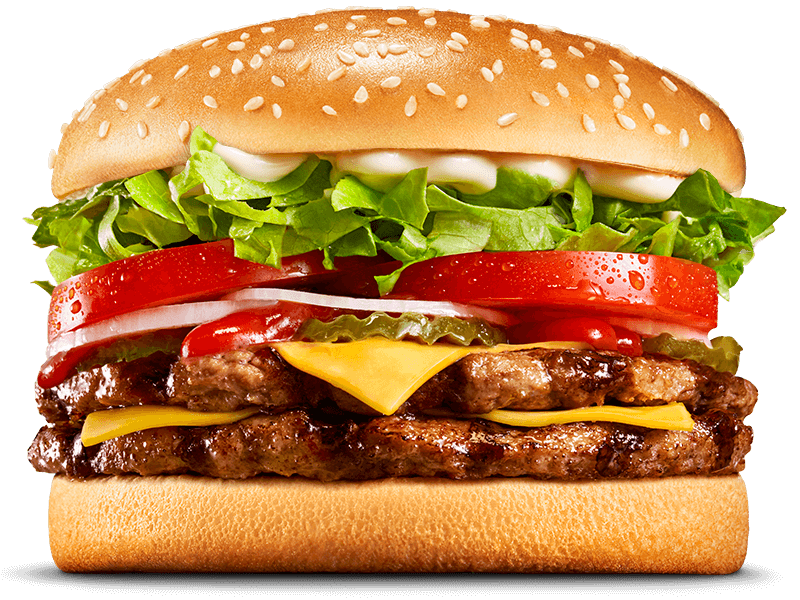
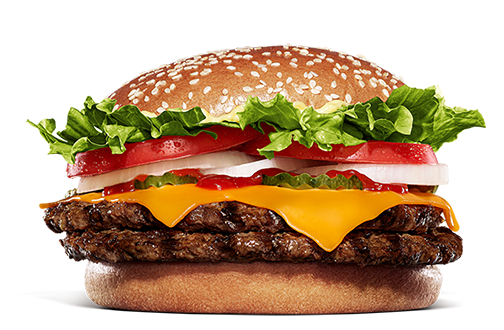
- A video posted by McDonalds Canada reveals how they stage the burgers for photographing them. They shift each layer backwards (bun, meat, etc) so that the ingredients of the layer are more visible when photographed. The top bun ends up being a few inches backward compared to the bottom bun.
- However, the buns on the Japanese menu are much more obviously askew than other countries menus, which is the interesting point I imagine the OP was getting at.
Compare for example with the UK images which are much more symmetrical:
- I used to work in food photography (in an admin role).
Sprayed on glycerine for condensation on cool things. cigarette smoke for steam.
It was super nasty, but the photos looked good.
- [delayed]
- I was told once everything in those food photos in the United States had to be edible. You could substitute sour cream, but not glue, for whipped cream. I wonder if that was true.
- I remember reading a book in the '80s where one of the characters was a food photographer and mentioned that some kind of plastic had to be used for the cheese in hamburgers or it wouldn't be realistic.
But also many post 2000 claims that it was all actually real food because of various "truth in advertising" regulations around the world.
The linked Canadian McDonald's video would be one example.
- Elmers glue is edible.
- Surely all glue is edible, you just have to commit a bit more to some glues than others.
It's like that saying about mushrooms: "All mushrooms are edible. It's just that some mushrooms you only get to eat once."
- I recently watched a video about death cap mushrooms (the deadliest, supposedly), and apparently about 80% of people still survive (requires prompt medical treatment), not that they would want to repeat the experiment. Apparently, the mushrooms even taste good.
Anyway, edible normally means "safe to eat," not just "possible to eat." (As you are no doubt aware). IIRC, Elmer's glue is considered safe to eat though not necessarily appetising.
- Elmer's white glue is "non-toxic" but today, it is made with synthetics. Since my youth in the early 80s, Elmer's has never been particularly appetizing or appealing to put in my mouth.
I believe that the stereotypical "craft food" is actually paste, which is often based on starches like corn or wheat. Children are very likely to put paste in their mouths and try eating it, because it is indeed based on food products.
I've frankly never been in a school that provided a lot of paste, and the switch to Elmer's glue may have been a strategy to stop kids from consuming the food-based stuff. However, I was in a summer science course where we crafted "Oobleck" which is also sort of "edible" if you like eating clay that's been squeezed between the filthy little hands of 8-year-old boys.
- That would be the charitable reason, but I wonder if it could be more related to their laws on accurate representations in ads (Act against Unjustifiable Premiums and Misleading Representations [0]).
[0] https://www.japaneselawtranslation.go.jp/en/laws/view/2303/e...
- That doesn't seem to bother burger king though: https://www.burgerking.co.jp/menu
- IANAL, so I won't quote relevant text from previous link, but I believe promotional photos need to be of the actual food (ie not substituting shaving cream for whipped cream to deal with melting issue), but it will likely be a very picturesque version of it, though they are indeed (less, but still) askew in those photos. I looked a bit further, and it seem the American BK uses similar (though not exact) photos of their JP counterpart now, maybe it's a trend, but I did find a rather stark contrast with their AU counterpart (naming is another story):
https://www.hungryjacks.com.au/Upload/HJ/Media/Menu/product/...
compared to the Japanese:
https://www.burgerking.co.jp/images/menu/web/main/2025/09/04...
- That was my first thought, too. Never ever looked a burger from any of the well-known chains the way it looks on photos.
- Please don’t compare a beautiful practice with the symbol of ultra-capitalism.
Probably it’s some sociopathic psychologist working for McDonalds that find out that askew buns makes them sell 0.2% more units per year, which is around half a gazillion dollars in increased revenue.
- Maybe 500 years into the future burger bun photography will be treated as a "beautiful practice" while nutrient syringes are getting shoved into our other buns.
- Why can't it be both?
- Because it's not. From another comment: "Being slightly aswew really hard to fight the subconscious urge to reach out and 'fix' them. I almost want to rush out to a nearest McDonald's right now and buy one of these burgers"
Urge to fix something, or tricking one to spend money for a novelty is quite literally the opposite of wabi-sabi.
- I like how it makes the burgers look more "laid back", like some cool sunglasses-wearing skater/surfer dude leaning back, or a pin-up model whose pose invites you in. Standing up straight is for the man and that's not how I want my burgers to be.
- These burgers aren't working for the man
- I was thinking more of south park characters, maybe ike:
- That would be Canadian McDonalds.
- Don't kick the burger
- As we can see, it takes deliberate effort to look laid back ;)
- No idea why we're discussing burgers or the man, but pretty funny to learn the phrase goes back to freaking BCE
- I just want to note how fast this page is.
806kB transferred. 766ms to finished. I hit the DFW AWS CloudFront pop from here.
Similar page for BK https://www.burgerking.co.jp/menu
31MB transferred. 6.5s to finished. Hits the DEN pop (but it's a "miss").
I am in Colorado. uBlock is on.
Even if you don't count the 7.5MB of fonts on the BK page, that's wild.
- McDonalds actually seems to have learned to take latency seriously. When their touch screen ordering systems were first deployed, the delay between tapping on an item or button was quite noticeable. These days the systems respond nearly instantaneously. I'm very glad there are people inside such a large organization that pay attention to that aspect of usability.
Now if only every other website on the internet would learn that latency matters...
- If that's true, then their mobile app team must be both completely separate and isolated from all communications.
Because it's really bad. And it's been bad for a really long time.
When all I want is to order a cheap cup of coffee, I get to stare at a throbbing box of fries while it tries to figure that out.
Get to the restaurant and signal my arrival? More throbbing fries.
Sometimes the fries never stop throbbing and the only way to get away from them and onto the next step is to force-close the app and start it again.
When I manage to accumulate enough points to order a free sandwich? "Sorry, something went wrong!" This leaves me with no sandwich, and no points. (I guess I was going to be disappointed no matter what -- maybe they're doing me a favor by fucking it up so bad that getting the food is impossible, since reaching the melancholy destination takes fewer steps this way.)
Over the years I've used multiple phones, from multiple manufacturers, with multiple carriers. It's not me; the app is consistently bad.
Oh. And speaking of carriers: Back when I had metered service, I used wifi where I could. The McDonald's near where I lived had free wifi, but their network had this app firewalled. It'd work anywhere but inside of the building where it was most useful.
But, yeah: The touchscreen kiosks are a bit more responsive than they initially were. It's too bad that they're gored up with finger grease and other bodily effluences, though, because they barely work with the layer of filth that covers them.
- I've never once been able to use the McDonald's app over several years and multiple devices. I originally wanted to check the nutritional info of the menu. Download our app, it says. This website is better in our app, it says. The order screen constantly asks me to enter my app code. Collect points in our App! Do you have our App? I give in and finally download the App. "Something's not quite right", you didn't install our app properly (Aurora Store instead of Google Play), you didn't set up your device properly (unlocked bootloader), you did something wrong to upset the App and it will not run. Oh no, we can't let you see the number of calories in your burger with an unlocked bootloader!!! This stupid app has stricter protection than any of my banking apps and I will never be able to escape constantly being asked to use it
- I have a half-serious theory that their mobile app is for price discrimination. The best deals are only available in the app, but the experience is so bad that you'll only use it if you really need to.
- Here in Japan they started to forward me to the app page when ordering. So you are forced to use the app with a mobile browser. Even though the website could do it perfectly fine in the past.
I do not go often, but if I do I prefer to sit, order in the page and they bring it to your seat. I dont like the Kiosk.
- Anyone is free to use the app to get the best deals. They just need to be willing to put up with its behavior.
That sounds, to me, less like something discriminatory and more like something that is simply sadistic.
- Price discrimination is basically corporate speak for giving discounts to those who wouldn’t or couldn’t afford to pay full price.
And it makes perfect sense in this context - if you make $200k salary you probably don’t care enough about a $0.30 discount to fiddle with an app for 5 minutes. But if you’re living on a few dollars of food budget, you probably care a lot about that 30 cents and would fight for it. So making the app bad allows them to segment the market to get an extra 30 cents out of the person who can afford it without excluding the low-budget person.
- The wealthiest person who I know well would absolutely fiddle with an app for 5 minutes to save 30 cents on a sandwich at McDonald's. He's cheap AF.
But even if he weren't that way, making the app deliberately bad to eek a few more clams out of a subset of people is perverse. Deliberately erecting barriers between the products and those who want to buy them is not how business is successfully done at this level. They aren't selling Ferraris here.
"I want to stick it to these rich guys, so I'll make the app terrible!" doesn't make sense. They're neither smart enough to do that, nor dumb enough.
The simplest explanation is that in a world of shitty software, this software is also just shit. :)
- I gave up on the app completely when I placed an order via the app, was waved past the payment window, then the order window denied it was placed (and paid for). I showed them the phone with the order number still on it. They said it could be a screenshot. After arguing for a while, I drove away without food.
I eventually got a refund after digging throw their web site for an email address, and emailed them the statement showing where it has been paid. With the back and forward while they asked for evidence, it took over an hour of my time in the end to get the refund. It wasn't the money. It was the principle.
The app is by far the slowest, most unreliable way to place an order with them. Period. The next slowest (although far better) is the kiosks. They also unreliable when the printer doesn't work (which is most of the time), and you make the mistake of forgetting the receipt number. Other fast food outlets have solved this problem by getting you to enter your name. That's beyond McDonalds apparently. The fastest, and most reliable way by far is to talk to a human.
The order should be the reverse. It is beyond me how they get it so badly wrong. Maybe price discrimination is the reason. Nothing else makes much sense for an organisation of the size and resources of McDonalds.
- their app has some very strange flow to it, i cant tell if it feels designed by committee or if there are just so many strange use cases that its somehow the least bad given some arbitrary constraints i cant begin to understand.
even selecting my restaurant is a constant battle. the closest restaurant to my house as the bird flies is not the closest restaurant. even the closest by miles driven involves much more complication than the one i always want to pick. it constantly battles me that i have selected a suboptimal choice. maybe learn that when i am at home, i want to default to my preferred choice, every time, unless i say otherwise.
- I'm only 50/50 but I swear they have only one app for the entire globe.
Can you imagine how complex that must be vs just making like 100 different apps in each country.
But eCoNoMiEs oF sCaLe
If you're balking at makin 100 different apps, then for reference, I am pretty sure my local mcdonalds - just the one restaurant turns over >10 mill a year, so you get a sense of how much they'd want to invest in, idk, the ordering front-end of every maccas in Australia
- At least in Japan on iOS, they have their own app, and it’s great.
You can find a seat first, then order directly from your seat, for delivery to your seat (helpful since some McDonald’s in Japan are really busy, and are very vertical, so you might need to climb up some two/three floors to find a seat!).
You can even order McDelivery and they’ll deliver McDonald’s to your house on McDonald’s branded mopeds.
It’s also been pretty fast, even on a slow internet connection.
The only two problems I’ve had with it are:
- Although the menu and the rest of the app is translated to English, sometimes coupons are only in Japanese, and not translated to English (I’m guessing these might be store-specific) (although it’s easy enough to translate that using your phone’s translator) - I’ve had Apple Pay occasionally be down and fail to work, which forced me to redo my whole order, then realize that Apple Pay is still down, then do my entire order again with a different payment method. Although it’s only happened twice a few months ago, so it could be something that they’ve already fixed (or I’m quite unlucky).
Edit: Forgot to add, but no issues like what basch seems to experience with their country’s McDonald’s app. The Japanese one always gives me a sorted list/map view of my closest McDonald’s to pick from, with any favourites marked at the too.
- That's how it was in the US, too. Sit down anywhere, fire up the app[1], order whatever, enter the table number and they bring it over. That part of the service was consistent and worked well.
The consistency all changed with the covid shuffle.
Now, it depends on the location and their mood at the time. Sometimes, they bring the food out on a tray. Sometimes, they just dismissively put it on the counter at the front in a paper bag and walk away from it without a word. Sometimes they fill the drink for you; sometimes there's a rack of cups and an implied expectation that you just figure it out yourself; sometimes they bring over an empty cup; sometimes you have to beg them for that empty cup. It sucks.
Same with the kiosk. They have these neat table tents with numbers; they're actually BLE beacons that work with tracking hardware inside the ceiling. They help the employees to get a good idea of where you're sitting before they even leave the kitchen. But sometimes there are no table tents to be had (even in an empty restaurant), and sometimes when they do exist nobody gives a damn about them.
As systems, these things work fine. I've seen them work. But I've observed the implementation of them in recent years to have been an unmitigated mess, and this mess is clearly the result of a geographically-diverse problem with bad local-level management.
Buying a cheeseburger and a Coke at McDonald's -- which built an empire around simplicity and efficiency -- should never be an adventure or a guessing game. It should be the most straight-forward process on Earth and completely devoid of surprises.
But it isn't.
[1]: Well, within the app's limitations. I did rant about that in another comment, above.
- I have been in the situation of standing outside an after-hours pick-up only window at a McDonald’s in the UK, able to talk to the staff, but unable to order because they only accepted app orders and I only had access to the Canadian app.
- I tried to log into it just now to see which McDonald's it would select for me at home and whether it would be callous about changes.
But when I touched the icon to open the app, a big M appeared on a bright red screen and then it died and returned to the home screen less than half a second later.
(Good work, fellahs! Good work!)
- The US app is still laggy (even on the iPhone 17 Pro) and constantly logs you out. My theory is that they set the login timeout to a low number to make it harder to accrue points.
- I remember the exact opposite of the McDonalds touch screen ordering systems.
When they first came out, everything was snappy because it wasn't loading recommendations or additional tracking. There were a lot fewer customization options.
Now, you click on something, and you wait a while, and then it asks you what you want to change and if you want to add these other suggested items. When you want to check out, it lags and then pops up another dialog asking if you want to add more items to your order.
- McDonald’s in the U.S. is targeting market segments that either have low-price cellular data plans or are operating cellular devices in cars where coverage is often worse (especially for travelers!), which requires minimum server latency since you have to turn around those data packets instantly in order to queue them into their customer’s lowest-priority on-the-pole cellular pipe. Thus why they continue to provide a series choices that have such a high round-trip cost of user interaction: everyone wants to customize, no one wants to suffer a complicated UI, so simple serial dialogs served at minimum server resources per request it is. I would hazard a guess that the process fervor they design into their kitchen operations means that internet ordering is shown within the same metrics dashboard as store ops.
- I refuse to go to McDonalds anymore because they refuse to acknowledge you, won’t take your order, force you to use those stupid terminals.
- I actively seek out such establishments because I'm an introvert and I don't want to talk to people. Japan is a paradise in this way... an extremely large number of restaurants do not require interacting with a human to place your order.
- I'm the same, although I understand OP's sentiment to a degree. I also like no interaction with someone who is potentially or visibly sick and contagious. That is why I never stand in the service line at the grocery store. It's always self serve only.
- As a customer of McDonalds in both countries: the counter is much better in Japan, especially now.
I was always proud of the American stores having lots of nice napkins, sauces, etc for self-service but we lost that years ago.
- Why do you want them to take your order if you have access to a terminal?
- Because it's 10x faster. In can say "big mac meal" and be done while the kiosk ordering machine is still loading the first screen.
- It’s pure efficiency. I always customize my orders and it’s too many taps on a usually laggy system. I’m also usually ordering for 3, all customized. I can tell a cashier the entire order in less than 20s. And somehow their UI allows them to enter it just as quickly. It’s not a muscle memory thing either, it’s literally the interface and hardware they use runs fast and is perhaps designed with efficiency. The kiosk app is designed for dummies and takes forever to use. I’ve tried it at several places and it’s always my take away. When I use it I literally watch 5+ people place human cashier orders before I can place my order.
I’m not against talking to people for transactions. I’m against being forced to use inefficient machines.
- The cash register doesn't try quite as hard to upsell you as the kiosk.
But yes, the cash register should be able to support the data entry skills of teenagers growing up with TikTok.
- Just wait until you have to make a complicated order in a country where people don't speak English very well, you will be very thankful for the kiosks. Even the US has two languages.
- I prefer the machine because the order is correct 100% of the time. When I used to have someone take the order, I had to double check the receipt to make sure the order was correct.
- In the one sentence he wrote, he clearly told you.
- I'm not sure - their kiosks in Poland are horrible, nagging you to order more. Event hardware is broken, as your recipe with order number tends to get stuck in the machine. What makes me wonder what our Fiscus thinks about it.
- Except they make you tap 2-3 times more than it takes to make your selections. That's business guys though, not the devs.
Do you want to add one of [x]?... No. How about now, add one of [x]?... No. Do you want to round up your total to [n]?... No. Do you want to eat in, even though we'll still put it in a takeaway bag so this option is really just the equivalent of a close door button on an elevator in that it does nothing except placate you?... Yes.
- I'm sure these two behaviors depend on each other. Instantaneous response allows the company to spend more of your attention answering questions rather than staring at a spinner.
If you've ever watched TV with someone who gets distracted and sets down the remote after each button press while Netflix's UI slowly loads, you know that three or four UI interactions can turn into a several-minute ordeal.
- I have been in elevators in which it does do something. I've timed the difference. This foul rumour must die.
- They effectively don’t do anything in most elevators in the US during normal operation. The ADA requires elevator doors remain open at least 3-seconds. Usually, people-moving elevators are most efficient when doors close as quickly as possible, so they start closing exactly at 3 seconds. I’ve used elevators with less common use cases — huge ones in hospitals, freight elevators, hotel service elevators — that might be configured to stay open longer than the 3 second minimum, assuming people will push the door close button as soon as they’re ready.
- Nothing you've said indicates why the button does nothing.
I can enter an elevator is under a second and push the button. This is doubly faster when not waiting for the doors to open fully, effectively making my button push at 0 seconds from door full open.
If you're saying "3 seconds is not long to wait, so it's the same as the button doing nothing", this is false, untrue, and I often use it.
Alternatively, requiring elevator door to wait 3 seconds as a default does not negate someone overriding that.
I've manipulated the button and seen timing differences. It does work. It does make a difference.
Did you mean something else?
- It's choice exhaustion, a common dark pattern. You get worn down and that makes you more likely to spend more than you need
- Yeah, but there's a risk that people won't come back because it's exhausting.
I ordered from the wrong location once, and it's fine, they don't work the order until you arrive, and they refund it at the end of the day, but they lost a sale because I was so frustrated that I just drove home without picking up food like I was expecting to.
And the way prices are now, you need to order in the app if you want a chance at value, so if I don't have time to poke at the app, I won't go.
- Wait, seriously? They make you show up before they start and the orders can't travel between locations?
I've only used the app a couple times so I only knew the first half of that.
- I mean... I could have asked, and they might have been able to transfer, but there's no user accessible way to make it happen, and you can't (or couldn't) make a new order while one was pending. But I was coming back from kid's hockey practice and tired and now mad at mcdonalds, so I wasn't going to wait in line to ask. I have ordered to the wrong Starbucks, where they do start your order when you place it, and they were able to see the order and remake it at the one I actually showed up at, but Starbucks is always super nice whenever anything goes wrong, even if when it's my fault, which it usually is.
Not being able to start a new order is also great when you had a successful order that the app didn't notice and then you have to clear app data days later when you want to order again... but I think McDonalds may have added a button to just order anyway in the past not too long.
- Annoying, for sure, but at least it’s not an unpredictable 800 keystroke, zero agency, chatbot interaction.
- I repaired some of ~10 years ago (Australia)
Just low end uncustomised NUCs overheating behind the screen
No idea if that’s still the case
- Yet the Maccas app in Australia is atrocious for me. Takes >30secs to load the huge ad that pops-up before you can get to the menu. Close the ad and the menu takes another eternity, then inside each sub menu, you wait another eternity for the pictures to all load. Meanwhile, all of this content could just be downloaded in the background and cached for future loads...
And the app continues to get worse each update. The checkout process used to be quick and responsive. They've since made it require additional clicks and take much longer.
- Is there anyone who uses the app and orders premium options and uses coupons that don't represent much of a discount... yet, the app STILL takes a long time to load?
Causing delays for unprofitable customers. Any business is going to do it if they can. /tinfoil
(Their margins shouldn't be this bad.)
- I don't want to touch their greasy in-store touch screens that thousands of other people touch. And those "deals" are way cheaper per user than large marketing campaigns, and probably more effective too.
I wonder how slow you can make an app before a significant number of people will just order elsewhere? Give it a few more years of downgrades to the app, and I'll have reached it.
- I stopped using those because I'm faster ordering at the cashier. The delay was awfully long with 3-5 seconds. It's now improved but 2-3 seconds is still ridiculous. I wouldn't say they've learning anything. That's probably just a side effect of something they aren't even aware about.
Germany btw
- My experience with them to this day is still abysmal... often have to touch 2 or 3 times to get it to register and there is still a noticeable delay, as if I'm (probably so) interacting with a slow/bloated webpage. The mobile app is even worse for me with added latency and surprising(ly delayed) large content changes that affect what you're trying to click on.
- Here in Singapore the terminals work well! The latency has definitely gone down. Ironically the Japanese McDonald's website loads faster than the Singapore one... so they've got some work to do.
- They probably never wash them so there is this insulating layer of grease and grime on the screen that inhibits touch detection.
- Bet someone here worked on them
- Probably. Similarly, Walmart has a great eng org for a company of its size.
- As someone who works there, as a Data Scientist, I can't scroll past this without expressing my disagreement. I've never seen a worse eng org. Coming from Uber, it was and is shocking how dysfunctional Walmart tech is. Maybe my standards are too high.
- When I temporarily lost access to my phone, I contacted Walmart dot Com Support. They solemnly informed me that they had no means of overriding MFA for my account or helping me to recover it without the phone.
Support told me that I was better off abandoning the account and creating a new one.
While I did recover my phone, I decided that it was best to simply stop doing business with Walmart, and I haven’t missed them one bit!
- Didn’t they start that from acquiring jet.com?
- IIRC, they revamped Walmart.com around the time of the Jet.com acquisition, so that probably had something to do with it.
- Really? Walmart does some spectacularly stupid, costly, and obnoxiously customer hostile stuff.
- But they do it with much uptime, and very low latency!
- I know this is tongue-in-cheek, but yes, all I was saying is their eng org. I'm not speaking on their Customer Service or business practices.
- I would imagine it is intended so it loads quickly on mobile devices using slow data connections in crowded areas. I have noticed web pages taking a lot longer to load when I am in a city centre on a data connection. Its pretty cool and may even give a competitive edge if you can still be snappy in that situation when your competitiors arent.
- It’s worrying, or perhaps just sad, that 766ms for an initial page load is considered especially noteworthy. Six thousand milliseconds is just awful.
- But it feels snappy.
- When I was a lad, 30ms was considered the worst latency allowable for telephony unless you were dealing with satellite links, in which case you taught people to use a simple variety of radio protocol (over).
Nowadays with all our fancy crappy comms, 200+ms is considered normal. Ever noticed the lag on a Teams call?
- OP is not talking ping but page load time. Depending on when you were a lad pages could take up to 30-60 second to load on a modem.
- It feels snappy _compared with most sites_.
That's the point!
It feels _very_ sluggish if I try it after spending some time using a windows 98 VM, or a library catalog from 1990.
- Not if you were browsing the internet of that time using a 28k8 modem.
- BK's page is also completely unusable without JS. It's an "appsite", not a website.
McD's is readable with JS off, because the "meat" of the content is plain HTML. I also like how the other links here are to URLs of the form "/en/products/nnnn", which further reinforces the fact that the pages are server-side.
- It's fast food, what do you expect. ;)
- they gotta make sure you learn about those burgers as fast as possible.
- Crazy fast but the the way all header text sizes change briefly flash between values every time you switch tabs would drive me nuts if I was responsible for this.
- +1. not just that front page, click on any of the menu. Good prefetch and ttfb optimization there
- Hungry people are impatient. Some have learned this and how to gain another small edge with it.
- This is such a dastardly psychological trick. Being slightly aswew really hard to fight the subconscious urge to reach out and 'fix' them. I almost want to rush out to a nearest McDonald's right now and buy one of these burgers so that I can make sure that it's buns are aligned properly....
- In a culture that likes things neat and orderly lined up!
- Interesting, I couldn't care less about those shapes. Where is the difference in our minds? Because I haven't for single a second thought about "fixing" it, nor cared about it - even after you mentioned it.
- > reach out and 'fix' them
maybe by eating your way into the problem...
- Oh, that is absolutely how all of mobile game ads now are designed. It will deliberately fail a very simple task to poke our desires of "Huh, I can do better than that"
- What if I told you that you could do this without flying to Japan. You’ll probably be reprimanded for holding up orders.
- I believe it has to do with
https://boingboing.net/2026/04/08/japans-truth-in-packaging-...
- I don't think so. Mos Burder and Burger King's websites don't look like that.
- Mos takes it even further, the top bun is completely off.
- It isn't showing anything that would otherwise be hidden, I think this is a stylistic decision. Looks cute and more natural to me.
- https://www.japaneselawtranslation.go.jp/en/laws/view/2303/e...
>No Entrepreneur may make a ... representation where the quality, standard or any other particular relating to the
>content of goods or services is portrayed to general consumers as being much better than that of the actual goods or services
- To me the buns still look far too perfect and fluffy. I don't know if I've ever received a wrapped McDonald's hamburger that hasn't been smashed flat to some extent, with cracks in the bun. The ones that come in boxes fare a little better but they still look as if they've weathered some turbulence.
- I'll admit to McDonald's Japan being a guilty pleasure of mine. Most things I get are pretty close to the picture. It's not perfect of course, but it's McDonald's, I'm not exactly expecting gourmet food and presentation. The fries kick ass though, I almost always get them hot and perfectly golden brown.
- The quality of the fries is directly proportional to how good the attendant at the fries station is at following procedure and not dumping loads of pre baked fries in the keep-warm bin (don't know the English McD's phrase for it). They get worse from being under the heating lamp for too long or being left over the frying pan too long dripping. It's not rocket science but many don't want to be shouted at when the station runs out of fries so they overdo it on the supply. This is exaggerated when a rush is winding down and the production isn't scaled down quickly enough.
If I remember correctly there is a small trouble shooting section in the floor managers quality guide (small booklet with all procedures, weights, temperatures, stack height of boxes etc) which hints you at what is going wrong if you ever want to know and get your hands on one. Though that will have changed since mine is ancient.
- I figured as much, and I would expect a Japanese mcdonalds employee to give slightly more of a shit than say, an American employee so that probably explains the discrepancy in the average experience if you were to compare them.
That reminds me of when I worked at a movie theater. We used to serve the popcorn scooped directly from the popping machine into a bucket. But then they had a corporate guy come in and install warmers so we could pre-load a bunch of buckets/bags of popcorn and hand them out when ordered. Of course the ones from the warmers aren't as good as the ones freshly popped, and this guy gave some bullshit about "ackshually popcorn right out of the popper isn't as good, it needs time to dry". It's not like the customer is about to take their popcorn into a multi-hour sitting activity where they have time to "let it dry"...
I always tried to hook up the nice customers with the fresh stuff when I could, it felt criminal handing them one out of the warmer.
- At least, in Japan, they're generally as advertised.
- Honestly, this looks far more like a stylistic choice that the company thought was fine? And... it is? It actually gave me a bit of a smile. :D
- Isn't that more about size? Instagram video seems to corroborate that.
- Greek and Roman columns would have a slight curve because it was more pleasing to the human eye: https://en.wikipedia.org/wiki/Entasis
> Its best-known use is in certain orders of Classical columns that diminish in a very gentle curve, rather than in a straight line as they narrow going upward. The human eye would allegedly perceive that the middle of the column was diminishing in a concave curve halfway up the column, and entasis corrects this.
- It's just burger wabi sabi.
- I think this is the reason.
For a deeper look at this philosophy of craft you won't do much better than The Beauty of Everyday Things, by Soetsu Yanagi: https://uk.bookshop.org/p/books/the-beauty-of-everyday-thing...
- You guys learn one term...
- I was going to say feng shui, but the handful of times I've seen it brought up in the context of food plating the whole point was harmony and balance . . .
Having food askew is probably messing with the eater's qi.
- Yeah just say horse radish geeze
- You're missing a syllable
- This seems the most likely explanation to me.
It's just much more visually interesting than a page full of perfect burgers. Each one looks like a unique thing from the real world; they don't "look AI", as the kids say these days.
- Japoneses aesthetics favor assimetry. There's a lovely book , Book of Tea, that have fun with west tastes https://www.gutenberg.org/files/769/769-h/769-h.htm
- Burger chizutsugi needs to be a thing.
- Some of them, it seems like it could be to show the sauce more clearly:
https://www.mcdonalds.co.jp/en/products/4530/
But others, it's just inexplicable:
https://www.mcdonalds.co.jp/en/products/1010/
Burger King isn't doing this though (close the two popups to see the menu):
https://www.burgerking.co.jp/menu
Is it some kind of trendy style? It does feel kinda... cute.
- Yes, my guess is that this is the result of a few food stylists or a single agency holding an opinion. It's not at all unusual as far as styling food goes, but maybe so for fast food.
- I know that burgers are usually stacked to tilt away from the camera in photography to show the contents. (ie the bottom bun is laterally closer to the camera than the top in a downward view) I don't know why you would stack them to the side because it's more obvious, and in this case you can hardly see anything different at such a shallow angle. It's almost like they stacked them and then took the picture from a randomly selected angle or something.
- BK is doing it in the very first one.
- Honestly, it’s adorable and I love it.
- It's to get people on social media posting about it so more people go look at it out of curiosity. Result is lots of people looking at the McD's menu.
- Anyone notice that the plain burger is only 190 Yen ($1.20) vs $3.99 in the US. https://www.mac-menus.com/
- > The Big Mac Index is a price index published since 1986 by The Economist as an informal way of measuring the purchasing power parity (PPP) between two currencies and providing a test of the extent to which market exchange rates result in goods costing the same in different countries. It "seeks to make exchange-rate theory a bit more digestible."[1] The index compares the relative price worldwide to purchase the Big Mac, the flagship hamburger sold at McDonald's restaurants.
- Food in Japan is incredibly cheap. I never paid more than $6 for noodles, sometimes just $2. In the US it’d be $12-$20 (and worse).
- In recent years Japan has been cheap due to the weakness of the yen, which has been trending 160/1 USD. Just 10 years ago it was nearly twice as strong. When I visited a couple years ago (2 weeks in Tokyo/Osaka/Kyoto), everything seemed to be surprisingly cheap.
- Yes food, as well as alcohol, was quite cheap. Had very few meals that came out to more than $10, alcohol (about $3-4/drink) included.
- I purchased a couple pairs of running shoes that were about 30% cheaper than they were offered for sale in the US.
- I purchased an umbrella for $45 that sells in the US for $75.
- An all-access pass at their premier amusement park, Fuji-Q Highland, was only about $40 - when entry to comparable parks in the US can easily be twice as much.
- I recall the subway came out to around $1.50 a ride, roughly half what the NYC subway costs and the 1 and 3 day passes made it ridiculously cheap (IIRC something like $5/$10).
- I only used capsule hotels, but those were only $15 to up to $38 for a luxury one, almost all in desirable/touristy areas.
- I also took a look at apartments, and in decent areas in Tokyo you can find small apartments for about $1500 that would cost ~$3500 in Manhattan, or maybe $2000 in medium sized US city centers.
- this is incredibly weird to read. once upon a time japan was notorious for its high food prices
- Is that in comparison to the US? Because US food was cheaper than dirt in the past before all the food processing conglomerates decided to leverage their dominant market position to increase margins.
- If you want to pay a lot for food you still can. I imagine this is the case anywhere. If you care to look, you can find an amazing meal on the cheap. If you don't, you may end up paying a few bucks for a single apple.
- This is so strange to me. Hasn't Japan been printing money for like decades? How isn't their inflation completely out of control by now?
- Printing does not of its own cause inflation. In Japan it seems that efforts to inject money into the economy end up immediately stuck in low interest savings accounts.
- Folks are not paid terribly high wages in Japan. I saw McDonalds "we're hiring" signs when I was eating there and I don't recall the wage but it was below 1000¥.
(That being said I tried to calculate the ratio of hourly wage to McChicken sandwich and Japanese workers came out with a better deal than Canadian ones)
Are you familiar with the Big Mac index that The Economist (magazine) publishes? It is a cool spin on PPP (purchasing power parity).> ... I tried to calculate the ratio of hourly wage to ...
- A little curious about this website, I just pulled up the local menu (Texas) and the same burger is $2.19.
- I remember when they were $0.49
- I would imagine this is to make them look less machine-perfect and more "home-made"
- If that marketing works on anyone they need to be examined. McDonald's is the definition of machine repeatability.
Except with pickles. They never get the pickles on the actual burger.
- >Except with pickles. They never get the pickles on the actual burger
there should be some sort of named law (in the "law of headlines" sense, not legal sense) about mcdonalds and pickles.
i dont like pickles. i ask for no pickles. i always receive pickles. the people that want them? too bad, they put them on mine instead apparently
- One of the benefits of the move to app ordering is that I know for certain the order-taker got it right. And I can bookmark the custom order for later reuse.
Now it's just down to the kitchen to fulfill the order correctly, and while it's not 100% it's a lot, lot better.
- It's always the kitchen for me across food places (in Australia). Ending up with pickles when I removed them. Ending up with coke zero instead of coke. But the worst is ending up with anything mock meat!
- McDonalds once forgot to actually put the patty on my burger. No idea how they managed to do that.
- Do you think that kitchen was using a robot to build the burgers?
- And of course whoever set up the menu on the app to have programmed in the appropriate option in the first place.
- Once I ordered extra pickles and I got them - in a vertical stack of about 6 pickles.
- Imagine ordering online late a night from a hotel room and the MCD missing my required condiment ketchup with the order.
- That's my guess, too. I live in Japan and eat at fast food places from time to time. One feature of McDonald's is that the food preparation area is almost always visible from the customer area; I can see the people assembling the burgers, handling the fries, etc. At Yoshinoya and other domburi places, even though the shop is much smaller than a McDonald's, I am usually unable to see the person actually putting the rice and toppings into the bowls.
I suspect that efficiency of layout is the top priority in both cases, but I wouldn't be surprised if McDonald's is also consciously trying to show that their food is human-prepared, both in the store design and in their food photos.
- It's about communication, the cashier needs to be able to shout "I need a Big Mac no pickles" and have the grill person hear it.
The new ones near me now have touch menu that customers enter and swipe payment instead of cashiers and the grill area is no longer visible.
- Biggumakku!
- It also makes them appear larger, there's so much in there the bun can't contain it all.
- Japanese food prices are ridiculously cheap. Well that's true to pretty much whole Asia too. Even in HK which I consider more expensive than Japan a Big Mac is only 2.9€ (27 HKD). And that's McD, local food spots are even cheaper. If you have the money there is no better time to have a holiday in Asia.
A Big Mac is 10€ in France...
We are ripped off big time in the US and Europe for nothing.
- My guess about how/why McDonald's is so cheap in Hongkong: (1) Guangdong province is just north which means there are lot of farms with very cheap labor. (2) Minimum wage in Hongkong is frightening low. As a counterpoint, I would offer that retail/commercial real estate is crazy expensive. I have no idea how this translates into my McD's is so damn cheap in HK!
- american fast food learned that if they try to hit the business market they can sell higher mark up items. it's why mcdonalds for a long time went to premium chicken and premium burgers that were more expensive. they changed strats, but for a while in the US that's what a lot of fast food was doing. they were chasing whales.
- When I was in cooking school there was a brief lesson in photo presentation. For something like a burger you would skew from front to back, going upward to the top bun to show the layers better but it wasn't visually noticeable that it was skewed on the photo. This seems like the same thing except the ai has chosen the side view instead of the frontal view, thus making the skew very noticeable.
- Aren't there more strict laws on marketing imagery being similar to their actual products in Japan? Wonder if that plays into it, or if the photography team was just having fun.
- Is it me or are those prices dead cheap compared to UK / US?
- They are, wow. I had this age old Yen conversion wired into my brain: 100 Yen is one Euro. Boy did that change in the last decade or so, it's only half that now.
- Wabi-sabi.
- They're not askew, they're in _italics_
- I think you mean italics.
- Seems like the right way to display them, no? If the buns (and all the layers of ingredients) were stacked perfectly, you wouldn't see very much of the ingredients inside.
The US site doesn't use this placement strategy, though. The Japanese one looks better. No surprise there.
- Another mysterious thing is that McDonald's Japan burgers taste completely different from European or Americans. The spices and sauces there are not the same, I suspect they made it that way to make it tailored to the local preferences!
- This is not so mysterious, when you consider the state of any ethnic food in the United States.
It is basically expected that any foreign chef must adapt their idea of cuisine to fit the available ingredients and processes in the host country. It is simply a fact of life that there are many fruits and vegetables, to begin with, that are rare or nonexistent here in the USA. And centuries ago, Chinese food as we know it originated in San Francisco, based on ingredients that could be readily acquired in San Francisco on an immigrant's budget.
Some produce and even animals can be cultivated stateside by immigrant communities, but it's simply prohibitive to try and exactly reproduce foreign cuisines here. You will basically find that American fruits, vegetables, and animals are adopted and "Western fusion" cuisine rules the roost here.
It may be surprising that a "Three-Ring Binder" franchise like McDonald's should have local variation, when their pride is being completely uniform and predictable in the USA. On any American highway I can pull into a McD's and count on having exactly the same meal as anywhere else. But if you cross an international border, a hemisphere, into new climates and terroirs, you should expect significant variation.
- They must get a kick too when they see our stoic, rigid, perfectly postured McWiches. Great post, OP +1
- I remember in India's McDonalds there was a Maharaja Burger. In Lebanon they have falafel on the menu. This Japanese menu looks really enticing to be honest.
- Wonder if this is due to Japan’s marketing laws? Doing it this way exposes more of what’s between the bread.
- This is doing a bigger number on me than it has any right to.
...why are they all skewed, save for the buns that are already lopsided? Those I'll note are perfectly seated. Some are more skewed than others. Like the Big Mac is only slightly skewed.
Is there a pecking order to how skewed they are? Some social hierarchy of sandwiches?
- Often (not always) the top bun is the worst offender, but it’s most certainly not just about the buns: if you look closely, the unique characteristic of Japanese McDonalds (separating it both from McDonalds in other countries as well as from other similar chains in Japan) is that in each photo every burger layer (be it bun, meat, lettuce, etc.) is offset by a seemingly-random factor on its X axis.
I’m sure discussions like this is exactly why they did it. Considering other chains in Japan don’t do this, it clearly has nothing with regulations (unless those are really unevenly enforced).
- they're all tilted so the new comer don't feel so awkward with that bump on it's head --source: me
*edit: I'd like to also comment on the crazy lighting going on.. if the photographer of this can see this comment, please take a pic of the setup..this look quite intense
- Why are Japanese burgers significantly cheaper than the ones in the US? A Big Mac is 500 yen, that's like $3.
https://www.mcdonalds.co.jp/en/products/1210/
Big Macs haven't been that cheap since 2008 in the US.
- If you've been to Japan any time recently you'd probably know that just about everything is cheaper in Japan, especially food and drink. I've been twice, most recently back in October, and I'm blown away by how relatively affordable things are. USD goes a long long way in Japan.
Oddly I could not find any cheaply priced Japanese Whiskey, and I looked around quite a bit. It was all about as much or more than what I could get it for in the states.
- Japan's salaries are much lower than those in the US. Even adjusted to PPP, the median salary in Japan is still significantly lower that in the US. Few would be able to afford food at US price levels.
Any bog-standard supermarket will carry a variety of very low end Japanese Whiskeys. You can easily find 750ml for about 1000 yen. It won't poison you(!), but it is pretty rough. At this price point, it is rarely drunk neat. Also, Japan has nationwide uniform alcohol taxes. Alcohol taxes vary widely in the US by jurisdiction.> Oddly I could not find any cheaply priced Japanese Whiskey
- Three decades of deflation will do that. That ended a few years ago, but there's clearly lingering effects.
- The US median salary is twice that of Japan, prices follow what people can afford to pay.
- I don't know about McD's exactly, but food in general is very cheap in Japan compared to the U.S.
Source: I watch a lot of behind the scenes restaurant videos on YouTube and I'm always shocked at the prices. Most dishes are cheaper than if I were to go to the grocery store and cook it myself...
- Probably like 50%+ of the cost of restaurant food is labor and rent. Labor and rent are cheaper in Japan than in the US.
- Their meat also tastes like actual food compared to the US. McDonalds Japan is more like a gourmet meal experience, everything is delicious and the service is much faster and way more polite and pleasant in my experience.
- The sandwiches are wearing their hats, cocked a bit, in a devil-may-care kind of way.
- It could be to reduce discrepancy (and the disappointment) between marketing and reality.
Reminds me of this monologue from the 1993 movie Falling Down [1]:
> See, this is what I'm talking about. Look at that. See what I mean? It's plump, juicy, three inches thick. Look at this sorry, miserable, squashed thing. Can anybody tell me what's wrong with this picture?
- I relate McDonald's with the famous movie https://en.wikipedia.org/wiki/Super_Size_Me And avoid at any cost
- You shouldn't. It was revealed later that Morgan Spurlock, the star of the movie, was also secretly drinking himself to death while he was making the documentary. Not to shame an addiction OR defend McDonalds too much here, but being a raging alcoholic and blaming your health problems on hamburgers and french fries on a massive public stage is/was extraordinarily irresponsible.
- He also ate nothing but McDonald's - three meals a day, even if he was already "full". In one scene, he literally vomits, then continues eating the food.
Literally zero people do what Spurlock did in that film.
- You should check out "Counter-claims" section of your link, especially the last paragraph: https://en.wikipedia.org/wiki/Super_Size_Me#Counter-claims
- FWIW, there is some controversy around the “methodology” and honesty in that film. Not saying you should change your view of McDonald’s, but possibly of that movie.
- The maker of that documentary was a massive alcoholic, that's what caused his liver problems, not eating McDonald's.
A sweet disorder in the dressing Kindles in food a wantonnessing; A bun about the burgers thrown Into a fine distraction; An erring lettuce, which here and there Enthrals the growling stomacher; A sauce neglectful, and thereby ketchup to flow confusedly; A spilling salt, deserving note, Into the rumpled sandwich tote; A careless side dish, in whose fries I see a wild ed'bility: Do more bewitch me, than when meals Are too precise in their appeals.- Adding "trying McDonald's" to my long list of reasons to travel to Japan.
- the shrimp burger is great! https://www.mcdonalds.co.jp/products/1030/
- A lot of odd takes in the comments.
I think the most correct take is that seeing a the top bun slightly off is more realistic and honest.
Respecting your customers, even in advertising, is appreciated.
- Generating media attention or protecting from Japanese regulations?
I wonder if it's related to their strict rules on realistic pictures for advertising products
- https://www.mcdonalds.co.jp/en/products/4600/
The Bai Egg Cheeseburger achieved more than slightly askew, it is defying gravity.
- It's going for a rendition of the leaning tower of Lire.
- I've seen an interview with a food stylist and she pointed out that when putting pins and needles into a burger, then you have to pay real attention to that burger because you have a really great looking burger, full with pins and needles.
- No way they didn't prop that one up behind the burger.
- noone says you can't use industrial adhesives imperceptible to the advertised eye
- Silently screaming "Why?!" As a scroll
- I don’t think this is a japanese thing. The way they are askew feels familiar; I have definitely seen food that looks weirdly “off” on other menus. It’s probably just a way to stand out, like how so many models have gaps between their two front teeth. You’re gonna remember the one that’s different.
- Any other examples of burgers shown like this?
- This is the content I come to orange site for.
- Dang! Now I can't unsee it.
- [dead]
- [dead]
- [dead]
- This isn't interesting.
Does it imply there is a cultural difference that would make this style more lucrative in Japan than other places? Does it suggest compositionally the alignment of asymmetric shapes in a regular form is more satisfying than a regular arrangement of identical forms? Does it imply that given an array of nearly identical choices it's important to add some noise visually to distinguish?
I'm a cynical person by nature but I'm seriously not understanding what makes this interesting.
We might as well discuss the effectiveness of simulated grime in the most recent Clorox advertising campaign?
- The 192 other comments from interested people seem like pretty strong counter-evidence to your claim.
You've also listed a few questions that seem pretty interesting to me, from a curiosity perspective.

489 points by bckygldstn 13 hours ago | 231 comments