- > Anh em ơiiii, vực nào sâu thăm thẳm? —“Brothers, what abyss is deep?” Vực nào sâu bằng cái ly này! —“What abyss is deeper than this glass?” Hò zô ta nào! —“Haul it up!” Kéo cái ly này lên! —“Lift this glass high!”
It’s a pity that the writer didn’t elaborate on the origin of this “chant.” It’s a parody of a chant that’s originally for pulling cannons up the abyss of Dien Bien Phu. The battle alone killed at least 15,000 Vietnamese but brought decisive victory for the Vietnamese in its struggle to gain freedom from the French in 1954.
- I grew up with these glasses (they're used for other street beverage too, the second most common behind beers in HN would be iced tea), and now I'm growing old with them. They're an integral part of who I am at this point, I guess I'd tell my kids to bury me with a few so I could have beers down there with my friends too lol.
- I use them on a daily basis, but I have my doubts about the health aspects. They have literal rough edges. I had to throw 10% away because I hurt myself while cleaning them and they are hard to clean.
On the streets I saw some buildup dirtiness behind those edges directly below the part you touch with your mouth.
Moreover, they are cooled down during the production process in the ashes, so they are very dirty when delivered.
- > Bia hơi (pronounced “bee-ah hoy” and meaning “fresh beer”) is brewed without preservatives or added carbonation.
Tank beer (tankova) from Urquell is same but it last a week or two in the tank to my knowledge and not just 24 hours as Bia hơi. It is properly the best pilsner in the world.
- You don't get beer after brewing. You get wart. Beer you get after fermentation. Since it's alcoholic, it'll last more than one day.
- It’s “wort” and since the Vientnamese kegs aren’t pressurized with CO2, they will, in fact, spoil (oxidize) pretty quickly. It won’t kill you but it’ll taste like wet cardboard pretty quickly.
- Getting cranked on Bia Hoi in Hanoi with some locals is just an incredible cultural experience.
- Yeah, it's great stuff - you can drink skips of the stuff and no hangover - well me 20 years ago could! I've great memories of sitting around on those tiny stools with friends - such a different drinking experience from home in Ireland
- Great read about a niche topic!
I know almost nothing about Vietnam, but this article felt like I had visited.
- Great article, I visited Vietnam reading it. Now I want to buy a cóc
- These glasses look absolutely stunning
- I was sure that these were similar to the famous Luminarc and the French connection seemed relevant. But having trawled their site… they aren’t.
- They remind me of Duralex Picardie glasses
- Thank you - that’s what I had in mind.
Not quite the same but a lot closer.
There was a good thread about the brand here a while back, which your comment helped me find.
https://www.duralex.com/en https://news.ycombinator.com/item?id=46015379
- That first photo looks so much like a watercolor that it's uncanny. Glass is such a cool material.
- I like them because they look like cartoon glasses
- Talking about weird cultural things. Pretty much every Spanish household has at least some of their drinking glasses made up of the glasses used by Nocilla (Spanish chocolate spread brand). https://dechocolate.net/wp-content/uploads/2013/08/nocilla.j...
- Also not uncommon in Australia back in the 80s maybe, with the glasses from spreadable cheese.
- It used to be like that in France with Maille glasses (mustard and gherkins).
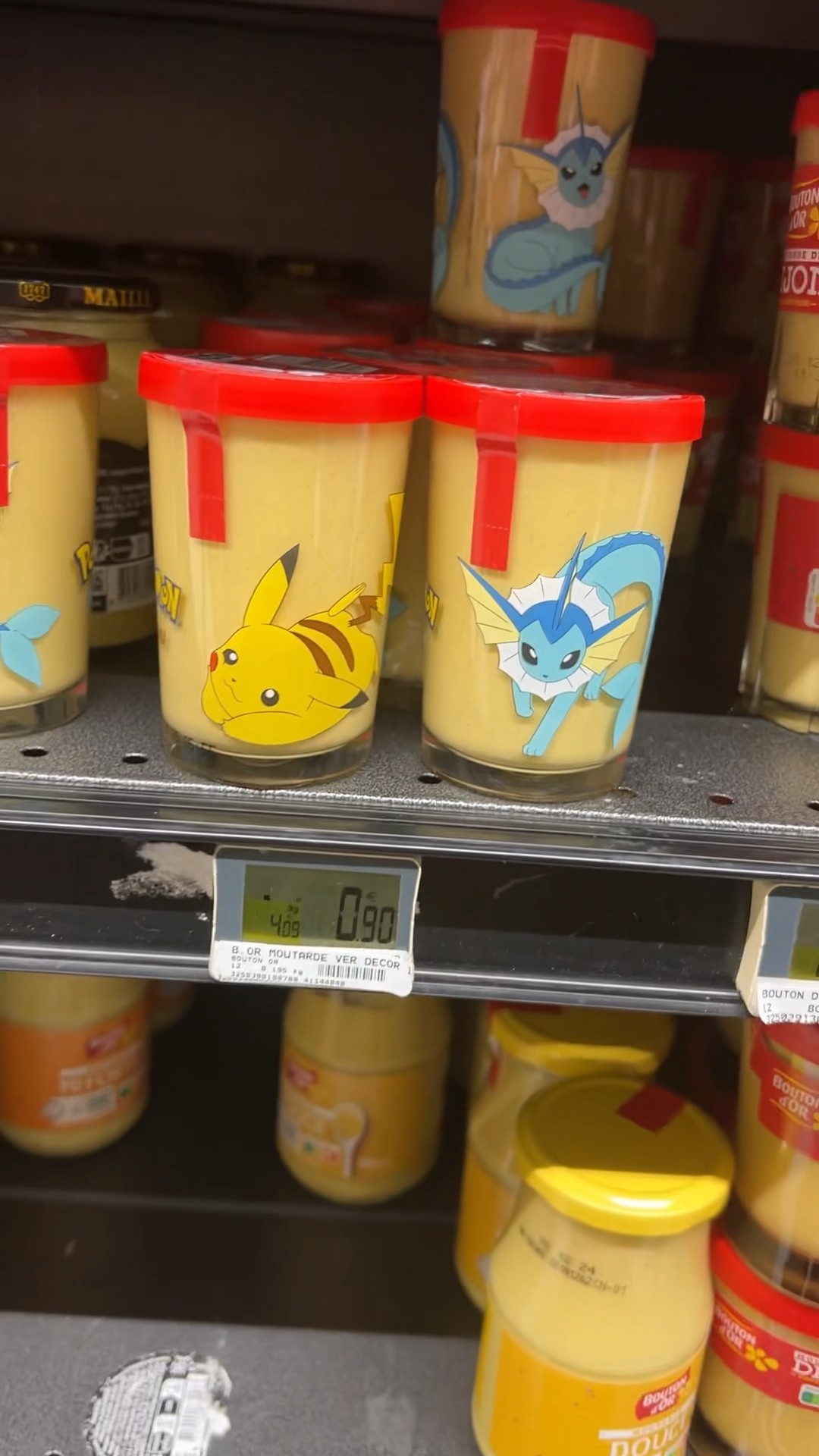
- Amora mustard glasses are famous as well. They are designed to be reused as table glasses and often have pictures on them so children love to get them. My son used to badger me to get all the Pokémon ones.
See here for an example: https://i.ytimg.com/vi/KDIMNfsuM3s/oardefault.jpg
- Hmm, does everyone in Vietnam have a drinking problem?
- When I "lived" in Vietnam, they had more bars than coffeshop in the US, but they also had double amount of coffee shops. In Saigon I was never not in a short walking distance from a bar.
- I'd say somewhat. It is also tied to masculinity in a way, so it is a bigger problem for men.
- bia hơi is pretty light
- FTA: the defeat of American troops and fall of Saigon in 1975
This is a bit misleading: Yes, strategically the U.S. was defeated in 1975, but U.S. troops had pulled out in 1973, having essentially never been beaten on the battlefield — not that it matters, of course.
- You can indeed lose a war whilst having won all the battles.
- A gesture of good will as they say. They never wanted to get to redacted in three days anyway.
- That’s really splitting hairs. The Republic of Vietnam was a dead man walking, but it was a United States puppet state, and they finally collapsed in 1975.
The cope stuff of “never beaten in the battlefield” is just bullshit. The point of fighting a war is to win. The military bureaucrats tried to apply kill counts as a proxy for victory.
The army pulled out but everything didn’t just end. There was a variety of covert and semi-covert American presence remaining, both in terms of CIA people and “sheep dipped” contractors.
- > That’s really splitting hairs.
As software people are keenly aware, accuracy in writing is important.
> The Republic of Vietnam was a dead man walking, but it was a United States puppet state, and they finally collapsed in 1975.
I don't disagree. In hindsight, the U.S.'s political strategy was disastrous. American decisionmakers — like all of us — had to make their best judgments based on education and experience (and the often-malign influence of groupthink). Some factors were especially salient:
• As WWII ended, the "Atlanticists" in the State Department supported France's insistence on retaining their Southeast Asian colonies (IIRC, because the U.S. wanted a strong anticommunist France to help stand up to Stalin and the Red Army after Germany's surrender). Also IIRC, FDR was inclined to support Ho Chi Minh's independence movement, but he was gravely ill by then.
• The American political class was very much aware of the lessons of Munich in 1938; of Stalin's conquest of Eastern Europe in 1945; and of North Korea's invasion of South Korea in 1950. It wasn't unreasonable for them to fear the spread of totalitarian communism.
• The governing Democratic Party was acutely aware of the political impact of McCarthyism in the 1950s, including being incessantly attacked by the GOP for having "lost" China in 1949 (as if China was ours to lose).
• Douglas MacArthur's advice to President Kennedy — not to put troops on the ground in Asia — didn't carry the day. [0]
Those interested in this debacle should read David Halberstam's magisterial book The Best and the Brightest. [1]
[0] https://thediplomat.com/2018/10/a-new-take-on-general-macart...
[1] https://en.wikipedia.org/wiki/The_Best_and_the_Brightest
- And I would recommend Kill Anything That Moves: The Real American War in Vietnam - https://www.goodreads.com/book/show/12292260-kill-anything-t...
- > brewed it fresh daily
This is not how beer works.
- It's a new batch each day, but it's not drank in the same day it's brewed I suspect. Probably a week or two later, going off some quick research into "running ales", a similar English style of brewing.
- [flagged]
- "But in some corners of Hanoi, government officials still have exclusive access to special shops selling goods at subsidized rates. "
Surely in a communist government access would be equal to all? Why would there be elites?
- You'll be really shocked to discover that in the Soviet Union, people also got different pay and company benefits and different retirement ages for doing different work.
- Believe it or not, but there were different quality grades of commieblocks. You can guess who got the ones from the first, more quality batch.
- it's because it's not real communism.